
Dr. Samhitha Reddy
Consultant Proctologist & Laparoscopic Surgeon
MBBS, MS, FMAS, FISCP, DMAS
- 8 Yrs
- ASCRS Member
General and Laparoscopic Surgery
By Dr Abhishek Katha · MBBS, MS, FMAS 19 February 2025 6 min read Updated 21 August 2026
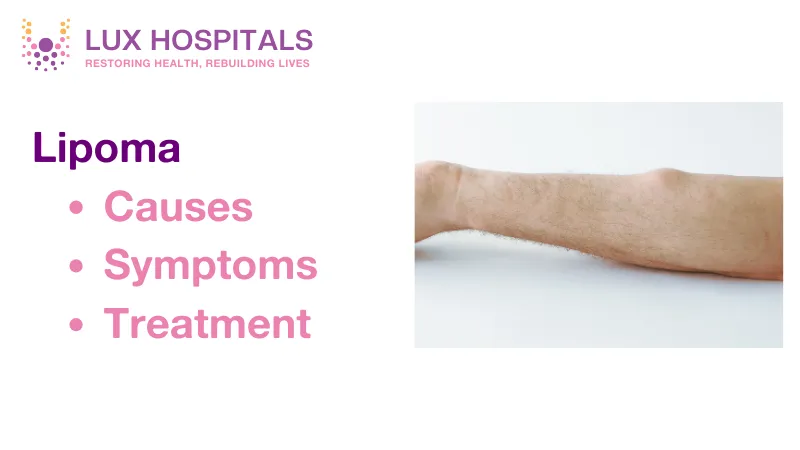
Lipomas are among the most common benign (non-cancerous) growths found under the skin. These fatty lumps are typically soft and movable, often growing slowly. Despite being harmless in most cases, people often wonder, Are lipomas dangerous? In this blog, we’ll explore the causes of lipomas, their potential risks, available treatments, and the typical costs of lipoma removal.
Let’s dive into everything you need to know about lipomas, their risks, and the options for lipoma treatment.
A lipoma is a soft, fatty lump that grows beneath the skin. It is made of fat cells, and its appearance is often round or oval-shaped. These growths are usually not painful but can vary in size. Lipomas can form anywhere on the body, but they are most commonly found on the upper arms, thighs, back, and neck.
While lipomas are slow-growing and generally painless, some people may experience discomfort if the lump presses on nerves or other tissues. In rare cases, lipomas may become malignant (cancerous), but this is extremely uncommon.
The exact cause of lipomas is not fully understood. However, several factors may contribute to their development:
Though lipomas themselves are generally harmless, they can sometimes grow large enough to cause discomfort or even interfere with daily activities.
Lipomas are generally not harmful. They are benign growths and do not pose a significant risk to health, as was previously stated. But in certain situations, lipomas could lead to problems:
Although lipomas are generally benign and harmless, it is crucial to keep an eye out for any changes. It’s important to see a doctor if you observe unexpected symptoms, such as pain or quick growth.
If you experience any of these symptoms, or if your lipoma grows suddenly or becomes painful, you should seek medical attention to rule out more serious conditions.
While lipomas do not require treatment if they are not causing pain or discomfort, there are several options for those who wish to have them removed or treated. Here are some common treatments for lipomas:
The cost of lipoma removal can differ depending on several factors, such as the size and location of the lipoma, the type of treatment used, and your geographical location. On average, lipoma removal costs range from $500 to $3,000 per procedure.
Keep in mind that most insurance companies will cover the cost of lipoma removal if the lump is causing pain, discomfort, or interfering with daily life. However, cosmetic lipoma removals (for aesthetic reasons only) may not be covered.
You should consider lipoma removal if the lipoma is:
Seeing a doctor is also crucial if you observe the formation of many lipomas or if the shape or texture of the lipoma changes. Early identification can help rule out any other potential health risks, even though most lipomas are harmless.
In most cases, lipomas are not dangerous and do not pose a significant health risk.They may, however, be uncomfortable, and in rare instances, lipomas may need to be removed for aesthetic or medical reasons. Any bumps on your body should be closely watched, and if you see any changes, you should speak with a healthcare professional. TTreatment options include lipoma surgery and liposuction, and the cost of removing a lipoma may vary depending on the procedure and other factors. If you’re concerned about a lipoma, it’s always best to consult with a doctor who can assess the situation and recommend the appropriate treatment. Whether you choose lipoma treatment for medical or cosmetic reasons, the good news is that lipomas are usually benign and can be safely removed in most cases.
A lipoma is a benign (non-cancerous) growth of fatty tissue that develops under the skin. It is typically soft, movable, and painless.
Lipomas are generally non-cancerous, but in rare cases, they can develop into a form of cancer known as liposarcoma. However, this is extremely uncommon.
The main risks of lipomas are related to their size and location. Large lipomas may cause pain, pressure on nearby structures, or restricted movement. They may also lead to cosmetic concerns, depending on their visibility.
Lipomas can sometimes grow back after removal, though recurrence is relatively rare. The likelihood of this depends on the completeness of the removal and the nature of the lipoma.
You should consult a doctor if you notice a new lump, if it grows rapidly, becomes painful, or if you experience any unusual symptoms associated with the lipoma.
For lipoma treatment, including diagnosis, monitoring, and surgical removal if needed, experienced general surgeons are available to manage the condition with care and precision at Lux Hospitals.
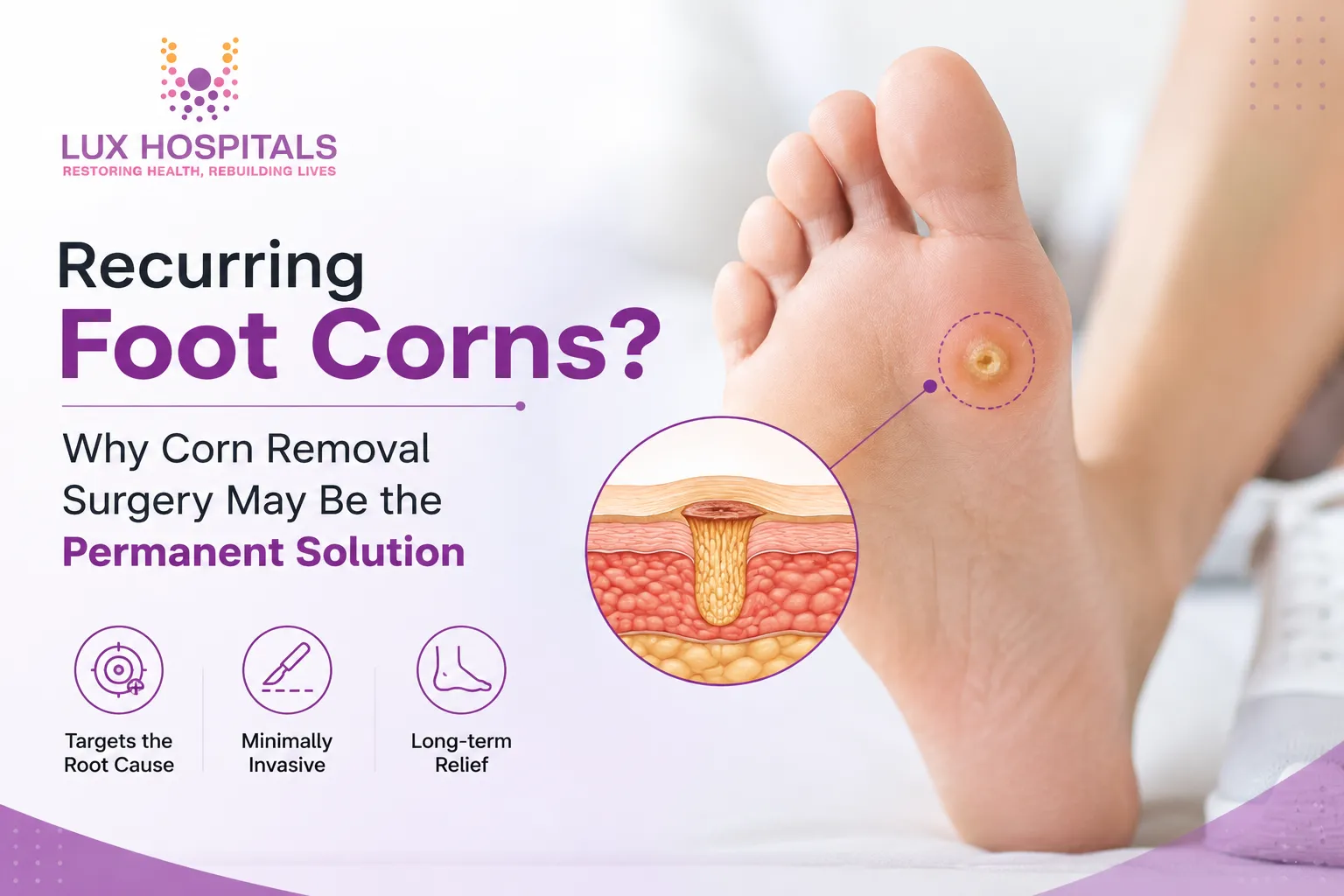
There is more to recurrent foot corns than merely a cosmetic issue. They may result in ongoing pain, trouble walking, and recurrent discomfort that interferes with day-to-day activities. Home treatments and over-the-counter corn pads may offer short-term comfort, but they frequently don’t address the root cause.
29 July 2026
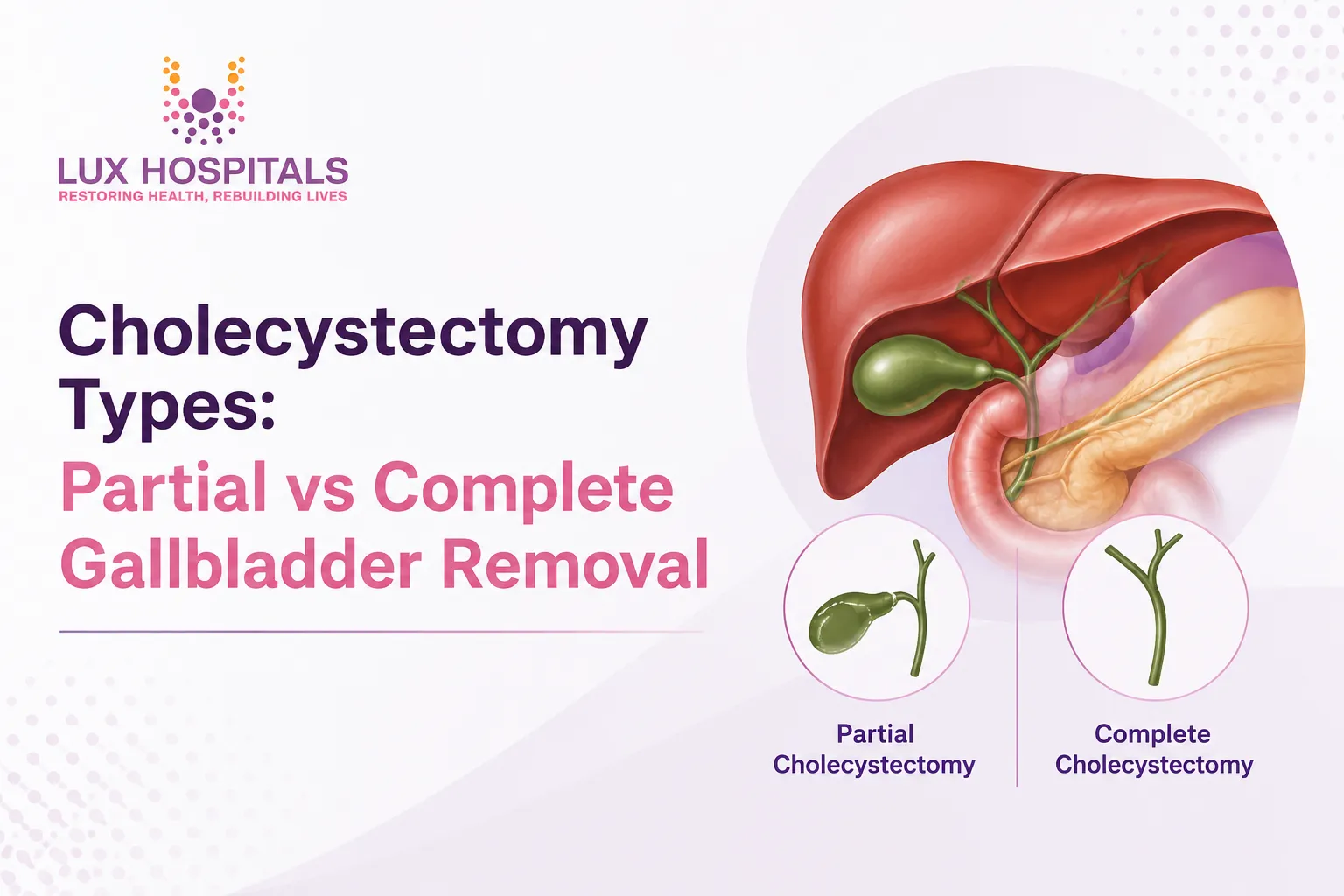
Gallbladder disease is a prevalent digestive problem that affects millions of people worldwide. To prevent serious consequences, surgery is often necessary to treat conditions such as gallstones, gallbladder inflammation, and infections. Partial removal may be advised in certain circumstances where removing the entire gallbladder could be dangerous, even though total removal is the typical technique.
24 July 2026

There is more to varicose veins than just appearance. If neglected, they might result in skin changes, pain, oedema, leg heaviness, and even problems. One of the most crucial choices you can make for successful treatment and long-term comfort is selecting the correct varicose vein specialist.
20 July 2026
Send your reports across and a senior surgeon will review them, explain the options and tell you honestly whether surgery is the right call.
Plot No.116, Lumbini Avenue, HITEC CITY, Near IKEA, Hyderabad – 500032