












Gynecomastia in Hyderabad: What to Ask Before Surgery
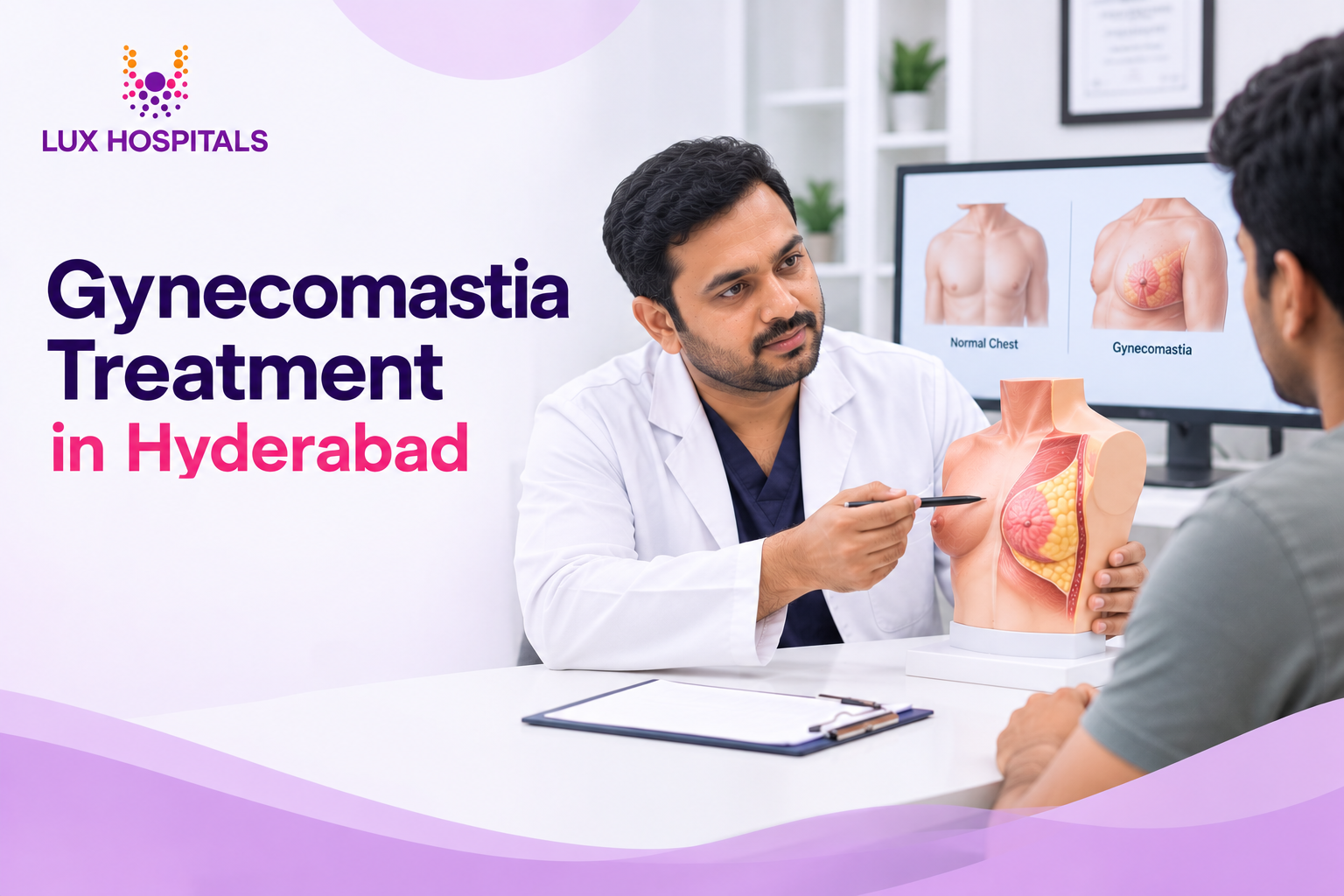
Losing excess weight can change your body shape significantly, but your chest may not become as flat or defined as you expect. Some men notice that breast fullness, a firm area beneath the nipple, or loose chest skin remains even after achieving a healthier weight. This can happen because the chest may contain glandular tissue, remaining fat, or excess skin. If chest enlargement continues after weight loss, gynecomastia in Hyderabad may be worth discussing with a qualified plastic surgeon. At Lux Hospitals, a specialist can assess your chest, medical history, weight-loss journey, skin quality, and treatment goals before recommending an appropriate approach.
Why Does Chest Enlargement Remain After Weight Loss?
Although weight loss reduces body fat, it might not completely remove the tissue that creates the illusion of an expanded chest. After significant weight loss, some men may have loose skin or leftover fat, while others may have persisting glandular tissue associated with gynecomastia. Gynecomastia in Hyderabad As a result, the chest can remain prominent even when the rest of the body becomes leaner.
Common possibilities include:
- Persistent glandular breast tissue
- Remaining chest fat
- Loose or stretched skin after weight loss
- A combination of fat and glandular tissue
- Hormonal or medication-related causes
Understanding the cause is an important part of gynecomastia treatment in Hyderabad, because different tissue types may require different approaches.

1. Ask: Is It Gynecomastia or Chest Fat?
This should be one of your first questions during a consultation. Gynecomastia involves increased glandular breast tissue, while pseudogynecomastia is mainly related to excess fat. The two can look similar but may require different treatment strategies. A surgeon may examine the chest and assess the tissue beneath and around the nipple. Your medical history, weight changes, medications, supplements, and other health factors may also be relevant.
Why Does This Difference Matter?
Liposuction can remove excess fat, but it does not eliminate glandular breast tissue. If glandular tissue is present, the surgeon may decide to remove it surgically, sometimes in conjunction with liposuction. This distinction helps your surgeon develop a more personalised gynecomastia treatment plan in Hyderabad, rather than treating every enlarged chest the same way.
2. Ask Whether You Need Liposuction, Tissue Removal, or Both
Another important question is: “What technique will you use to correct my chest?” The answer depends on the type and amount of tissue present. Some patients may benefit from liposuction when excess fat contributes to chest enlargement. Others may require removal of glandular tissue. In selected cases, surgeons may combine both approaches.
What Should You Discuss?
Ask your surgeon:
- What type of tissue is causing my chest enlargement?
- Is liposuction enough for my case?
- Do I have glandular tissue that needs removal?
- Will loose skin also need attention?
- What technique do you recommend and why?
The goal of gynecomastia treatment in Hyderabad should be to create a balanced chest contour while considering your anatomy and realistic expectations.
3. Ask If Your Weight Is Stable Enough for Surgery
If you recently lost a significant amount of weight, ask whether you should maintain your current weight for a period before considering surgery. A relatively stable weight can help the surgeon assess your actual chest contour and determine how much residual fat, glandular tissue, or excess skin remains. Professional guidance also considers physical health, stable development, realistic expectations, and suitability for surgery when evaluating candidates.
Why Weight Stability Matters
Further significant weight changes after surgery can affect your body contour and may change your chest’s appearance.
Before gynecomastia treatment in Hyderabad, discuss:
- Your current weight
- Recent weight changes
- Your target weight
- Exercise routine
- Nutrition
- Any planned future weight loss
Your surgeon can then determine whether the timing is appropriate.
4. Ask About Loose Skin After Weight Loss
Significant weight loss can leave loose or stretched skin. This is different from excess fat or glandular tissue and may affect the final appearance of the chest.
Liposuction alone does not remove large amounts of loose skin. Skin elasticity plays an important role in how the skin adapts after fat removal.
What Should You Ask?
If you have lost substantial weight, ask:
- Is loose skin affecting my chest shape?
- Can my skin tighten sufficiently after treatment?
- Would removing excess skin improve the result?
- Where would any incisions or scars be located?
- What result is realistic for my body?
Discussing these concerns before gynecomastia treatment in Hyderabad can help you understand what surgery can and cannot achieve.
5. Ask About Recovery, Risks and Expected Results
Understanding recovery and potential problems is crucial because gynecomastia surgery is still a medical procedure. Risks include bleeding, infection, asymmetry, irregular contours, changes in sensation, fluid collection, scarring, and the need for revision surgery.
Your surgeon should also explain the expected recovery timeline and activity restrictions based on your individual procedure.
Questions to Ask Before Surgery
Consider asking:
- How long will recovery take?
- When can I return to work?
- When can I resume exercise?
- Will I need a compression garment?
- What symptoms should prompt me to contact the hospital?
- What result can I realistically expect?
- Will the result change if I gain weight again?
A detailed consultation makes gynecomastia treatment in Hyderabad more predictable and helps you prepare properly for recovery.
What Tests May Be Needed Before Gynecomastia Surgery?
A consultation does more than assess your chest’s appearance. Your doctor may investigate possible causes of gynecomastia, particularly when the enlargement is new, unusual, painful, one-sided, or associated with other symptoms. Depending on your history and examination, your doctor may consider additional evaluation, including assessment of hormonal or endocrine factors.
Tell your doctor about:
- Prescription medicines
- Supplements
- Steroid use
- Previous surgeries
- Existing medical conditions
- Recent weight changes
- Alcohol or tobacco use
This information helps your surgeon plan safer gynecomastia treatment in Hyderabad.
When Should You Get Chest Enlargement Evaluated?
Not every male chest enlargement is indicative of gynecomastia. Examine any new or unexpected changes to the breasts instead of presuming they are only ornamental.
Seek medical advice if you notice:
- A firm or hard lump
- Persistent pain or tenderness
- Nipple discharge
- Sudden or unusual enlargement
- Skin changes
- Enlargement that is noticeably one-sided
Although male breast cancer is uncommon, breast lumps and unusual changes should be assessed by a healthcare professional.
Who May Be a Candidate for Gynecomastia Surgery?
Surgery may be considered for men who have persistent chest enlargement that causes physical or emotional concerns and does not respond adequately to appropriate non-surgical measures. Candidates should generally be healthy enough for surgery, have realistic expectations, and ideally have stable chest development and weight. A surgeon will assess your individual condition rather than deciding based on chest size alone. At Lux Hospitals, a consultation can help determine whether gynecomastia treatment in Hyderabad is appropriate for your condition and what treatment approach may provide a balanced result.
Why Choose Lux Hospitals for Gynecomastia Treatment?
Choosing the right hospital and surgeon is an important part of planning male chest reduction surgery. During consultation, patients should have the opportunity to discuss their goals, medical history, treatment options, recovery, risks, and expected results. At Lux Hospitals, patients can discuss persistent chest enlargement with specialists and understand whether the concern is related to fat, glandular tissue, loose skin, or a combination of factors. The focus should be on creating an individualised treatment plan rather than recommending the same procedure for every patient.
Conclusion
Chest enlargement that remains after weight loss can have different causes, so the right solution depends on what is actually contributing to the chest fullness. Persistent glandular tissue, residual fat, and loose skin may require different approaches, and surgery should follow a proper clinical assessment. If you’re considering gynecomastia treatment in Hyderabad, learn what caused your chest enlargement, whether you’re a good candidate for surgery, the recommended procedure, recovery, risks, and what you can reasonably expect. A specialised consultation at Lux Hospitals can help you understand your options and move forward with confidence and clarity.
Frequently Asked Questions
Yes, chest enlargement can linger after weight loss when glandular breast tissue persists or when some chest fat or loose skin remains. Weight loss does not necessarily remove glandular tissue, so a medical assessment can help determine whether the remaining fullness is gynecomastia, excess fat, loose skin, or a combination.
The appropriate treatment depends on the cause, duration, symptoms, and whether an underlying medical or medication-related factor is present. Some cases may improve when the underlying cause is addressed, while persistent enlargement that causes concern may be considered for surgical correction after appropriate evaluation.
Liposuction can remove excess fat but not glandular breast tissue, so it may not be enough when true glandular gynecomastia is present. Depending on the individual's anatomy, surgeons may use liposuction alone or combine it with surgical removal of glandular tissue to improve chest contour.
The right timing depends on whether your weight has stabilised, how much you have lost, your skin quality, and whether you plan further weight loss. Discuss your recent weight changes and target weight with your surgeon so they can determine whether your chest contour is stable enough to plan treatment.
Gynecomastia surgery is a surgical procedure and, like other surgeries, can involve risks such as bleeding, infection, asymmetry, contour changes, scarring, sensation changes, or fluid collection. Your surgeon should explain the specific risks, expected benefits, recovery requirements, and available options before you decide whether surgery is appropriate.
Lux Hospitals offers specialist evaluation for men concerned about persistent chest enlargement and can help determine whether surgical correction may be appropriate. During consultation, the specialist can assess your chest, discuss your concerns, and explain suitable treatment options based on your individual condition.
A consultation is the best next step if your chest enlargement still affects your daily life and confidence, even after you've lost weight. Before suggesting a suitable gynecomastia treatment in Hyderabad, a specialist can evaluate the underlying tissue, weight stability, skin quality, medical history, and objectives.