Dr. Samhitha Reddy
Consultant Proctologist & Laparoscopic Surgeon
MBBS, MS, FMAS, FISCP, DMAS
- 8 Yrs
- ASCRS Member
By Dr.Ramprabu 6 November 2026 5 min read
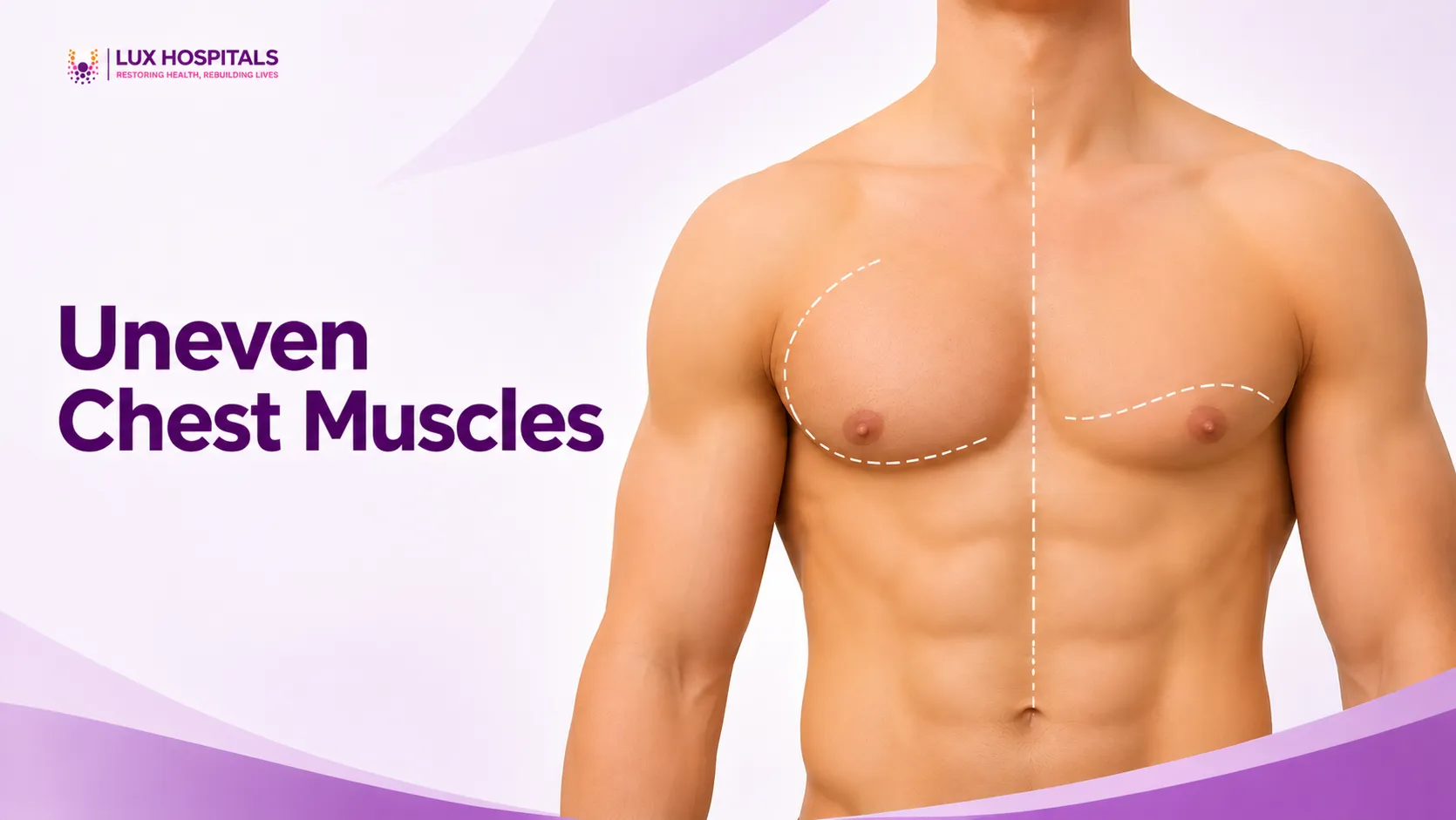
Noticing uneven chest muscles can be concerning, especially when one side appears larger, flatter or more developed than the other. Mild differences between the two sides are common. However, a noticeable change may relate to muscle imbalance, posture, a previous injury, chest wall structure, or changes in breast tissue.
Understanding the source of the uneven chest matters because the best course of action depends on the underlying cause. Exercise may help if the problem relates to muscle development, but it may not fix structural or tissue-related differences.
Several factors can contribute to uneven chest muscles. The difference may develop gradually or become noticeable after an injury, changes in exercise habits or weight fluctuations.
One side of the chest may become stronger or larger because you use it more during workouts or everyday activities. This can happen when your dominant side takes over during exercises such as bench presses or push-ups.
A chest muscle imbalance may become more noticeable over time if the stronger side continues doing more of the work.
Poor form during strength exercises can cause chest muscle imbalances. For example, during a bench press, tilting the bar or allowing one shoulder to move differently can increase the load on one side.
Using lighter weights and focusing on controlled, balanced movements may help improve technique.
A previous shoulder, chest or upper-body injury can affect how one side moves and contracts. Reduced activity during recovery may lead to weakness or muscle loss on that side.
If the difference appeared after an injury, a medical or physiotherapy assessment can help determine whether movement, strength or tissue damage is contributing to the asymmetry.
The collarbones, breastbone and ribs are rarely perfectly symmetrical. Even when the chest muscles are fairly balanced, one side may look different because of the underlying chest wall structure.
Exercise cannot completely change the shape of the skeleton.
Rounded shoulders, spinal alignment problems or consistently leaning to one side can change how the chest looks.
Poor posture may make existing chest asymmetry appear more noticeable. Improving posture and strengthening the surrounding muscles may help in selected cases.
Not all uneven chests are caused by the pectoral muscles.
In men, breast tissue enlargement, known as gynecomastia, can make one side appear fuller than the other.
If the difference involves a firm lump, tenderness or noticeable breast tissue rather than muscle size, a doctor should assess it instead of relying only on exercise.
A small difference between the two sides of the chest is common. Human bodies are naturally asymmetrical, and the two sides do not always develop at the same rate.
However, a significant difference that develops suddenly, keeps increasing or is associated with pain, swelling, a lump or weakness warrants medical evaluation.
The key question is not simply whether your chest looks uneven. It is why it looks uneven.
If the asymmetry is mainly related to muscle development, changes to your training approach may help.
Exercises that allow each side to work independently can help identify and address strength differences.
Examples include:
Start with a manageable weight and maintain good form rather than allowing the stronger side to compensate.
Reducing the weight may help you regain control if one side frequently takes over during exercise.
You can also review your form by recording your movements or working with a qualified trainer.
It may be tempting to perform excessive repetitions on the smaller side.
However, increasing training volume without understanding the cause may not solve the problem and could increase the risk of injury.
A balanced exercise plan is usually more appropriate.
Consider medical assessment if uneven chest muscles are:
A doctor can examine the chest and determine whether the difference involves muscle, breast tissue, the chest wall or another structure.
Treatment depends on the cause.
For exercise-related muscle imbalance, correcting technique, modifying workouts and addressing strength differences may be sufficient.
If the asymmetry is related to an injury, treatment may involve rehabilitation or physiotherapy.
When chest wall structure or excess tissue causes the difference, exercise alone may not provide the desired change. In selected patients, a plastic and cosmetic surgeon may discuss appropriate procedures after a physical examination.
No single uneven chest treatment works for everyone. The cause, severity, overall health and individual expectations all matter when choosing an approach.
In selected cases, surgery may be considered when a structural difference or excess tissue causes significant asymmetry.
The exact procedure depends on the underlying problem. A plastic surgeon may assess the chest shape, muscle development, skin and soft tissue before discussing whether surgery is appropriate.
Do not choose surgery simply because one side looks slightly different. A proper evaluation helps determine whether a procedure is necessary and what outcome can realistically be expected.
Uneven chest muscles can result from muscle imbalance, exercise technique, posture, previous injury or natural differences in the chest wall. In some cases, targeted training can improve the appearance, but exercise cannot correct every type of chest asymmetry. If one side of your chest has changed noticeably, or if the difference is accompanied by pain, swelling, a lump, or weakness, a professional assessment can help identify the cause. At Lux Hospitals, a plastic and cosmetic surgeon can evaluate your concern and discuss treatment options based on your anatomy and goals.
Medical Disclaimer: This article is for general educational purposes and does not replace an examination, diagnosis or personalised medical advice. Make treatment decisions with a qualified healthcare professional.
Because of variations in muscle growth, exercise technique, posture, prior injuries, or the chest wall's natural structure, one side may appear larger than the other. Breast tissue variations can also affect appearance. Seek a medical assessment if the change is new, progressive, or accompanied by pain or a lump.
Exercise may help if the difference is mainly due to muscle imbalance or training technique. Unilateral exercises and better form can help each side work independently. However, exercise may not correct asymmetry caused by the chest wall, breast tissue or other structural factors.
Mild chest asymmetry is common because human anatomy is rarely perfectly symmetrical. One side may naturally have slightly different muscle development or chest wall shape. Look for any significant, sudden, or steadily worsening disparity to identify the cause.
Chest asymmetry is often not caused by bench pressing; however, bad form can force one side to bear more weight. If you tilt the bar, shift your shoulders, or use varied movement patterns, you may devel
If the asymmetry develops suddenly, keeps worsening, or is accompanied by discomfort, swelling, a new lump, tenderness, weakness, or limited movement, seek medical help. Even though these symptoms don't always indicate a serious illness, they should be properly evaluated rather than treated on their own.
Yes. Lux Hospitals has a Plastic & Cosmetic Surgery department where patients can discuss concerns about chest appearance and asymmetry with a specialist. The doctor can assess whether the difference is related to muscle development, soft tissue or another structural factor and explain suitable options.
No. Surgery is not necessary for every case of chest asymmetry. Some differences can be managed with exercise, posture correction or rehabilitation, while structural or tissue-related concerns may require a different approach. Consider treatment only after identifying the cause.

Gynecomastia surgery requires an incision, so some scarring is expected. The scar’s size and location depend on how much tissue is removed and whether excess skin also needs treatment. Scars usually fade over time, but they don’t disappear completely. If you are thinking about gynecomastia surgery, you may already have questions about the result.
14 October 2026
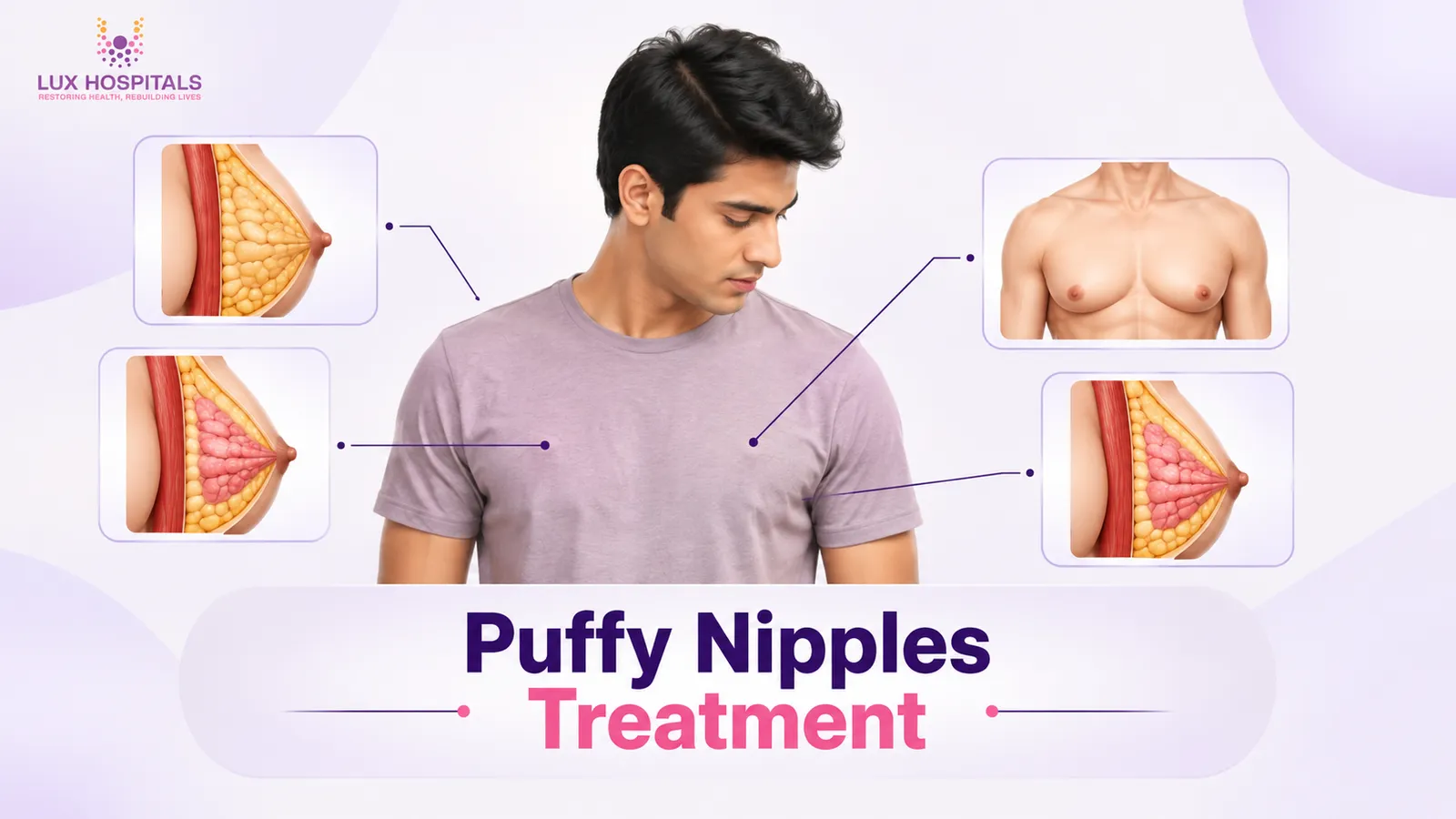
Puffy nipples treatment starts with finding out why the nipple area looks enlarged or projects through clothing. During an assessment, a plastic surgeon examines the chest, nipple-areola area, and surrounding tissue checks for gynecomastia or excess fat; assesses chest asymmetry; and may recommend blood tests or imaging when clinically indicated.
11 October 2026

Losing excess weight can change your body shape significantly, but your chest may not become as flat or defined as you expect. Some men notice that breast fullness, a firm area beneath the nipple, or loose chest skin remains even after achieving a healthier weight.
4 October 2026
Send your reports across and a senior surgeon will review them, explain the options and tell you honestly whether surgery is the right call.
Plot No.116, Lumbini Avenue, HITEC CITY, Near IKEA, Hyderabad – 500032