










Gastric Bypass vs Sleeve Gastrectomy for Type 2 Diabetes: Which Is Better?
Type 2 diabetes often becomes harder to manage when it occurs along with obesity. Medicines, diet changes and exercise can help, but some patients may continue to struggle with high blood sugar and weight-related health problems. Bariatric surgery can be an option for selected patients with obesity and type 2 diabetes. Two of the most common procedures are gastric bypass and sleeve gastrectomy. Both surgeries can support weight loss and improve blood sugar control, but they work differently. Understanding gastric bypass vs. sleeve gastrectomy can help patients have a more informed discussion with their bariatric surgeon. At Lux Hospitals, doctors assess each patient’s weight, diabetes control, medical history and overall health before recommending a suitable treatment approach.

What Is Gastric Bypass?
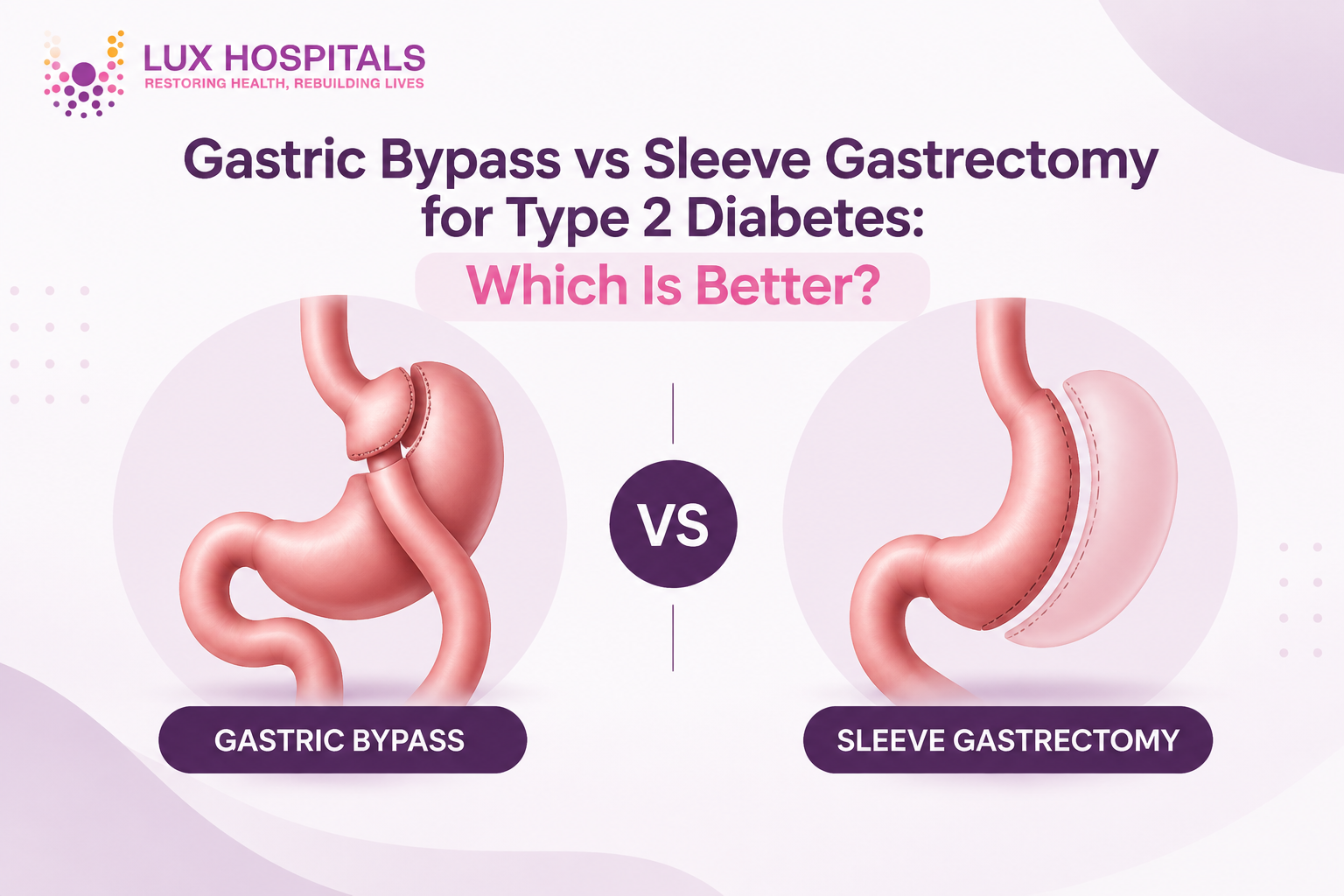
Gastric bypass, also called Roux-en-Y gastric bypass, is a bariatric procedure that changes both stomach size and the path food takes through the digestive system. During the procedure, the surgeon creates a small stomach pouch and connects it to a lower section of the small intestine. This allows food to bypass part of the stomach and upper small intestine.
How Gastric Bypass Can Help Diabetes
Gastric bypass can support diabetes management in several ways:
- It reduces how much food the stomach can hold.
- It can promote significant weight loss.
- It changes certain gut hormones involved in appetite and glucose regulation.
- It may improve insulin sensitivity.
- Some patients may need fewer diabetes medicines after surgery.
Because gastric bypass produces both weight-loss and metabolic effects, it can be particularly useful for selected patients whose type 2 diabetes remains difficult to control.
What Is Sleeve Gastrectomy?
Sleeve gastrectomy involves removing a large portion of the stomach and creating a narrow, tube-shaped stomach. Unlike gastric bypass, sleeve surgery does not reroute the small intestine. The digestive system continues to follow its usual pathway, but the stomach holds much less food.
How Sleeve Gastrectomy Can Help Diabetes
Sleeve gastrectomy can improve type 2 diabetes through substantial weight loss and metabolic changes.
Patients may experience:
- Better blood sugar control
- Reduced appetite
- Improved insulin sensitivity
- Lower dependence on some diabetes medicines
- Improvement in obesity-related health conditions
For many patients, sleeve gastrectomy offers a less complex surgical approach while still providing meaningful weight-loss and metabolic benefits.
Gastric Bypass vs Sleeve Gastrectomy for Type 2 Diabetes
Both Gastric Bypass and Sleeve Gastrectomy can help people with type 2 diabetes. However, patients differ in how much they improve. Research comparing bariatric procedures suggests that gastric bypass may provide a stronger diabetes-remission benefit in some patients. At the same time, sleeve gastrectomy can also substantially improve blood sugar and metabolic health.
The choice should not depend on diabetes alone. Doctors also consider BMI, diabetes duration, medications, reflux symptoms, nutritional status and other medical conditions.
Gastric Bypass May Be Considered When:
- Diabetes remains difficult to control.
- The patient has significant obesity.
- Great metabolic improvement is an important goal.
- Weight-related health conditions are present.
- The patient’s overall health makes bypass appropriate.
Sleeve Gastrectomy May Be Considered When:
- The patient prefers a procedure that does not reroute the intestine.
- Significant weight loss is required.
- The overall medical assessment supports sleeve surgery.
- The patient can follow long-term dietary and lifestyle changes.
Gastric Bypass vs Sleeve Gastrectomy: Which Provides Better Diabetes Control?
One of the most important questions patients ask about Gastric Bypass vs Sleeve Gastrectomy is which surgery provides better diabetes control. Both treatments can increase insulin sensitivity and reduce blood sugar. But gastric bypass has demonstrated strong metabolic effects and may offer higher diabetes-remission rates for some patients.
The result depends on several factors, including:
- How long the patient has had diabetes
- Current HbA1c levels
- Whether insulin is required
- Starting BMI
- Remaining pancreatic function
- Weight-loss response
- Lifestyle changes after surgery
Therefore, view surgery as part of a complete diabetes-management plan, not a guaranteed cure.
Gastric Bypass vs Sleeve Gastrectomy: Weight Loss
Weight loss is another major factor when considering Gastric Bypass vs Sleeve Gastrectomy. Both procedures can produce significant and sustained weight loss when patients follow their postoperative diet and lifestyle plan. Gastric bypass may provide greater average weight loss in some patient groups. However, individual results vary.
Factors That Influence Weight Loss
- Starting weight
- Eating habits
- Physical activity
- Metabolic health
- Age
- Medical conditions
- Follow-up care
- Long-term adherence
The best surgery is therefore not necessarily the one that produces the highest average weight loss. It is the procedure that provides an appropriate balance of benefits, risks and long-term suitability for the individual patient.
Gastric Bypass vs Sleeve Gastrectomy: Key Differences
| Feature | Gastric Bypass | Sleeve Gastrectomy |
| Stomach size | Creates a small stomach pouch | Creates a narrow stomach sleeve |
| Intestine rerouted | Yes | No |
| Weight loss | Significant | Significant |
| Diabetes improvement | Strong metabolic effect | Strong metabolic effect |
| Surgical complexity | More complex | Comparatively simpler |
| Nutritional monitoring | Important | Important |
| Long-term follow-up | Required | Required |
This comparison shows why consulting a bariatric professional about gastric bypass vs. sleeve gastrectomy is better than deciding without medical advice.
What Are the Risks and Considerations?
Every surgical procedure has potential risks. Bariatric surgery also requires lifelong attention to nutrition and lifestyle.
Possible Considerations After Gastric Bypass
Patients may need careful monitoring for nutritional deficiencies because the procedure changes nutrient absorption. Doctors may recommend vitamin and mineral supplements and regular blood tests.
Possible Considerations After Sleeve Gastrectomy
Sleeve surgery can also require nutritional monitoring. Some patients may experience or develop acid reflux, so discuss existing digestive symptoms with the surgeon before choosing the procedure.
Why Follow-Up Matters
After either procedure, patients should:
- Follow the recommended diet plan.
- Take prescribed supplements.
- Attend follow-up appointments.
- Monitor blood sugar as advised.
- Maintain regular physical activity.
- Follow medication changes recommended by their doctor.
Who May Benefit From Bariatric Surgery?
Not every person with type 2 diabetes requires bariatric surgery.
A bariatric specialist may consider:
- BMI
- Diabetes severity
- Duration of diabetes
- Existing medical conditions
- Previous weight-loss attempts
- Current medications
- Nutritional status
- Overall surgical fitness
The Gastric Bypass vs Sleeve Gastrectomy decision should come after a detailed medical evaluation. At Lux Hospitals, a patient-focused approach helps determine whether bariatric surgery is appropriate and which procedure best fits the patient’s individual needs.
Why Choose Lux Hospitals for Bariatric Surgery?
Choosing the right hospital is an important part of your bariatric journey. At Lux Hospitals, patients can receive guidance on surgical options, preparation, postoperative nutrition and long-term follow-up.
What Patients Can Expect
- Individual medical assessment
- Bariatric surgery consultation
- Evaluation of diabetes and obesity
- Procedure-specific guidance
- Postoperative dietary advice
- Long-term monitoring
The goal is not simply to reduce body weight. It is to support better metabolic health, improved mobility and a healthier lifestyle.
Conclusion
For patients with type 2 diabetes and obesity, the choice between sleeve gastrectomy and gastric bypass is crucial. Although they work differently and may suit different patients, both procedures can help with significant weight loss and improve blood sugar control. While sleeve gastrectomy offers substantial weight loss without rerouting the intestine, gastric bypass may provide higher metabolic benefits for certain individuals. Before deciding, consider your diabetes duration, BMI, medications, digestive health, and overall health. For a customised assessment and a treatment plan based on your unique medical requirements, speak with the experts at Lux Hospitals if you’re thinking about bariatric surgery.
Frequently Asked Questions
Gastric bypass may provide stronger diabetes-remission benefits for some patients, particularly when significant obesity and poorly controlled type 2 diabetes are present. However, sleeve gastrectomy can also improve blood sugar, insulin sensitivity and weight, so the right choice depends on the patient's individual health profile.
Sleeve gastrectomy can lead to major improvements or remission of type 2 diabetes in some patients, especially with substantial, sustained weight loss. However, diabetes remission is not guaranteed, and patients still need regular medical monitoring, healthy eating habits, physical activity and appropriate follow-up.
Both gastric bypass and sleeve gastrectomy can produce substantial weight loss, although gastric bypass may result in somewhat greater average weight loss for some patient groups. Individual outcomes depend on starting weight, eating patterns, activity levels, medical conditions and how closely patients follow their long-term treatment plan.
Lux Hospitals evaluates the patient's weight, diabetes status, medical history and overall health before discussing suitable bariatric treatment options. Patients can receive guidance about surgery preparation, recovery, nutrition, diabetes management and long-term lifestyle changes as part of their treatment journey.
No single procedure suits every patient because both surgeries have different benefits, risks, and metabolic effects. A consultation at Lux Hospitals can help you understand your options and determine which approach may be appropriate based on your health, diabetes control and weight-loss goals.