












Laser Liposuction vs Traditional Liposuction: Which Should You Choose?
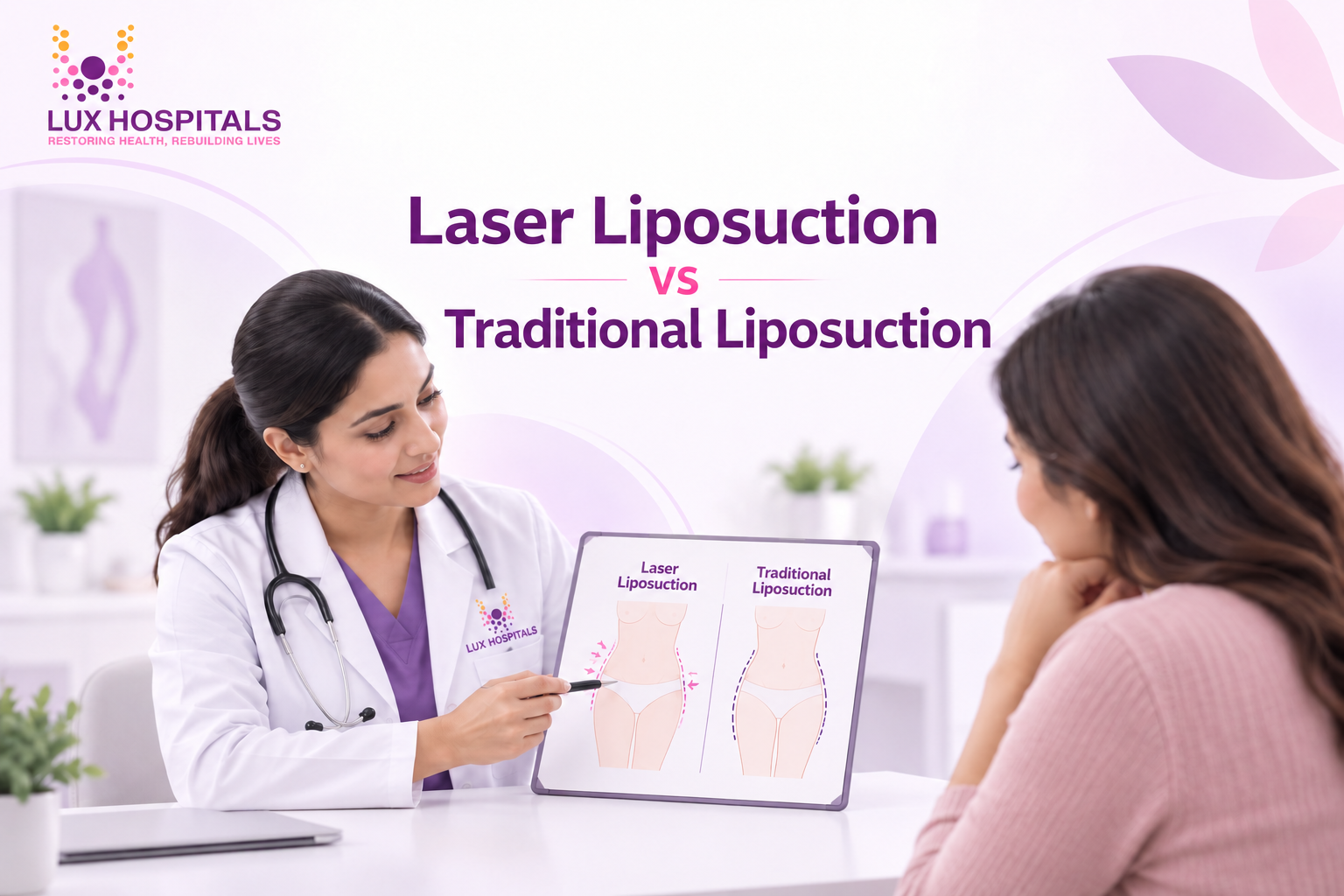
Stubborn fat can remain even when you follow a healthy diet and exercise regularly. This is why many people consider liposuction for targeted body contouring. But with different techniques available, choosing the right option can feel confusing. When comparing Laser Liposuction with Traditional Liposuction, it’s important to understand how each method works, what outcomes you can reasonably expect, and which option best fits your body and goals. Laser-assisted liposuction uses laser light to heat and break down fat before removing it, while traditional liposuction uses a cannula to loosen and manually remove unwanted fat. Laser Liposuction vs Traditional Liposuction Nevertheless, there isn’t enough information to conclude that laser liposuction is always better. At Lux Hospitals, we select the right procedure after assessing your body contour, skin quality, health, treatment area, and expectations.
Which liposuction suits you?

What Is Laser Liposuction?
Laser liposuction is a minimally invasive body-contouring technique that combines laser energy with fat removal. A thin laser fibre is introduced through a small incision into the targeted area. The laser energy heats the fat tissue and can help break it down before the fat is removed. The heat may also stimulate collagen activity, which can support skin contraction.
Potential benefits of laser liposuction
Depending on the patient and treatment area, potential advantages may include:
- Targeted removal of stubborn fat
- Support for skin tightening
- Smaller access points
- Body contouring with precise treatment
- Potentially less bleeding in selected cases
- A potentially shorter recovery for some patients
However, results depend on factors such as the treatment area, amount of fat removed, skin elasticity and the surgeon’s technique. Laser treatment also carries specific risks, including burns, pigmentation changes and other surgical complications.
What Is Traditional Liposuction?
Traditional liposuction, also called suction-assisted liposuction, removes unwanted fat using a small cannula. The surgeon carefully moves the cannula through the fatty layer and removes fat through suction.
It remains an established and widely used method for body contouring.
Where traditional liposuction can help
Traditional liposuction may be considered for localised fat deposits around areas such as:
- Abdomen
- Waist and flanks
- Thighs
- Arms
- Back
- Hips
- Chin and neck
Liposuction is a body-contouring procedure, not a substitute for weight-loss treatment. The goal is to improve the shape and proportion of selected areas.
Laser Liposuction vs Traditional Liposuction: Key Differences
Understanding the differences can make your consultation more productive.
| Feature | Laser Liposuction | Traditional Liposuction |
| Main technique | Laser energy + suction | Mechanical suction |
| Fat treatment | Laser-assisted breakdown | Mechanical loosening and removal |
| Skin tightening | May provide some skin contraction | Primarily focused on fat removal |
| Best suited for | Selected localized fat with skin-laxity concerns | Larger or more established fat deposits |
| Precision | Useful for carefully targeted areas | Effective for contouring larger areas |
| Recovery | Varies by treatment size | Varies by treatment size |
| Results | Depend on patient and technique | Depend on patient and technique |
When considering Laser Liposuction vs Traditional Liposuction, there is no universal winner. A systematic review found possible advantages for laser-assisted liposuction in fat reduction, skin retraction and satisfaction, but also noted that the available studies had significant limitations and risk of bias.
Laser Liposuction vs Traditional Liposuction: Which Is Better for Skin Tightening?
Skin elasticity is one of the biggest factors to consider.
When fat is removed, the skin needs to adapt to the new underlying contour. Patients with good skin elasticity may naturally achieve a smoother appearance. However, patients with mild skin laxity may want to discuss whether a laser-assisted technique could offer an additional skin-contraction effect.
Laser energy can stimulate collagen-related skin tightening by causing heat changes in tissue. This does not, however, mean that when there is a large amount of excess skin, laser liposuction can replace surgical skin-tightening surgery.
Who may benefit from discussing laser-assisted treatment?
It may be worth discussing when you have:
- Localised stubborn fat
- Mild skin laxity
- Good overall health
- Realistic expectations
- Stable body weight
Laser Liposuction vs Traditional Liposuction: Which Offers Better Results?
The best result is not necessarily the procedure using the newest technology. It is the procedure that matches the patient’s anatomy and treatment goals.
Traditional liposuction can effectively remove fat and contour the body. Laser-assisted liposuction may add a skin-tightening component in selected cases.
A randomised clinical trial involving submental treatment found greater fat-thickness reduction with laser-assisted lipolysis than traditional liposuction at follow-up, but it was a small study focused on a specific treatment area.
Therefore, patients should avoid choosing a procedure based only on claims of faster or better results.
Laser Liposuction vs Traditional Liposuction: What About Recovery?
Recovery depends on several factors, including:
- Number of areas treated
- Amount of fat removed.
- Anaesthesia used
- Individual healing
- Overall health
- Surgical technique
Swelling, bruising, tenderness and temporary changes in sensation can occur after liposuction. Your surgeon may recommend compression garments and gradual return to physical activity.
Some laser-assisted procedures may have a relatively short recovery, particularly when smaller areas are treated. However, don’t assume laser automatically means zero downtime.
Is Liposuction Safe?
Liposuction is a surgical procedure, so you should approach it as a medical treatment rather than a simple cosmetic shortcut.
Complications can include uneven contours, according to a 2024 comprehensive review and meta-analysis. It can also cause swelling, fluid collections, bruising and other issues, although serious complications are uncommon.
Laser-assisted liposuction also has specific risks. Because laser energy generates heat, incorrect application can potentially cause thermal injury. Proper patient selection, equipment and surgical expertise are therefore important.
How can you improve safety?
Before treatment:
- Share your complete medical history.
- Tell your surgeon about medicines and supplements.
- Discuss previous surgeries and anaesthesia reactions.
- Ask which technique is recommended and why.
- Understand expected recovery and possible complications.
- Choose a qualified medical team and appropriate surgical facility.
Laser Liposuction vs Traditional Liposuction: How Do You Choose?
Make the decision based on your needs, not popularity.
Laser-assisted liposuction may be worth discussing if your main concern is localised fat combined with mild skin laxity. Traditional liposuction may be suitable when the primary goal is to remove and contour larger localised fat deposits.
Your surgeon may consider:
- Your body composition
- Skin elasticity
- Fat distribution
- Treatment area
- Amount of fat requiring removal
- Previous procedures
- Medical history
- Desired body contour
- Recovery expectations
At Lux Hospitals, a consultation can help determine the best approach for your specific needs.
What Should You Ask Your Surgeon?
Before choosing between techniques, ask:
- Which procedure is appropriate for my body type?
- How much fat can safely be removed?
- Will my skin tighten after fat removal?
- What type of anaesthesia will be used?
- How long will my recovery take?
- What complications should I know about?
- Will I need compression garments?
- What results can I realistically expect?
- What happens if I have excess skin after fat removal?
These questions can help you decide based on medical guidance instead of online comparisons.
Conclusion
No single answer to Laser Liposuction vs Traditional Liposuction fits every patient. While traditional liposuction is still a viable choice for targeted fat removal and body reshaping, laser-assisted liposuction may provide extra skin-contraction effects in certain patients. Current data do not support the idea that laser-assisted liposuction is always better. The most important step is choosing the right technique for your anatomy, health and goals. If stubborn fat is affecting your confidence despite healthy lifestyle habits, speak with a qualified cosmetic or plastic surgery specialist at Lux Hospitals to understand your options and expected outcomes.
Frequently Asked Questions
Laser liposuction may provide an additional skin-tightening effect in selected patients, while traditional liposuction remains effective for removing localised fat. Current research reports potential advantages of laser-assisted techniques, but evidence is limited and does not show that laser treatment is universally better.
Patients with modest skin laxity may benefit from laser energy because it can provide heat effects that may promote collagen activity and skin contraction. However, a physical examination is crucial before choosing a treatment plan because substantial loose or excess skin may require a different surgical technique.
The treatment region, the amount of fat removed, the technique, and each patient's healing response all affect recovery. During recovery, many patients experience swelling, bruising, and soreness. As tissues mend and swelling subsides, the final form may take longer to become visible.
Lux Hospitals can provide a structured consultation to assess your concerns, medical history, body contour and treatment expectations before recommending an appropriate approach. The focus should be on individualised treatment planning, patient safety, realistic results and appropriate follow-up rather than choosing a procedure based only on technology.
The choice depends on factors such as your fat distribution, skin elasticity, treatment area, health status and desired outcome. A consultation at Lux Hospitals can help you understand the advantages, limitations, risks, and expected recovery of each approach before you decide.