










Is Laser Surgery the Best Treatment for Piles?
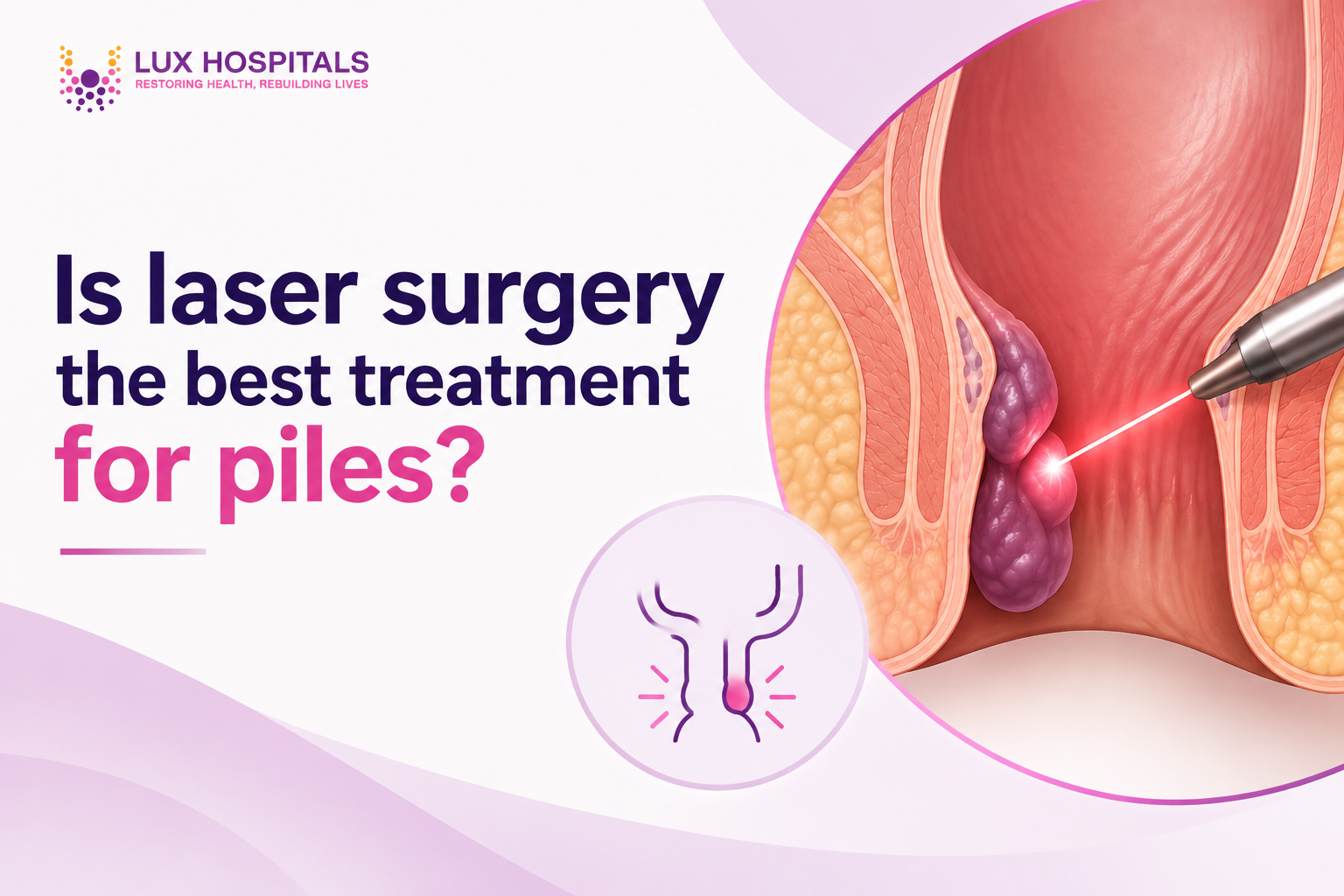
Piles, also called haemorrhoids, are swollen blood vessels around the anus or lower rectum. They can cause bleeding, itching, pain, swelling and discomfort during bowel movements. While mild piles may improve with diet and lifestyle changes, persistent or advanced symptoms may need medical treatment. Many patients now ask whether laser surgery is the Best Treatment for Piles. Laser treatment has become a popular minimally invasive option because it can reduce discomfort and help patients return to normal activities sooner. However, it is not automatically the right treatment for every patient. The Best Treatment for Piles depends on the type, grade and severity of piles, along with your symptoms and overall health. At Lux Hospitals, specialists evaluate the condition before recommending the most suitable treatment.

What Are Piles?
Piles develop when the blood vessels and supporting tissues in the lower rectum or anal area become swollen. They can occur inside the rectum or under the skin around the opening.
Common Symptoms of Piles
Watch for symptoms such as:
- Bright red bleeding during or after passing stool
- Pain or discomfort
- Itching or irritation
- Swelling around the anal area
- A lump or tissue coming out during bowel movements
- Feeling that the bowel has not emptied completely
Ignoring repeated symptoms can allow the condition to worsen. Early medical evaluation can help identify the Best Treatment for Piles before symptoms become more difficult to manage.
Why Do Piles Develop?
Several factors can increase the risk of piles. Understanding these triggers can also help prevent symptoms from returning.
Common causes and risk factors include:
- Long-term constipation
- Straining during bowel movements
- Sitting on the toilet for a long time
- A low-fibre diet
- Drinking too little water
- Pregnancy
- Being overweight
- Frequent heavy lifting
- Prolonged sitting
- Chronic diarrhoea
Changing these habits can reduce pressure on the blood vessels and support recovery.
What Is Laser Piles Surgery?
Laser piles treatment uses focused laser energy to treat the affected hemorrhoidal tissue. Depending on the technique and the patient’s condition, the surgeon may use laser energy to reduce the blood supply to the haemorrhoid and shrink the swollen tissue.
How Laser Treatment Works
A typical procedure may involve:
- Evaluation of the piles and their grade.
- Administration of suitable anaesthesia.
- Use of a specialised laser device.
- Treatment of the affected hemorrhoidal tissue.
- Observation and postoperative instructions.
The exact technique depends on the patient’s condition and the surgeon’s assessment.
Is Laser Surgery the Best Treatment for Piles?
For selected patients, laser surgery can be an effective Best Treatment for Piles option, particularly when piles cause persistent symptoms and conservative treatment has not provided enough relief. However, calling laser surgery the Best Treatment for Piles for everyone would be misleading. Treatment should match the severity and type of piles.
For example, smaller or early-stage haemorrhoids may improve with fibre, fluids, medicines and lifestyle changes. More advanced piles may require a procedure.
When Laser Treatment May Be Considered
Laser treatment may be considered when:
- Symptoms continue despite conservative care.
- Piles cause repeated bleeding.
- The haemorrhoids are suitable for a minimally invasive procedure.
- The patient wants to explore a less invasive surgical option.
- After examination, a specialist recommends laser treatment.
A proper diagnosis remains essential before choosing the Best Treatment for Piles.
Benefits of Laser Piles Treatment
Laser treatment can offer several potential benefits for appropriately selected patients.
1. Minimally Invasive Approach
Laser procedures generally involve less tissue disruption than some conventional surgical techniques.
2. Less Postoperative Discomfort
When compared to traditional haemorrhoid surgery, some individuals may have less pain following minimally invasive laser treatment. Discomfort, however, differs from person to person.
3. Faster Recovery
Many patients can return to normal daily activities relatively quickly, depending on the procedure and their recovery.
4. Limited Tissue Damage
The targeted nature of laser energy can help the surgeon treat the affected tissue while limiting unnecessary damage to surrounding areas.
5. Shorter Hospital Stay
Depending on the patient’s condition and the surgical technique used, treatment may be performed as a day-care procedure.
These potential advantages make laser surgery an attractive option when selecting the Best Treatment for Piles for suitable patients.
Laser Treatment vs Traditional Piles Surgery
Patients often compare laser treatment with conventional haemorrhoid surgery. Both approaches have a role, but they aren’t suitable for the same situations.
| Feature | Laser Treatment | Traditional Surgery |
| Approach | Minimally invasive | More tissue removal |
| Pain | Often lower | May be higher |
| Recovery | Often faster | May take longer |
| Hospital stay | Often short | Depends on procedure |
| Suitability | Selected piles | Certain advanced cases |
The choice should depend on the patient’s condition, not the treatment’s popularity.
Can All Types of Piles Be Treated With Laser?
No. Laser treatment is not appropriate for every type or grade of haemorrhoid.
Doctors may classify internal piles into different grades based on whether the haemorrhoid stays inside or comes out during bowel movements.
Early-Stage Piles
Mild piles may respond well to:
- More dietary fibre
- Adequate water intake
- Regular physical activity
- Avoiding straining
- Medicines recommended by a doctor
Advanced Piles
Patients with larger or prolapsing haemorrhoids may require a procedure. Depending on the examination, the surgeon may recommend laser treatment or another surgical approach. That is why an examination matters before deciding on the Best Treatment for Piles.
What Can You Expect During Recovery?
Recovery depends on the treatment method, the severity of the condition and your overall health.
After laser treatment, your doctor may advise you to:
- Eat fibre-rich foods.
- Drink enough water.
- Avoid straining while passing stool.
- Take prescribed medicines.
- Keep the treated area clean.
- Gradually return to physical activity.
- Attend follow-up appointments.
Following these instructions can support healing and reduce the chance of recurrent symptoms.
How Can You Prevent Piles From Coming Back?
Treatment alone does not remove the habits that may contribute to piles.
Follow These Simple Steps
- Add fruits, vegetables and whole grains to your diet.
- Drink enough fluids.
- Do not delay bowel movements.
- Avoid prolonged sitting on the toilet.
- Exercise regularly.
- Avoid excessive straining.
- Maintain a healthy weight.
- Seek medical advice for persistent constipation.
These simple changes can support long-term bowel health and complement the Best Treatment for Piles recommended by your doctor.
Why Choose Lux Hospitals for Piles Treatment?
Choosing the right treatment starts with an accurate diagnosis. At Lux Hospitals, specialists can assess your symptoms and determine whether lifestyle treatment, medication, a minimally invasive procedure or surgery is appropriate.
The team can consider:
- Your symptoms
- Piles grade
- Previous treatments
- Overall health
- Recovery expectations
- Suitability for laser treatment
This personalised approach helps patients understand their choices, rather than assuming one procedure is the Best Treatment for Piles for everyone.
Conclusion
For many suitable patients, laser treatment can provide an effective minimally invasive approach with potentially less discomfort and a faster return to daily activities. However, it should not be considered the universal answer for every patient. Some people improve with dietary and lifestyle changes, while others may need medication, minimally invasive procedures or conventional surgery. The right choice depends on the individual condition. If you have repeated bleeding, pain, swelling or a lump around the anal area, do not ignore the symptoms. Consult the specialists at Lux Hospitals for an accurate evaluation and a treatment plan suited to your condition.
Frequently Asked Questions
For certain people, laser surgery may be a viable choice, particularly if conservative treatment is unable to alleviate persistent problems caused by piles. However, the grade, type, and severity of haemorrhoids determine the Best Treatment for Piles; thus, a physician should evaluate the situation first.
Laser treatment is designed to minimise tissue damage, and many patients experience less postoperative discomfort than with some traditional procedures. Pain varies depending on the individual, the technique used, and the severity of the piles, so your surgeon will explain what to expect.
Many patients can return to routine activities relatively quickly after minimally invasive laser treatment, but recovery differs from person to person. Following your doctor's dietary, medication and activity instructions can support healing and help you return to normal activities safely.
Lux Hospitals can evaluate patients with piles and recommend an appropriate treatment based on their symptoms, haemorrhoid grade and overall health. If laser treatment is suitable, the specialist can explain the procedure, expected recovery and other available treatment options.
The Best Treatment for Piles depends on factors such as symptom severity, haemorrhoid grade, previous treatment and your overall health. At Lux Hospitals, a specialist evaluation can help you determine whether lifestyle management, medication, laser treatment, or another procedure is most appropriate.