












Puffy Nipples Treatment: What Happens During a Gynecomastia Assessment?
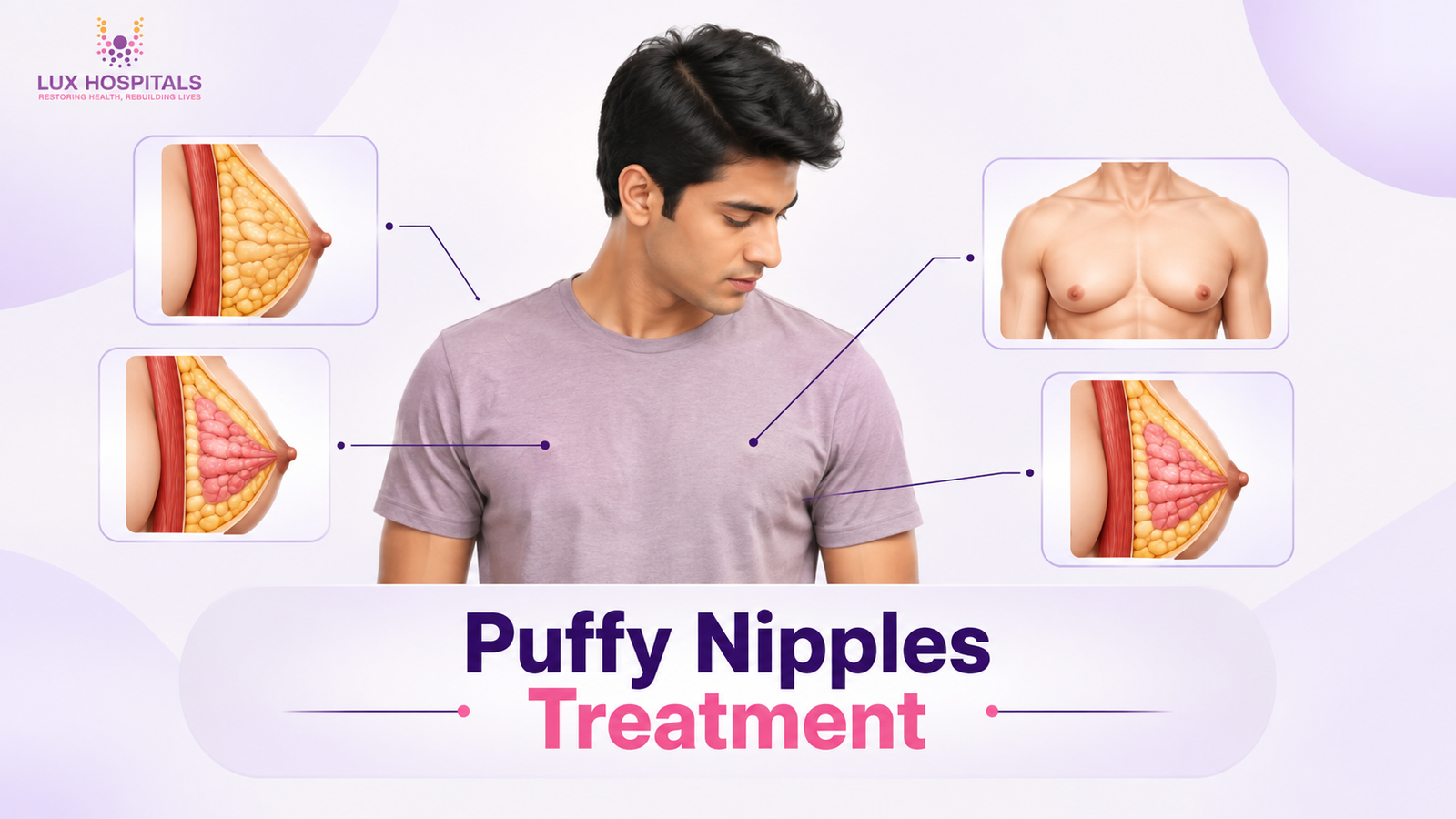
Puffy nipples treatment starts with finding out why the nipple area looks enlarged or projects through clothing. During an assessment, a plastic surgeon examines the chest, nipple-areola area, and surrounding tissue checks for gynecomastia or excess fat; assesses chest asymmetry; and may recommend blood tests or imaging when clinically indicated. Puffy nipples treatment can result from glandular breast tissue, chest fat, hormones, or normal body variation. Gynecomastia can affect one or both sides and doesn’t always produce a perfectly symmetrical chest. If your nipples become noticeable through a T-shirt, you may wonder whether you have gynecomastia or simply uneven chest muscles.

What Does “Puffy Nipples” Usually Mean?
Puffy nipples describe a nipple or areola that appears raised, swollen or more prominent than the surrounding chest. The appearance can occur with gynecomastia, excess chest fat, hormonal changes or normal anatomical variation. Gynecomastia is a benign enlargement of the glandular tissue in the male breast. It can occur on one or both sides and may be tender, especially if it developed recently. The important point is that a protruding nipple does not automatically mean you need surgery.
Is It Gynecomastia or Chest Fat?
A physical examination can help distinguish glandular tissue from fatty tissue. Some men have both. With glandular gynecomastia, you may feel firmer tissue beneath the nipple-areola complex. With predominantly fatty tissue, the chest may feel softer and may change more noticeably with overall weight changes. A surgeon will also assess the skin, nipple position, areola size, chest contour and the degree of chest asymmetry.
What Causes Puffy Nipples in Men?
Puffy nipples can have several causes, and identifying the cause is an important part of assessment.
Hormonal Changes
Gynecomastia can develop when the balance between testosterone and estrogen-related activity changes. Puberty, ageing and certain medical conditions can influence this balance.
Excess Body Fat
Higher body fat can make the chest look fuller and can also influence hormone activity. This may create an appearance similar to gynecomastia, although fat alone is not the same as glandular enlargement.
Medicines and Substances
Some medicines and substances can contribute to gynecomastia. These may include certain medicines used for prostate conditions, some cardiovascular medicines, selected psychiatric medicines and anabolic steroids. Do not stop a prescribed medicine on your own. Discuss possible side effects with the doctor who prescribed it.
Natural Chest Asymmetry
One side of the chest bigger than the other does not always indicate a disease. Human bodies are naturally asymmetrical, and differences in muscle development, fat distribution and nipple position can become more visible after weight changes or resistance training.
Muscle Imbalance
Differences in muscle development, exercise methods, or dominant-arm use can all lead to uneven pecs. But muscle imbalance doesn’t explain all cases of nipple prominence.
When Should You See a Doctor?
Schedule a medical assessment if the change persists, is bothersome, develops rapidly, or is accompanied by other symptoms. Seek medical attention particularly if you notice:
- A new or firm lump in the breast or nipple area
- Persistent breast or nipple pain
- Nipple discharge or bleeding
Variations in muscle development, exercise methods, or dominant-arm use can all lead to uneven pecs. However, nipple prominence is not always caused by muscular imbalance.
What Happens During a Puffy Nipples Treatment Assessment?
Puffy nipples treatment starts with a clinical assessment, not a procedure. The surgeon first determines whether the prominence is caused by glandular tissue, fat, skin, muscle contour or another condition.
1. Medical History
Your surgeon may ask when you first noticed the change and whether it has increased, decreased or remained stable.
You may also be asked about:
- Previous chest or breast problems
- Weight changes
- Puberty and hormonal history
- Current medicines
- Supplements and herbal products
Being honest about medicines and supplements is important because some substances can contribute to gynecomastia. ASPS also recommends discussing medications, supplements, alcohol, tobacco and steroid use during a gynecomastia consultation.
2. Chest Examination
The surgeon examines both sides of the chest while comparing their shape and size. The assessment may include:
- Nipple and areola position
- Breast tissue beneath the nipple
- Fat distribution
- Skin quality
- Chest wall contour
The examination helps determine whether the concern is mainly glandular gynecomastia, fatty tissue, a combination of both, or another chest-wall difference.
3. Assessment for Uneven Pecs and Chest Asymmetry
Uneven pecs can relate to muscle development, but chest asymmetry can have several causes. The surgeon may compare the thickness and contour of the pectoralis major muscles, shoulder position and the overall chest wall. Differences in training, posture, previous injury or natural anatomy can contribute to uneven appearance. Rare structural conditions can also affect chest development. The assessment therefore focuses on the individual rather than assuming exercise causes every uneven chest.
4. Additional Tests When Needed
Not every person with puffy nipples needs extensive testing. When the history or examination suggests an underlying hormonal or medical problem, a doctor may consider blood tests. These can include hormone testing and tests assessing thyroid, liver or kidney function, depending on the clinical situation. Imaging may also be considered when the examination is uncertain or when another breast condition needs to be excluded. Select tests based on the patient’s symptoms and examination, rather than ordering them automatically.
Can Puffy Nipples Be Treated Without Surgery?
Yes, puffy nipples do not always require surgery. Treatment depends on the cause, duration, severity, and whether the appearance is mainly due to fat or glandular tissue.
Possible non-surgical approaches include:
Observation
Some cases, particularly those associated with temporary hormonal changes, may improve over time. A doctor may recommend observation when there are no concerning features.
Addressing an Underlying Cause
If a medicine, substance or medical condition appears to contribute to the enlargement, treating or changing the underlying cause may help. Make any changes to prescription medication only with medical guidance.
Weight Management
If excess body fat contributes to chest fullness, gradual weight management may improve the contour. However, weight loss cannot reliably remove established glandular gynecomastia.
Exercise
Strength training can build the pectoral muscles and improve overall chest definition. It does not directly remove established glandular breast tissue. For this reason, chest asymmetry treatment should be based on the actual cause.
When Is Surgery Considered for Puffy Nipples?
Surgery may be considered when persistent gynecomastia or excess chest tissue continues to cause significant cosmetic concern despite appropriate non-surgical measures. At Lux Hospitals, we choose the surgical approach based on the type of tissue present and the individual’s chest contour. The hospital offers liposuction for excess fat, excision for glandular tissue, or a combination of both.
Liposuction
Liposuction removes excess fatty tissue through small incisions. It may be appropriate when the chest fullness is primarily due to fat.
Glandular Excision
Excision removes firm glandular tissue that liposuction alone cannot adequately treat.
Combined Treatment
Some patients have both fatty and glandular tissue. Therefore, a combination of liposuction and glandular excision may be recommended to improve chest contour. For a detailed explanation of the procedure, see the Lux Hospitals guide
What Should You Expect After Surgery?
Recovery depends on the extent of surgery and how well you heal.
| Recovery stage | What may happen |
| First few days | Swelling, bruising, or soreness may occur |
| First 1–2 weeks | Routine activities may gradually resume according to medical advice |
| Several weeks | Swelling continues to settle; compression may be recommended |
| Around 4–6 weeks | Many patients can gradually return to more strenuous activity when cleared |
| 3–6 months | Final contour may continue to refine as swelling resolves |
Although healing times vary, Lux Hospitals says early recovery usually takes 1-2 weeks, and full recovery takes 4-6 weeks. Additionally, ASPS notes that return to activity depends on the operation performed and that swelling may continue during healing. Compression clothing may be recommended after surgery to support the chest throughout healing. For exercise, wound care, and follow-up checkups, follow your surgeon’s advice.
How Much Does Puffy Nipples Treatment Cost in Hyderabad?
The cost of puffy nipples treatment depends on whether the problem involves fat, glandular tissue, or both. It can also vary based on the surgical technique, extent of correction, anaesthesia, and postoperative care. Lux Hospitals currently lists an approximate range depending on factors such as the grade of gynecomastia, surgical technique and postoperative care. This is an indicative range and should not be treated as an individual quotation.
| Factor | Why it can affect cost |
| Fat versus glandular tissue | Different techniques may be required |
| One-sided versus both sides | The extent of correction can differ |
| Severity | More extensive tissue or skin correction may require additional work |
| Anaesthesia | Charges vary according to the planned procedure |
| Hospital and postoperative care | Facility and follow-up requirements affect the overall package |
We will provide a personalised estimate after a clinical examination.
What Makes a Good Gynecomastia Assessment?
A good assessment should answer three practical questions:
- What is causing the nipple prominence?
- Is there any medical reason that needs investigation?
- Would observation, lifestyle measures, or surgery provide the best solution?
At Lux Hospitals, Dr M. Ram Prabhu is listed as an MBBS, MS, MCH (Plastic Surgery) Consultant Plastic & Cosmetic Surgeon with 16 years of experience. His profile lists gynecomastia as one of his areas of plastic and cosmetic surgery practice.
Conclusion
Puffy nipples are not always a sign that you need surgery. A proper assessment can determine whether the appearance is due to gynecomastia, chest fat, uneven pecs, natural asymmetry, or another condition. If the appearance persists or affects your confidence, start with an individual evaluation rather than self-treatment. Book a consultation with our Plastic & Cosmetic Surgery specialists at Lux Hospitals to discuss your chest concerns and appropriate treatment options.
Frequently Asked Questions
Yes, occasionally. If extra fat is the main cause, weight management may help, and treating the underlying issue may relieve some transient symptoms. Exercise or weight loss may not affect established glandular tissue, so you may need a surgical evaluation.
Not usually by themselves. Muscle imbalance can make the chest look uneven, but nipple prominence may also be related to glandular tissue or fat, so an examination is needed before deciding on treatment.
No. Gynecomastia can affect one breast or both breasts, and the degree of enlargement can differ between sides.
Not always. Blood tests are generally considered when your medical history or physical examination suggests a hormonal, thyroid, liver, kidney or other underlying problem.
Recovery varies, but Lux Hospitals describes initial recovery of about 1–2 weeks and fuller recovery around 4–6 weeks. The timing for returning to exercise depends on the procedure and your surgeon's assessment.
Yes. Dr M. Ram Prabhu is a Consultant Plastic & Cosmetic Surgeon at Lux Hospitals, and his profile lists gynecomastia among his areas of practice. Review Dr Ram Prabhu's profile before scheduling a consultation.