












Kidney Stone Treatment in Hyderabad: What Procedure Is Right for You?
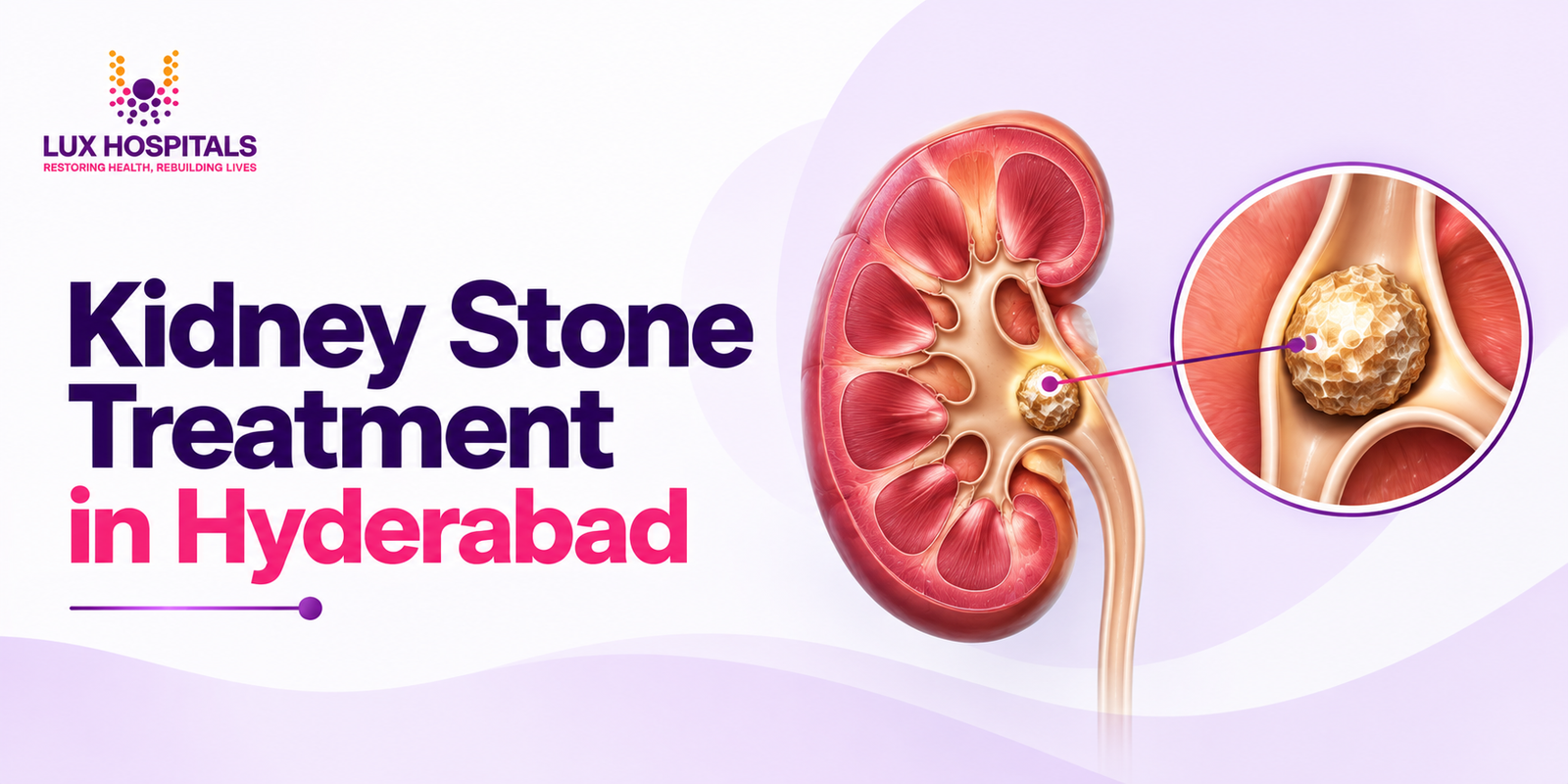
A kidney stone that remains visible on repeat scans can leave you wondering what to do next. Should you wait, change medicines, or consider a procedure? The answer depends on the stone’s size, location, symptoms, blockage, kidney function, and whether it is growing or moving. Don’t choose kidney stone treatment in Hyderabad based on the scan alone. A urologist needs to assess your complete medical history and imaging before recommending the right approach. At Lux Hospitals, the goal is to understand why the stone has remained and choose treatment based on your individual condition.
Why Does a Kidney Stone Remain on Repeat Scans?
Not every kidney stone passes naturally. Some stones remain in the kidney because of their size, position, shape, or limited movement through the urinary tract. A repeat scan may show that the stone has stayed in the same location. This does not always mean that immediate surgery is necessary. However, persistent stones need proper evaluation, especially if you have recurring pain, urinary symptoms, infections, or signs of obstruction.
Factors That Can Affect Stone Persistence
A urologist may consider:
- Stone size and number
- Location within the kidney
- Changes seen between scans
- Pain or blood in the urine
- Recurrent urinary infections
- Urine flow or blockage
- Kidney function
- Previous stone episodes
- Your overall health and treatment history
These factors help your doctor decide whether observation, medication, or a procedure is appropriate.
What Should You Ask Before Choosing a Procedure?
If your stone remains on multiple scans, you may have several treatment options. Asking the right questions can help you understand why your doctor recommended a particular procedure. When discussing kidney stone treatment in Hyderabad, ask your urologist:
1. Has the Stone Changed in Size?
Compare your most recent scan with earlier scans. A growing stone may need a different strategy than a stable one.
Ask whether the stone has:
- Increased in size
- Changed position
- Caused swelling of the kidney
- Created urinary obstruction
- Remained stable over time
Understanding the progression can help you make a more informed decision.
2. Where Exactly Is the Stone Located?
Stone location can influence treatment. A stone in a particular part of the kidney may be treated differently than one in the ureter. Your doctor may explain whether the stone is likely to pass naturally or whether intervention could provide a more predictable result.
3. Is a Procedure Really Necessary Now?
Not every persistent stone requires immediate intervention. Your urologist may recommend monitoring when the stone is small, stable, and not causing complications.However, treatment may become more important when the stone causes repeated pain, obstruction, infection, bleeding, or threatens kidney functionThis is why kidney stone treatment in Hyderabad should always be planned after reviewing symptoms and imaging together.
Which Kidney Stone Procedures May Be Considered?
The appropriate procedure depends on several factors. Your urologist may discuss minimally invasive or surgical options based on your stone characteristics.
Shock Wave Lithotripsy
Shock wave treatment uses externally generated energy to break a stone into smaller fragments. The fragments may then pass through the urinary tract. It may be considered for selected stones depending on their size, location, and other clinical factors.
Ureteroscopy and Laser Treatment
During a ureteroscopy, a tiny tool is passed through the urinary tract to the stone. A laser may then break up the stone, allowing the fragments to be extracted or passed naturally. This approach may suit certain kidney or ureteric stones.
RIRS
Retrograde intrarenal surgery, commonly called RIRS, uses a flexible scope to reach stones inside the kidney. The urologist determines the exact approach, and the stone can be fragmented using a laser. RIRS is one minimally invasive option that may be considered for selected kidney stones.
PCNL
Percutaneous nephrolithotomy, or PCNL, may be recommended for larger or complex stones. It involves creating a small access route into the kidney to remove the stone.Your urologist will determine whether PCNL is appropriate based on stone burden, location, anatomy, and your overall health.
What Tests May Be Needed Before Treatment?
Before deciding on kidney stone treatment in Hyderabad, your doctor may recommend tests to understand the stone and your urinary system better.
Depending on your condition, evaluation may include:
- Ultrasound or CT imaging
- Urine examination
- Blood tests
- Kidney function tests
- Evaluation for urinary infection
- Review of previous scans
- Stone analysis after removal, when available
These tests help your doctor identify potential risks and select a treatment plan that suits you.
Why Previous Scans Matter
Don’t discard outdated scan reports. Comparing past and current images can show whether the stone is stable, growing, moving, or linked to new problems. Bring your prescription drugs and previous reports to the consultation. They can help your urologist evaluate you more comprehensively.
When Should a Persistent Kidney Stone Be Treated?
A persistent stone may require closer attention when it causes symptoms or complications. Contact a urologist if you experience recurring or worsening pain, blood in the urine, fever, urinary difficulties, or repeated urinary infections. Seek urgent medical attention if severe pain occurs with fever or chills, particularly when a urinary blockage may be present. An infected, obstructed urinary system can require prompt medical management. The timing of kidney stone treatment in Hyderabad should therefore depend on your symptoms, scan findings, kidney health, and overall clinical assessment, not the scan report alone.
How Can You Reduce the Risk of Future Kidney Stones?
Removing a current stone does not always prevent another stone from developing. Prevention starts with understanding why stones formed in the first place.
Your doctor may recommend:
- Drinking adequate fluids as advised
- Following an appropriate diet
- Reducing excessive salt intake
- Maintaining a healthy weight
- Managing medical conditions that increase stone risk
- Completing recommended metabolic or urine evaluation
- Following up when advised
Your prevention plan should match your stone type and individual risk factors.
Why Choose Lux Hospitals for Kidney Stone Care?
At Lux Hospitals, kidney stone evaluation goes beyond the scan report. The urology team considers your symptoms, stone characteristics, medical history, kidney function, and previous treatment before discussing appropriate options. A thorough conversation can help you determine whether monitoring or intervention is more appropriate if your stone keeps showing up on subsequent scans. Lux Hospitals offers a systematic approach to examination, surgery planning, and follow-up care for patients seeking kidney stone treatment in Hyderabad.
Conclusion
A kidney stone that remains visible on repeat scans should not be ignored, but it does not always mean you need immediate surgery. The right decision depends on the stone’s size, location, symptoms, growth, blockage, and kidney health. If you are considering kidney stone treatment in Hyderabad, discuss your scan results and all suitable options with an experienced urologist. At Lux Hospitals, personalised evaluation helps you understand your condition and choose the next step with greater confidence.
Frequently Asked Questions
Yes, some kidney stones can remain in the kidney for a long time without moving or causing symptoms, but they still need proper treatment. To determine whether the stone is growing, moving, blocking the ureter, or impairing kidney function, a urologist may recommend further imaging. When symptoms, blockage, infection, stone formation, or other issues arise, treatment becomes more important.
When a stone causes severe bleeding, recurring infections, urinary blockage, chronic pain, stone development, or other issues, surgery may be recommended. The decision also depends on the stone's size, location, number, kidney function, and likelihood of passing on its own. After reviewing your scans and symptoms, your urologist can explain whether monitoring or intervention is more appropriate.
Since PCNL and RIRS are distinct treatments, neither is always the best option for every patient. The choice depends on several factors, including kidney anatomy, prior surgeries, stone size, location, complexity, and overall health. Before recommending a course of action, your urologist can weigh the expected benefits, limitations, recovery, and risks.
Lux Hospitals offers urology evaluation that considers imaging, symptoms, kidney function, medical history, and previous treatment before planning care. The urology team can discuss suitable minimally invasive and surgical options according to the individual stone characteristics. A consultation can help you understand your diagnosis and make an informed decision about the next step.
If kidney stones continue to appear on subsequent scans or cause recurrent symptoms, you can book a urologist consultation with Lux Hospitals. To help the doctor evaluate your condition, bring your most recent scan, prior imaging, prescriptions, and relevant test results. The urology team can then decide whether you need additional tests, treatment, or ongoing monitoring.