
Dr. Samhitha Reddy
Consultant Proctologist & Laparoscopic Surgeon
MBBS, MS, FMAS, FISCP, DMAS
- 8 Yrs
- ASCRS Member
By Dr. Vipin Reddy · MBBS, M.S, DrNB (Urology - KMC Mangalore) 2 September 2026 6 min read Updated 4 September 2026

Kidney stones can cause sudden pain, nausea, blood in the urine, and difficulty passing urine. When a stone is too large to pass naturally or causes repeated symptoms, your urologist may recommend a procedure to remove it. Two commonly used options are RIRS and PCNL. But how do you know which treatment is right for you? Understanding RIRS vs PCNL can help you discuss your options confidently with your urologist. Several factors shape the choice, including stone size, location, number, hardness, kidney anatomy, previous treatments, and overall health. No single procedure suits every patient.
RIRS stands for Retrograde Intrarenal Surgery. It is a minimally invasive procedure that uses a thin, flexible ureteroscope to reach the kidney through the natural urinary passage. During RIRS, the surgeon guides the scope through the urethra and bladder into the ureter and kidney. A laser then breaks the stone into smaller pieces or dust. The fragments may be removed or allowed to pass naturally, depending on their size and the clinical situation.
The EAU guidelines recommend flexible ureteroscopy with modern laser systems, such as Ho: YAG or thulium fibre lasers, when RIRS is performed.
PCNL stands for Percutaneous Nephrolithotomy. Unlike RIRS, PCNL creates a small access tract through the skin directly into the kidney. Through this tract, the surgeon introduces specialised instruments to break and remove the stone. PCNL is particularly useful for larger or complex kidney stones. When comparing RIRS vs PCNL, stone size is one of the most important factors. Current EAU guidance recommends PCNL as the primary treatment for renal stones larger than 2 cm.
Compared to RIRS, PCNL has a higher risk of bleeding and may require hospitalisation because it necessitates access to the kidney. However, modern techniques like mini-PCNL can sometimes shorten the access tract.
The main difference is how the surgeon reaches the kidney.
With RIRS, the surgeon reaches the kidney through the urinary tract using a flexible scope. With PCNL, the surgeon creates a controlled access pathway through the skin into the kidney.
| Factor | RIRS | PCNL |
| Access | Natural urinary passage | Small access tract through skin |
| Best suited for | Small to moderate selected stones | Large or complex stones |
| Incision | No external incision | Small skin incision |
| Stone clearance | May require staged treatment for larger stones | Often effective for large stone burdens |
| Bleeding risk | Generally lower | Generally higher |
| Recovery | Usually shorter | May require longer recovery |
| Hospital stay | Often shorter | May be longer depending on the case |
This comparison shows why RIRS vs PCNL should not be decided by preference alone. Your urologist needs to evaluate the complete clinical picture.
RIRS may be considered when the stone is suitable for flexible ureteroscopic treatment and when avoiding a percutaneous access route is beneficial.
It can be especially useful for selected renal stones, difficult stone locations, and patients for whom PCNL may not be appropriate.
For stones larger than 2 cm, RIRS is generally not the first-line option because staged procedures may be required to achieve complete clearance.
PCNL becomes particularly important when the stone burden is large.
For kidney stones above 2 cm, current EAU recommendations support PCNL as the first-line treatment because larger stones can be difficult to clear completely through a retrograde approach.
In complex cases, doctors may sometimes combine different endoscopic approaches. The final decision depends on imaging, anatomy, stone characteristics, and surgical expertise.
Recovery can vary from one patient to another.
RIRS generally involves less invasive access, which may allow a quicker return to routine activities. However, patients may experience temporary urinary discomfort, particularly if a ureteral stent is placed.
PCNL involves an access tract through the kidney, so recovery can take longer. Some patients may also require a temporary nephrostomy tube or urinary stent, depending on the procedure.
Therefore, when considering RIRS vs PCNL, recovery should be considered alongside stone clearance rather than treated as the only deciding factor.
Both procedures are established treatments, but each has different risks.
RIRS can cause bleeding, infection, ureteric injury, stent-related symptoms, or the need for another procedure. PCNL can also cause infection and injury to surrounding structures, but bleeding is a bigger concern because the kidney is accessed directly.
Your doctor will assess your medical history, kidney function, urine testing, medications, and imaging before recommending a procedure.
The EAU recommends pre-procedural imaging for PCNL to assess stone anatomy and help plan safe access.
There is no universal answer to RIRS vs PCNL. Your urologist may consider:
Large stones generally favour PCNL, particularly when they exceed 2 cm.
While difficult kidney sites could call for a different approach, some kidney locations may be simpler to treat with RIRS.
Multiple stones can increase the total stone burden and influence the procedure selected.
CT characteristics and previous stone analysis can help doctors understand how difficult the stone may be to fragment.
The kidney’s shape and drainage pattern can affect access and treatment success.
Bleeding risk, infections, kidney function, medications, and other health conditions can influence the safest option.
At Lux Hospitals, kidney stone treatment begins with proper evaluation rather than automatically selecting one procedure.
A urology team can assess your imaging, stone characteristics, symptoms, medical history, and treatment goals before recommending an appropriate approach.
The goal is not simply to remove the stone. It is to choose a treatment strategy that balances stone clearance, safety, recovery, and your individual needs.
If you are confused about RIRS vs PCNL, discussing your CT scan and treatment options with an experienced urologist can help you make an informed decision.
Do not ignore recurring kidney stone symptoms.
Seek medical evaluation if you experience:
Fever with urinary obstruction can require urgent medical attention because infection and obstruction together can become serious.
Choosing between RIRS vs PCNL is not simply about selecting the newer or less invasive procedure. The best option depends on the stone itself and your individual health. RIRS can be an effective minimally invasive option for selected kidney stones, while PCNL remains an important treatment for large and complex stones. Current guidelines particularly support PCNL as the first-line treatment for renal stones larger than 2 cm. If kidney stones are affecting your daily life, do not rely on guesswork. Get the right evaluation and discuss RIRS vs PCNL with a qualified urologist at Lux Hospitals.
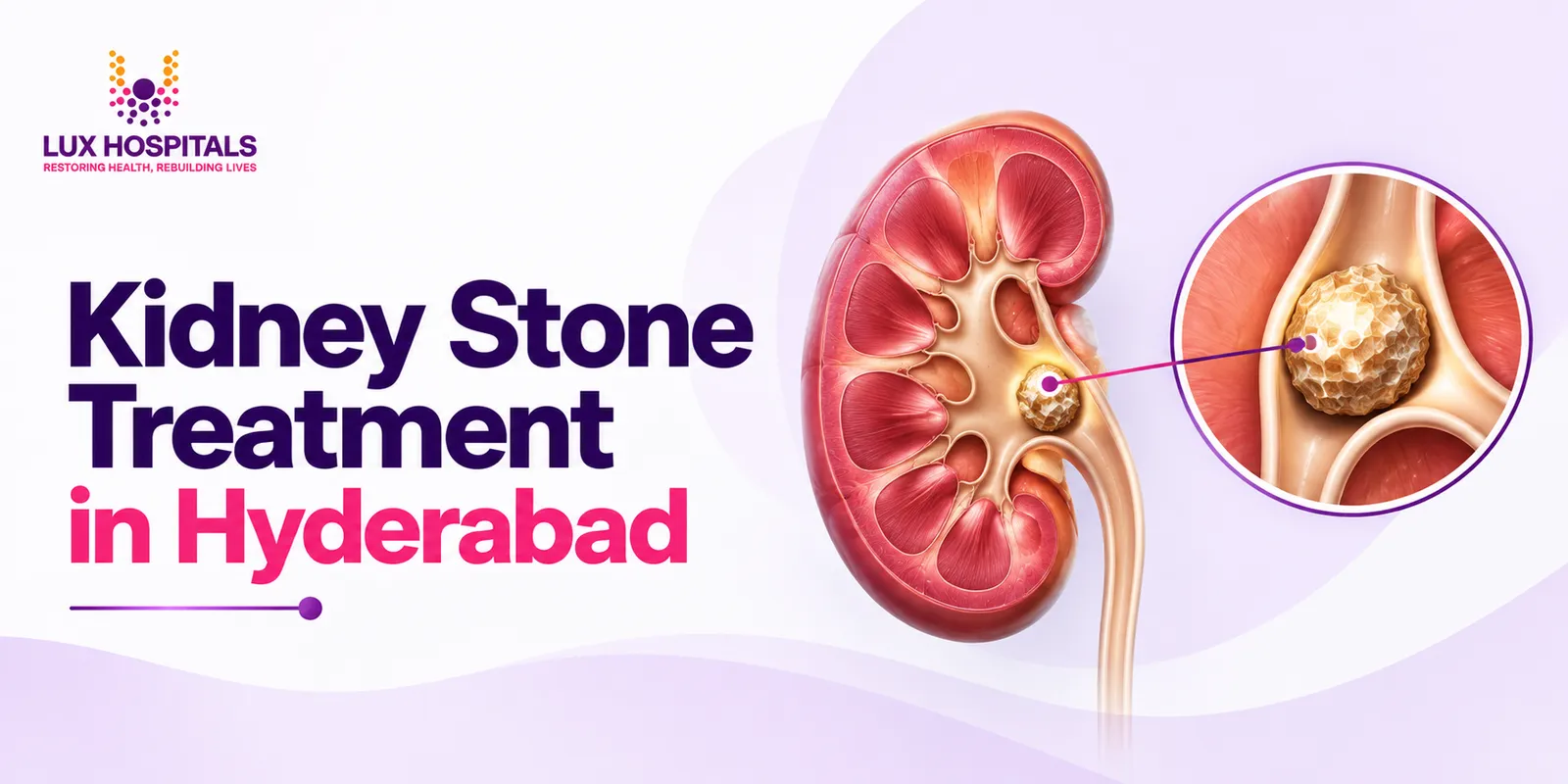
A kidney stone that remains visible on repeat scans can leave you wondering what to do next. Should you wait, change medicines, or consider a procedure? The answer depends on the stone’s size, location, symptoms, blockage, kidney function, and whether it is growing or moving.
8 October 2026

Kidney stones can cause sudden, intense pain, difficulty passing urine, nausea and blood in the urine. If a stone doesn’t pass naturally or causes obstruction, infection, or ongoing symptoms, you may need treatment. But with several options available, many patients ask: What is the Best treatment for kidney stones?
17 September 2026
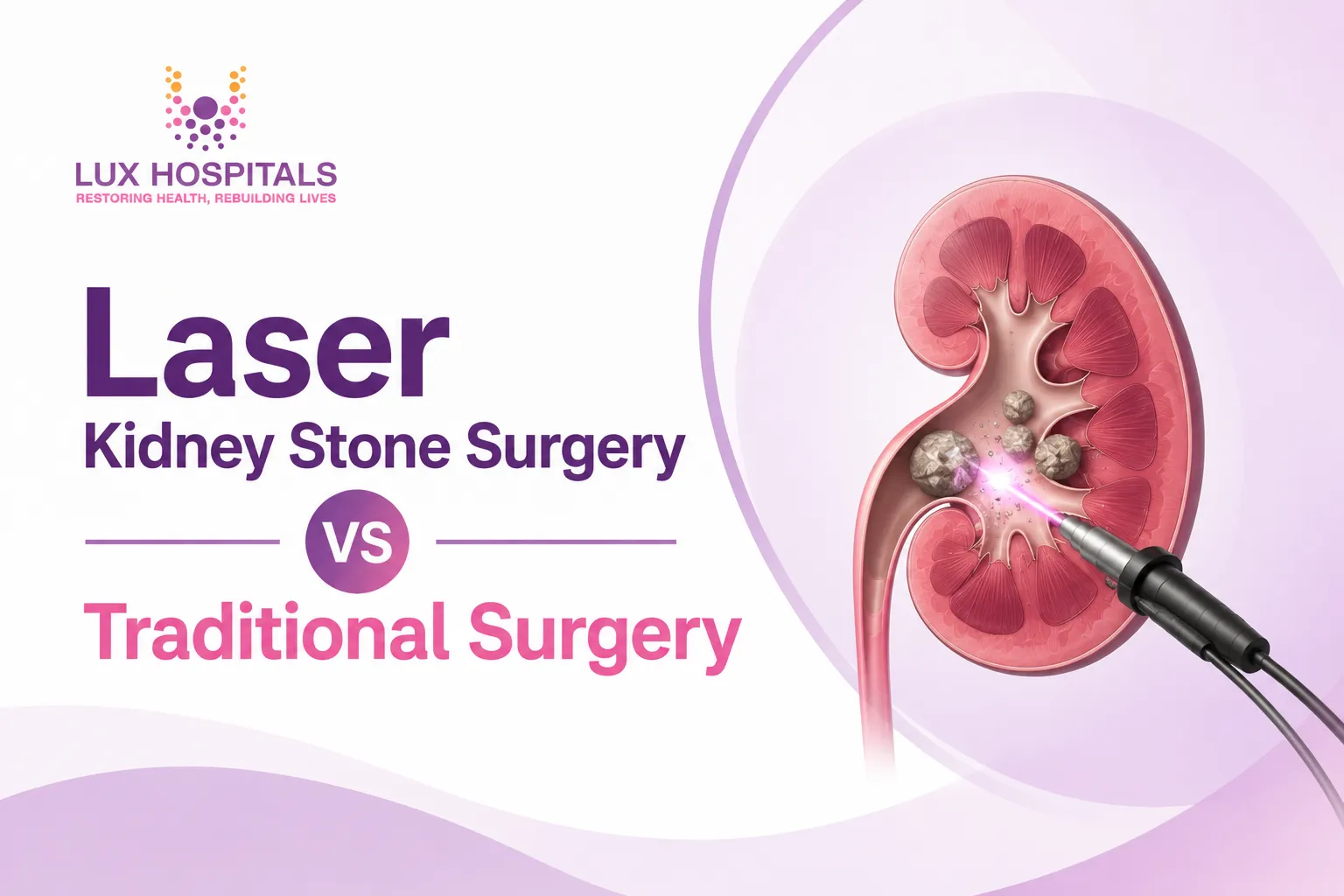
Kidney stones can cause sudden, severe pain, nausea, vomiting, blood in the urine, and difficulty passing urine. If a stone is too large to pass naturally or causes repeated symptoms, you may need treatment. But with several treatment options available today, many patients ask Laser Kidney Stone Surgery vs Traditional Surgery: Which Is Better?
31 August 2026
Send your reports across and a senior surgeon will review them, explain the options and tell you honestly whether surgery is the right call.
Plot No.116, Lumbini Avenue, HITEC CITY, Near IKEA, Hyderabad – 500032