











Rotator Cuff Tear vs Frozen Shoulder: Understanding the Difference
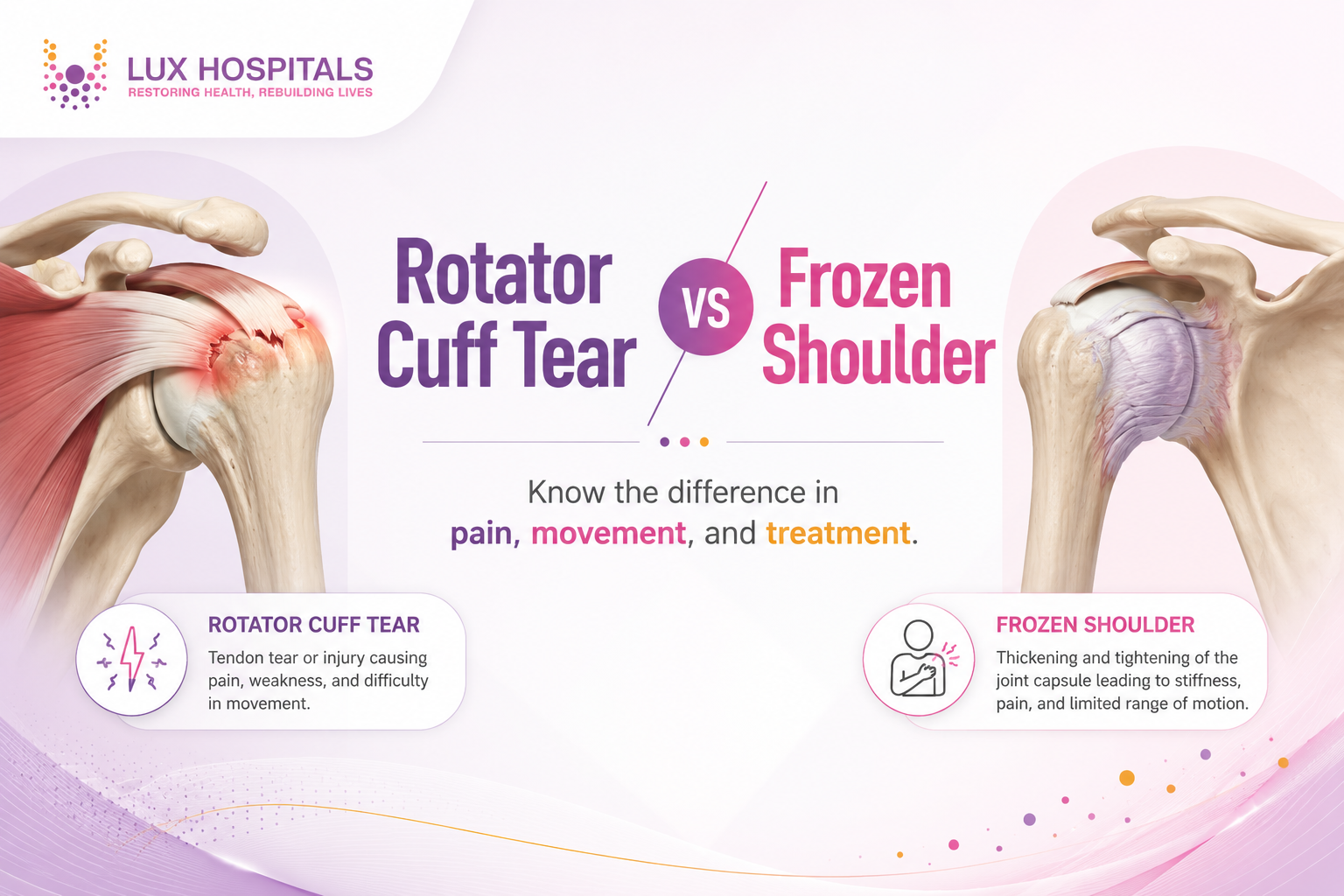
Rotator Cuff Tear vs Frozen Shoulder is a common comparison among people experiencing shoulder pain, stiffness, or difficulty moving their arm. Although both conditions can cause discomfort and limit daily activities such as driving, lifting objects, reaching overhead, or combing your hair, they affect the shoulder differently and require different treatment approaches. Understanding the difference between a rotator cuff tear and a frozen shoulder is essential for receiving an accurate diagnosis and timely treatment. Ignoring persistent shoulder pain may lead to worsening symptoms, prolonged recovery, and reduced shoulder function. At Lux Hospitals, our experienced orthopaedic specialists use advanced diagnostic techniques and personalised treatment plans to restore shoulder strength, mobility, and comfort, helping patients return to their daily routines with confidence.

What is a Rotator Cuff Tear?
A rotator cuff is a group of four muscles and tendons that stabilise the shoulder joint and help lift and rotate the arm. A rotator cuff tear occurs when one or more of these tendons become partially or completely torn. The injury may occur suddenly due to trauma or gradually over time due to wear and tear.
Common Causes
- Ageing and tendon degeneration
- Sports injuries
- Heavy lifting
- Repetitive overhead activities
- Falls or accidents
Symptoms
- Sudden or gradual shoulder pain
- Pain while lifting the arm
- Weakness in the shoulder
- Difficulty sleeping on the affected side
- Clicking or popping sensation
Understanding Rotator Cuff Tear vs Frozen Shoulder starts by recognising that a rotator cuff tear primarily causes weakness and pain.
What is Frozen Shoulder?
When the shoulder capsule thickens, becomes inflamed, and stiffens, it can lead to frozen shoulder, also known as adhesive capsulitis. This ailment mostly restricts shoulder movement due to joint stiffness, unlike tendon damage. The condition usually develops slowly and progresses through different stages.
Common Causes
- Diabetes
- Shoulder injury
- Surgery
- Long periods of arm immobilization
- Thyroid disorders
Symptoms
- Severe stiffness
- Progressive loss of shoulder movement
- Pain that worsens at night
- Difficulty dressing
- Trouble reaching overhead or behind the back
When comparing Rotator Cuff Tear vs Frozen Shoulder, frozen shoulder mainly causes stiffness rather than muscle weakness.
Rotator Cuff Tear vs Frozen Shoulder: Key Differences
Although both conditions affect the shoulder, there are important differences.
| Main Problem | Torn tendon | Tight joint capsule |
| Pain | Sharp pain with movement | Constant aching pain |
| Weakness | Significant weakness | Minimal weakness |
| Stiffness | Mild | Severe |
| Range of Motion | Limited due to pain | Limited in every direction |
| Onset | Injury or gradual wear | Gradual progression |
| Treatment | Physiotherapy or surgery | Physiotherapy, medication, stretching |
Patients can avoid needless risks and treatment delays by understanding the difference between frozen shoulder and rotator cuff tears.
Causes of Rotator Cuff Tear vs Frozen Shoulder
Several factors increase the risk of both conditions.
Rotator Cuff Tear Risk Factors
- Age above 40 years
- Repetitive shoulder movement
- Construction work
- Sports activities
- Smoking
Frozen Shoulder Risk Factors
- Diabetes
- Age between 40 and 60 years
- Women are more commonly affected.
- Stroke recovery
- Shoulder surgery
Recognising these risk factors can help in early diagnosis of Rotator Cuff Tear vs Frozen Shoulder.
Symptoms Comparison
Patients often ask how to distinguish between a Rotator Cuff Tear and a Frozen Shoulder.
Rotator Cuff Tear
- Difficulty lifting objects
- Shoulder weakness
- Pain during overhead activities
- Night pain
- Clicking sensation
Frozen Shoulder
- Gradual stiffness
- Difficulty reaching behind the back
- Severe restriction in movement
- Persistent dull ache
- Reduced flexibility
A specialist can distinguish between a Rotator Cuff Tear and a Frozen Shoulder through a detailed clinical examination.
How Doctors Diagnose Rotator Cuff Tear vs Frozen Shoulder
Proper diagnosis is essential because treatment differs significantly.
Medical History
Your doctor will ask about:
- Previous injuries
- Pain pattern
- Daily activity limitations
- Medical conditions
- Occupation
Physical Examination
The orthopaedic specialist evaluates:
- Shoulder strength
- Range of motion
- Muscle weakness
- Joint stiffness
- Pain location
Imaging Tests
Doctors may recommend:
- X-ray
- MRI Scan
- Ultrasound
- CT Scan (if required)
At Lux Hospitals, advanced imaging helps accurately distinguish between Rotator Cuff Tear and Frozen Shoulder, ensuring patients receive the right treatment without delay.
Treatment Options for Rotator Cuff Tear vs Frozen Shoulder
Treatment depends on the severity of the condition.
Treatment for Rotator Cuff Tear
Non-Surgical Treatment
- Rest
- Ice therapy
- Pain-relieving medications
- Physiotherapy
- Shoulder strengthening exercises
Surgical Treatment
Large or complete tears may require arthroscopic rotator cuff repair.
Treatment for Frozen Shoulder
Conservative Treatment
- Stretching exercises
- Physiotherapy
- Anti-inflammatory medicines
- Steroid injections
- Heat therapy
Advanced Treatment
- Shoulder manipulation under anesthesia
- Arthroscopic capsule release (in severe cases)
Understanding Rotator Cuff Tear vs Frozen Shoulder allows orthopaedic specialists to recommend the most effective treatment based on your condition.
When Should You Visit an Orthopaedic Specialist?
Consult an orthopaedic specialist if you experience:
- Shoulder pain lasting more than two weeks
- Difficulty lifting your arm
- Persistent shoulder stiffness
- Night pain affecting sleep.
- Sudden weakness after injury
- Reduced shoulder movement
Early diagnosis of a Rotator Cuff Tear vs. Frozen Shoulder prevents permanent joint damage and speeds recovery.
Can Rotator Cuff Tear and Frozen Shoulder Occur Together?
Yes, some patients have limited shoulder movement due to discomfort, particularly following a rotator cuff injury. Prolonged immobilisation can lead to frozen shoulder. This combination emphasises the value of early medical examination and makes therapy more difficult. Orthopaedic doctors can develop a treatment plan to restore strength and flexibility by correctly diagnosing a Rotator Cuff Tear vs. a Frozen Shoulder.
Why Choose Lux Hospitals for Shoulder Treatment?
Recovery depends on selecting the best orthopaedic hospital. Lux Hospitals provides patients with shoulder issues with all-encompassing care using cutting-edge treatment methods and skilled professionals.
Why Patients Trust Lux Hospitals
- Experienced orthopedic surgeons
- Advanced diagnostic imaging
- Personalised treatment plans
- Arthroscopic shoulder surgery
- Comprehensive physiotherapy support
- Faster recovery protocols
- Patient-focused rehabilitation
Whether you are dealing with a Rotator Cuff Tear vs Frozen Shoulder, our team focuses on relieving pain, restoring movement, and helping you return to your normal routine with confidence.
Conclusion
Although Rotator Cuff Tear vs Frozen Shoulder may seem similar because both cause shoulder pain, they are very different conditions. A rotator cuff tear primarily affects the tendons, causing weakness, while a frozen shoulder primarily causes stiffness and restricted movement. Getting an accurate diagnosis is the first step toward effective treatment and long-term recovery. If shoulder pain is affecting your daily activities, do not ignore it. Visit Lux Hospitals for expert orthopaedic evaluation, advanced imaging, personalised treatment, and compassionate care that helps you move comfortably again.
Frequently Asked Questions
The tendons that aid in shoulder movement are harmed by a rotator cuff tear, which causes pain and obvious weakening. When the joint capsule stiffens and becomes inflamed, it can lead to frozen shoulder, a condition that severely restricts movement.
Under professional supervision, little or partial rotator cuff injuries may heal with rest, medication, physical therapy, and strengthening exercises. To restore normal shoulder function, arthroscopic surgery is frequently necessary for large or complete tears.
Depending on the severity of the problem, a full recovery from frozen shoulder may take one to three years. The condition often improves gradually over several months. Recovery can be greatly enhanced by early physiotherapy, stretching exercises, medication, and prompt treatment.
Lux Hospitals provides comprehensive orthopaedic care with experienced specialists, advanced MRI and diagnostic facilities, minimally invasive arthroscopic surgery, and personalised rehabilitation programs.
Yes, following both surgical and non-surgical treatment, Lux Hospitals provides specialised physiotherapy and rehabilitation programs aimed at enhancing shoulder strength, flexibility, and general function.