
Dr. Samhitha Reddy
Consultant Proctologist & Laparoscopic Surgeon
MBBS, MS, FMAS, FISCP, DMAS
- 8 Yrs
- ASCRS Member
By Dr Sai kishan Sirasala · MBBS, MS. Orthopedics, FIJR, FIASM ( UK ) 25 June 2026 5 min read
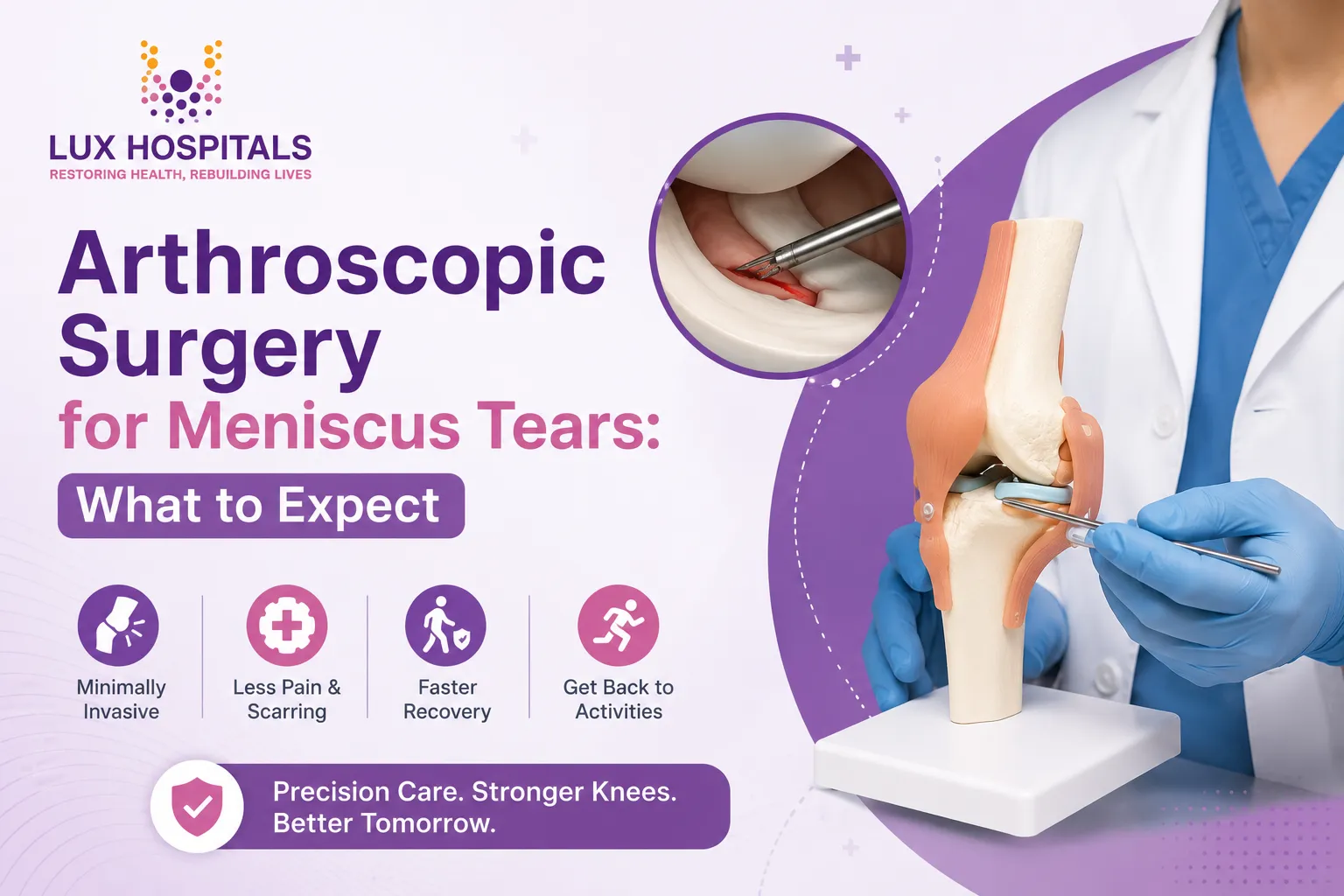
Walking, climbing stairs, and other physical activities may become difficult and uncomfortable due to a meniscus tear. The meniscus helps the knee absorb pressure and retain stability by acting as a cushion between the thigh and shin bones. Pain, oedema, stiffness, and limited movement can result from damage to this cartilage caused by sports injuries, accidents, ageing, or abrupt twisting motions. With fewer incisions, less discomfort, and a quicker recovery than with open surgery, this minimally invasive method helps many patients regain knee function.
At Lux Hospitals, experienced orthopaedic specialists use advanced diagnostic methods and modern surgical techniques to provide personalised treatment plans based on each patient’s knee condition, age, activity level, and overall health.
Inside the knee joint lies a C-shaped cartilage structure called the meniscus. Two menisci in each knee support fluid motion and absorb trauma. A tear may result from:
A damaged meniscus may not always heal naturally because certain areas of the cartilage have limited blood supply. In such situations, Arthroscopic Surgery for Meniscus Tears can help restore movement and reduce ongoing discomfort.
Patients may experience:
Ignoring these symptoms can sometimes worsen the injury and affect daily mobility.
Not every meniscus tear requires surgery. Doctors usually consider Arthroscopic Surgery for Meniscus Tears when conservative treatments fail or when the injury significantly affects daily life.
Surgery may be recommended for patients with:
If knee pain doesn’t go away after rest, medicine, and physical therapy, surgery might help repair damaged cartilage, which can be uncomfortable.
Normal knee movement may occasionally be impeded by a torn meniscus. Surgeons can effectively diagnose and treat the issue via arthroscopy.
Certain tear patterns, including bucket-handle tears or unstable cartilage fragments, may require surgical correction.
Athletes and physically active individuals may choose surgery to restore knee function and safely return to activities.
At Lux Hospitals, orthopaedic specialists carefully evaluate MRI scans, symptoms, and physical examination results before recommending surgery.
Before surgery, a lot of patients have anxiety since they don’t know what to expect. Reducing worries can be achieved by comprehending the procedure.
Before the procedure, the doctor reviews:
Patients receive instructions on fasting, medication adjustments, and preparation for post-surgery care.
During Arthroscopic Surgery for Meniscus Tears, the surgeon makes small openings around the knee joint. A thin instrument called an arthroscope, equipped with a camera, is inserted to provide a clear view of the damaged meniscus.
Depending on the injury, the surgeon may:
The goal is always to preserve as much natural meniscus tissue as possible.
After completing the procedure, the instruments are removed, and the small incisions are closed. Most patients can return home the same day, depending on their condition.
Modern orthopaedic care focuses on procedures that reduce recovery time while achieving effective results. Arthroscopic Surgery for Meniscus Tears offers several advantages compared to traditional surgery.
Small incisions are made during the treatment, which typically causes less tissue damage and scarring.
Under medical supervision, patients can progressively resume their regular activities and often experience faster recovery.
The arthroscope allows surgeons to view the inside of the knee clearly and treat the exact problem area.
Because the procedure is minimally invasive, many patients experience less pain and swelling after surgery.
Successful treatment can improve stability, flexibility, and overall quality of life.
Take the next step toward pain-free movement and improved knee health.
The type of meniscus injury, the surgical method, and each patient’s healing response all affect recovery.
Patients may experience mild swelling and discomfort, which can usually be managed with prescribed medications and proper care.
Physical therapy plays an important role in recovery. A rehabilitation program may include:
Depending on whether the meniscus was partially removed or restored, full recovery may take longer. However, many patients gradually return to their regular activities within weeks.
Following the surgeon’s instructions is essential for preventing complications and achieving the best possible outcome.
Although Arthroscopic Surgery for Meniscus Tears is considered safe, like any surgical procedure, it may involve certain risks.
Possible complications include:
Patients can reduce risks by:
Patients at Lux Hospitals receive complete orthopaedic care backed by advanced technology, skilled professionals, and patient: centered treatment philosophies.
The hospital focuses on:
The orthopaedic team at Lux Hospitals works closely with patients to understand their concerns and provide treatment options designed for long-term knee health.
Although sophisticated treatments can help patients regain knee function, a meniscus tear can considerably impair mobility, comfort, and daily activities. For many individuals with chronic knee issues, arthroscopic surgery for meniscus tears offers a successful, less invasive option.
With expert orthopaedic care, advanced technology, and personalised rehabilitation support, Lux Hospitals helps patients achieve better recovery outcomes and return to an active lifestyle. If knee pain is limiting your movement, consulting an orthopaedic specialist can help you understand the right treatment options for your condition.

Dr Sai Kishan Sirasala is a Consultant Orthopaedic Surgeon at Lux Hospitals, Hyderabad. His clinical interests include joint replacement, arthroscopy, sports-related injuries and musculoskeletal conditions. He holds an MS in Orthopaedics and fellowships in arthroscopy, sports medicine, and joint replacement surgery. Lux Hospitals lists his experience as 8 years.
9 November 2026

Knee pain treatment in Hyderabad depends on why your pain continues despite medicines and physiotherapy.
8 October 2026
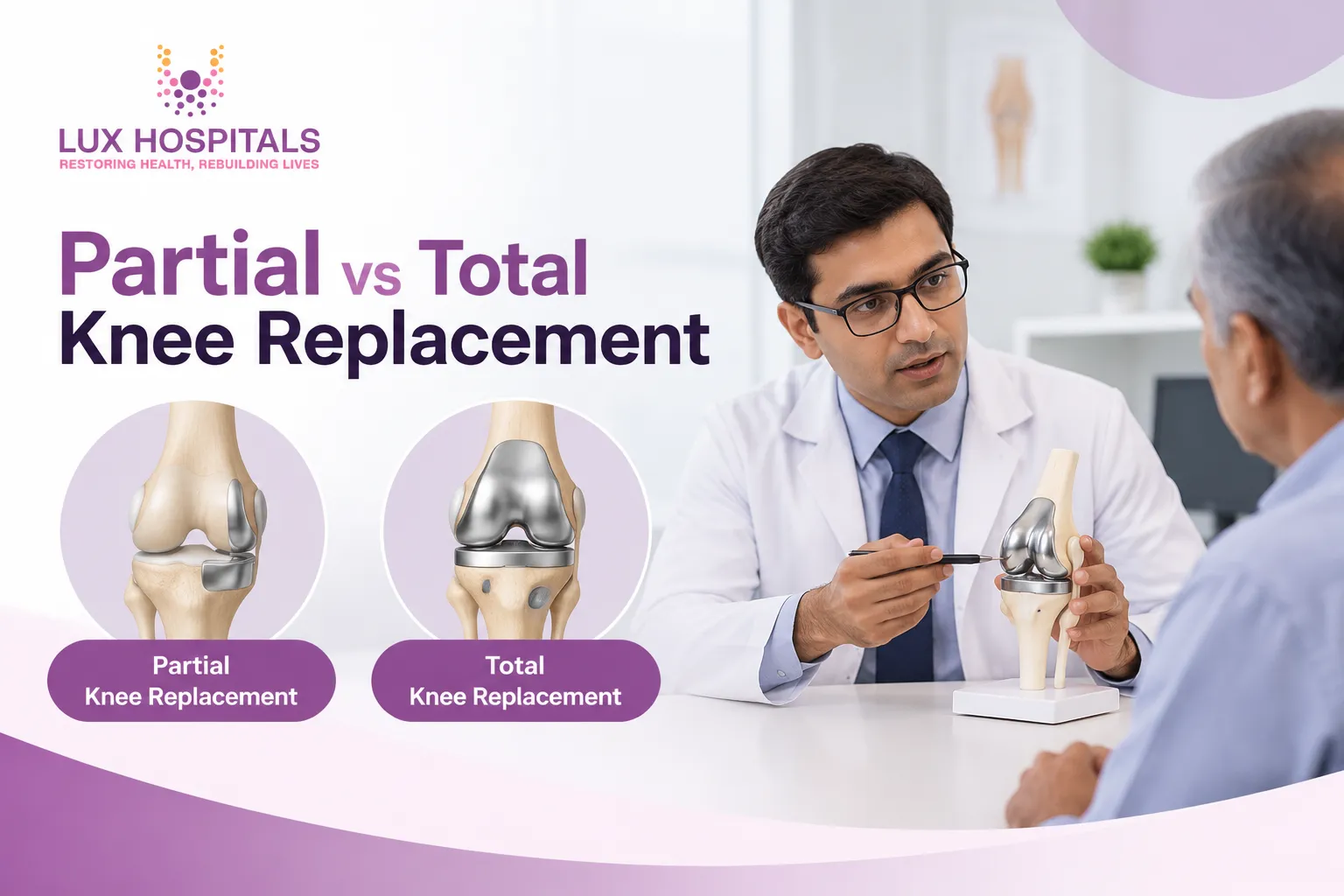
Knee pain can slowly change the way you live. Walking, climbing stairs, standing for long periods, or even getting up from a chair may become difficult. When medicines, physiotherapy, lifestyle changes, and other non-surgical treatments no longer provide enough relief, you may consider knee replacement surgery.
8 September 2026
Send your reports across and a senior surgeon will review them, explain the options and tell you honestly whether surgery is the right call.
Plot No.116, Lumbini Avenue, HITEC CITY, Near IKEA, Hyderabad – 500032