Dr. Samhitha Reddy
Consultant Proctologist & Laparoscopic Surgeon
MBBS, MS, FMAS, FISCP, DMAS
- 8 Yrs
- ASCRS Member
By Dr Sai kishan Sirasala · MBBS, MS. Orthopedics, FIJR, FIASM ( UK ) 1 July 2026 8 min read
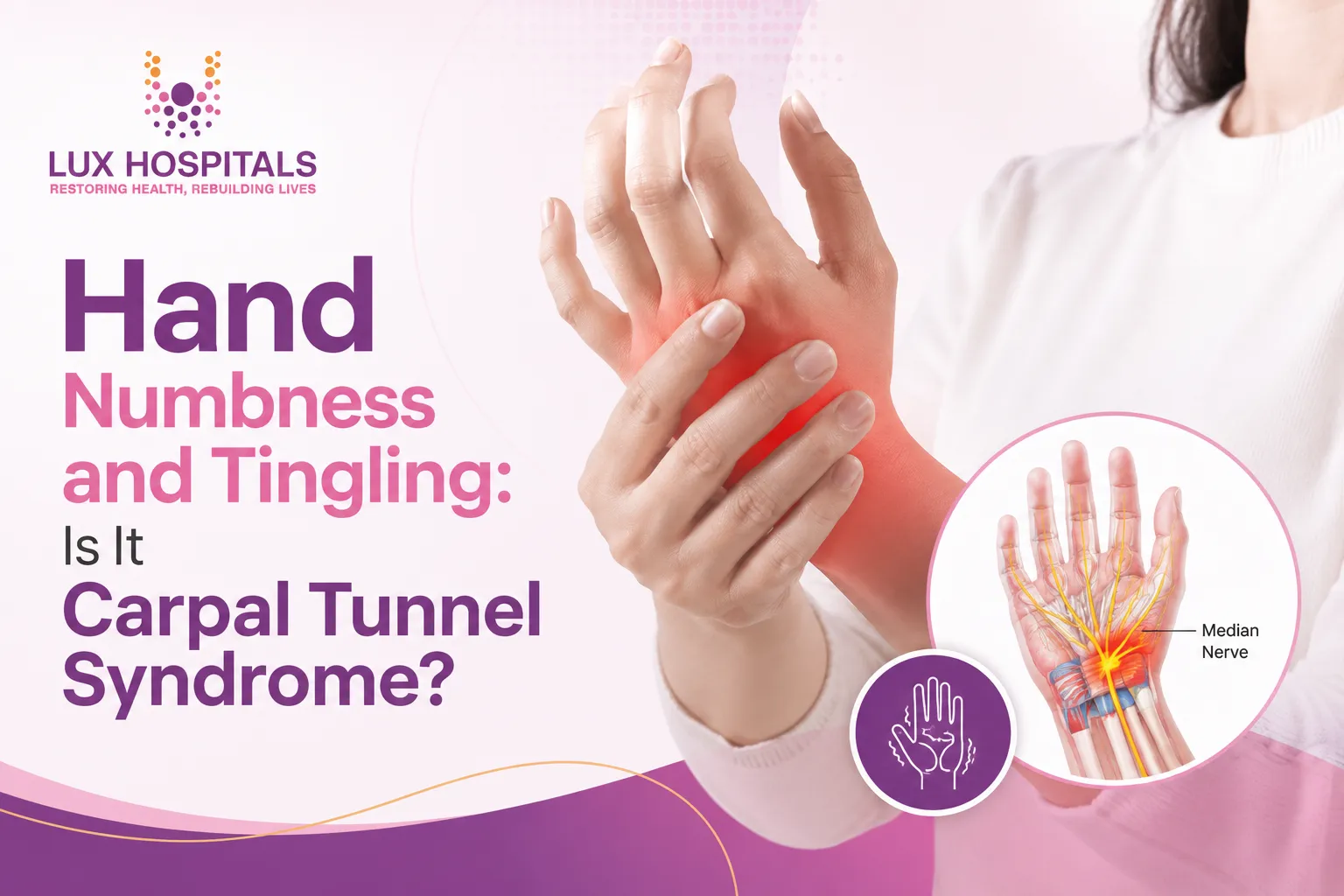
Your everyday activities, work productivity, and sleep quality can all be affected by numbness, tingling, or a “pins and needles” feeling in your hands. Persistent discomfort may be a sign of an underlying nerve issue, but many individuals overlook these symptoms because they believe they are transient. Carpal Tunnel Syndrome, a disorder that arises when […]
Your everyday activities, work productivity, and sleep quality can all be affected by numbness, tingling, or a “pins and needles” feeling in your hands. Persistent discomfort may be a sign of an underlying nerve issue, but many individuals overlook these symptoms because they believe they are transient. Carpal Tunnel Syndrome, a disorder that arises when the median nerve in the wrist is compressed, is one of the most frequent causes of hand-related nerve problems. Normal hand function can be restored, and symptoms can be prevented from getting worse with early diagnosis and appropriate therapy. At Lux Hospitals, specialists focus on identifying the exact cause of hand numbness and providing personalised treatment solutions to improve mobility, comfort, and quality of life.
A nerve-related disorder called carpal tunnel syndrome is caused by pressure on the median nerve as it passes through the carpal tunnel, a small opening in the wrist. This nerve regulates feeling in the thumb, middle finger, index finger, and a portion of the ring finger. When swelling or narrowing occurs inside the carpal tunnel, the nerve becomes compressed, leading to symptoms such as tingling, weakness, numbness, and pain.
Common reasons for nerve compression include:
Although anyone can develop this condition, people who perform repetitive hand activities are more likely to experience symptoms.
Many patients notice difficulty performing simple activities, including:
Ignoring symptoms for a long time may lead to permanent nerve damage and reduced hand strength.
Recognising symptoms early helps patients seek timely medical care. The symptoms of Carpal Tunnel Syndrome often develop gradually and may become more noticeable over time.
Numbness or tingling in the thumb, index finger, middle finger, and ring finger is the most typical warning symptom. Patients frequently describe the feeling as pins and needles, burning, or electric shocks.
These symptoms may appear:
Some people experience pain that starts from the wrist and extends toward the fingers or forearm. The discomfort may worsen during activities that involve bending the wrist.
The muscles the median nerve innervates may weaken as nerve compression increases. Patients may struggle with jobs requiring hand strength or unintentionally drop objects.
Many people with Carpal Tunnel Syndrome experience numbness, tingling, or discomfort in their wrists, which can be momentarily relieved by shaking the hand.
Precise motions may become more challenging in advanced cases due to impaired fine motor abilities.
Patients can reduce risk factors and take preventive action by understanding the causes.
Activities involving repeated wrist motion can irritate tissues around the median nerve. Common examples include:
Fractures, sprains, or swelling around the wrist can reduce the available space inside the carpal tunnel and increase nerve pressure.
Certain medical conditions can increase the likelihood of developing Carpal Tunnel Syndrome, including:
Changes in hormones can lead to fluid accumulation, which raises wrist pressure. Many pregnant women have transient symptoms that go away after giving birth.
Hand numbness does not always mean Carpal Tunnel Syndrome. Several other conditions can produce similar symptoms.
Possible causes include:
Problems affecting cervical nerves may cause numbness that travels from the neck to the arm and hand.
Low levels of certain vitamins, especially vitamin B12, can affect nerve function and cause tingling sensations.
Conditions like diabetes can damage peripheral nerves and create numbness in different areas of the body.
Reduced blood flow can sometimes cause temporary tingling or numbness.
A proper medical evaluation helps determine whether the symptoms are related to Carpal Tunnel Syndrome or another health concern.
At Lux Hospitals, doctors use a combination of medical history, physical examination, and diagnostic tests to accurately identify nerve problems.
Doctors check:
This test measures how efficiently electrical signals travel through nerves and helps confirm nerve compression.
EMG assesses muscle activity and helps determine the extent of nerve damage.
In some cases, ultrasound or other imaging methods may help examine structures around the wrist.
Treatment for Carpal Tunnel Syndrome depends on the severity of symptoms, duration of discomfort, and the level of nerve compression. At Lux Hospitals, specialists evaluate each patient individually and recommend treatments designed to reduce pain, restore hand movement, and protect nerve function.
By making minor adjustments to regular routines, one can reduce strain on the median nerve and prevent symptoms from worsening.
Helpful measures include:
These adjustments can be especially beneficial for patients with mild symptoms.
By keeping the wrist in a neutral position, a wrist splint lowers pressure within the carpal tunnel. Because symptoms often worsen at night, doctors often advise wearing a splint.
Benefits of wrist support include:
To control discomfort and inflammation, doctors may prescribe drugs. By reducing swelling around the nerve, corticosteroid injections may occasionally provide temporary relief.
Exercises that strengthen hand muscles, decrease nerve pressure, and increase wrist flexibility might be recommended by a qualified therapist. In addition, suggest exercises that improve wrist flexibility, strengthen hand muscles, and reduce nerve pressure.
Physical therapy may include:
These approaches can support recovery and improve long-term hand function.
Doctors may suggest surgery if nerve damage becomes severe or if symptoms persist despite conservative measures. Carpal tunnel release surgery, which involves loosening the ligament that compresses the median nerve, is the most common operation.
Benefits of surgical treatment may include:
Lux Hospitals provides advanced evaluation and surgical care to help patients return to comfortable daily activities.
Although some risk factors cannot be controlled, certain habits can help reduce the chances of developing Carpal Tunnel Syndrome.
People who work long hours on computers should maintain correct wrist and hand positioning.
Follow these tips:
Continuous repetitive movements increase strain on wrist tissues. Short breaks allow muscles and nerves to relax.
Simple stretching exercises can improve flexibility and reduce stiffness.
Examples include:
Controlling conditions like diabetes and thyroid disorders can reduce nerve-related complications.
Many people put off seeking medical help because they think their symptoms will go away on their own. However, worsening or chronic symptoms need to be evaluated by a specialist.
You should consult a specialist if you experience:
Early consultation helps prevent complications and improve treatment outcomes.
Lux Hospitals prioritises patient-centred care, utilising advanced diagnostic tools and knowledgeable medical support.
Patients benefit from:
Qualified medical specialists carefully evaluate symptoms to determine whether Carpal Tunnel Syndrome or another nerve problem is the cause.
Doctors can better comprehend nerve activity and make precise therapy recommendations thanks to modern diagnostic procedures.
Every patient receives care based on their symptoms, lifestyle, and medical needs.
From diagnosis to recovery, Lux Hospitals guides the treatment journey.
Hand numbness and tingling should not be ignored, especially when symptoms interfere with daily activities or sleep. While Carpal Tunnel Syndrome is a common reason for these symptoms, other nerve and health conditions can also cause similar problems. Your hand strength and mobility can be preserved by identifying early symptoms, obtaining an accurate diagnosis, and initiating prompt therapy. Lux Hospitals helps patients enhance their nerve health and quality of life by offering thorough evaluations and advanced treatment options.

Knee pain treatment in Hyderabad depends on why your pain continues despite medicines and physiotherapy. Persistent pain may indicate arthritis, cartilage or meniscus damage, a ligament injury, inflammation, or another condition that requires reassessment.Knee pain treatment in Hyderabad An orthopaedic specialist can review your symptoms, examine the knee, order appropriate imaging, and recommend non-surgical or […]
8 October 2026

Knee pain can slowly change the way you live. Walking, climbing stairs, standing for long periods, or even getting up from a chair may become difficult. When medicines, physiotherapy, lifestyle changes, and other non-surgical treatments no longer provide enough relief, you may consider knee replacement surgery. But an important question remains Partial vs Total Knee […]
8 September 2026

Knee pain can gradually change how you walk, work, exercise, and enjoy everyday life. When medicines, physiotherapy, injections, and lifestyle changes no longer provide enough relief, knee replacement surgery may become an option. With advances in orthopaedic technology, patients now have more choices than before. One common question is: Robotic Knee Replacement vs Traditional Knee […]
31 August 2026
Send your reports across and a senior surgeon will review them, explain the options and tell you honestly whether surgery is the right call.
Plot No.116, Lumbini Avenue, HITEC CITY, Near IKEA, Hyderabad – 500032