














Metabolic Surgery vs Bariatric Surgery: What’s the Difference?
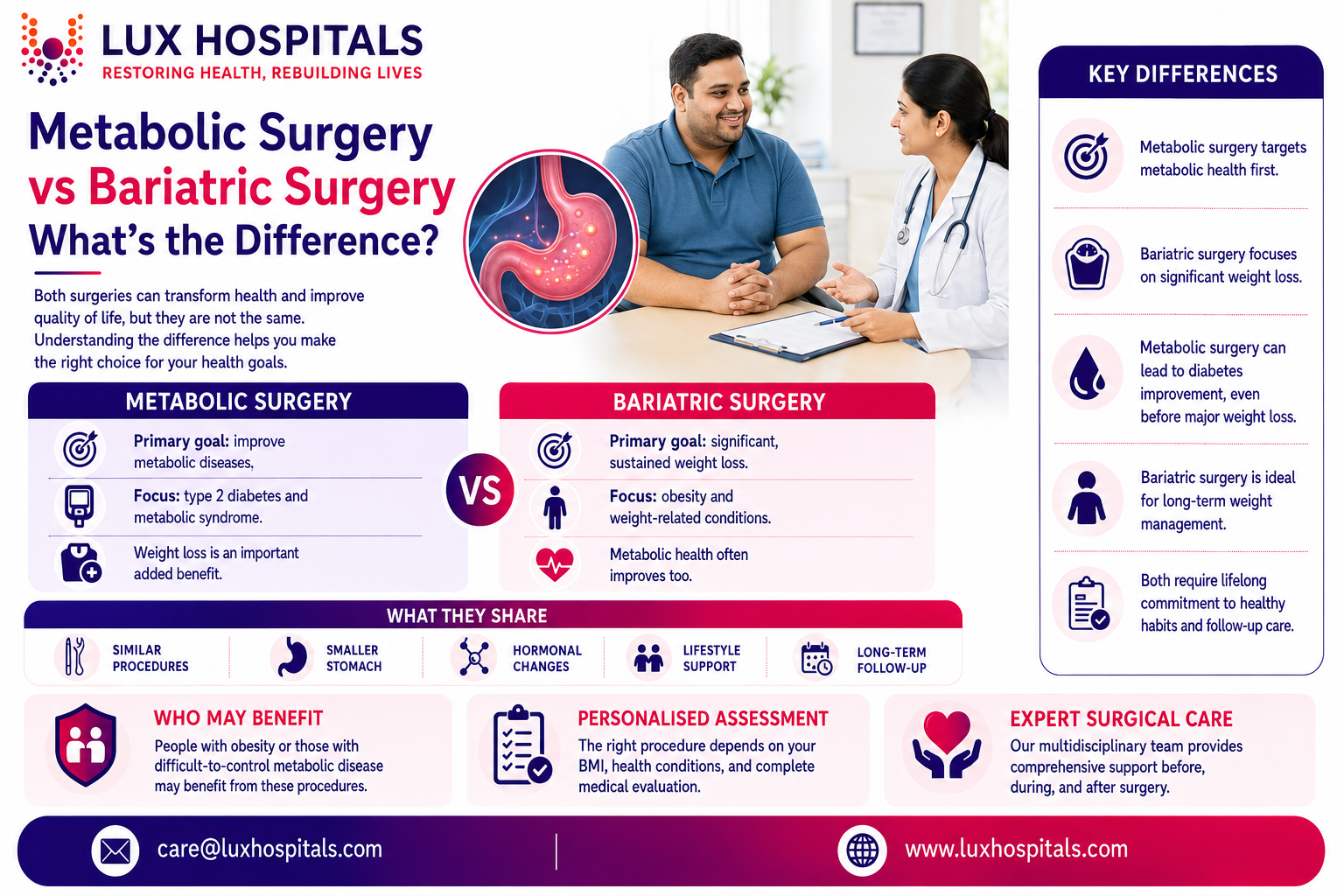
If you are exploring surgery for obesity, you may have come across two terms metabolic surgery vs. bariatric surgery. At first, they may sound like two completely different treatments. In reality, the terms often overlap, and many of the same procedures can be described as both metabolic and bariatric surgery. The key difference lies mainly in the treatment goal and the health benefits being emphasised. Bariatric surgery traditionally highlights weight loss, while metabolic surgery highlights improvements in conditions linked to obesity, such as type 2 diabetes, high blood pressure and sleep apnea. Modern surgical practice recognises that these benefits are closely connected. At Lux Hospitals, understanding these differences can help you have a more informed discussion with a bariatric specialist and choose an approach based on your overall health, weight, medical conditions and long-term goals.

What Is Metabolic Surgery?
Metabolic surgery refers to surgical procedures that can improve the body’s metabolism while also helping reduce weight. These procedures alter the digestive system and can influence appetite, fullness, food intake and metabolic hormones. One of the major reasons doctors use the term “metabolic” is because these operations can improve obesity-related conditions, particularly type 2 diabetes.
How Does Metabolic Surgery Work?
Depending on the procedure, surgery may:
- Reduce the amount of food the stomach can hold
- Increase feelings of fullness.
- Reduce hunger
- Alter digestive hormone signals.
- Change how nutrients interact with the digestive system.
- Improve blood sugar regulation.
- Support long-term weight management.
For instance, a sleeve gastrectomy can affect appetite-related hormones and reduce stomach size. Gastric bypass provides key metabolic benefits by combining stomach restriction with changes to the digestive tract.
What Is Bariatric Surgery?
Surgical therapy for obesity and excess weight is often referred to as bariatric surgery. It mainly improves health issues associated with obesity while helping qualified individuals achieve significant, long-lasting weight loss.
Common metabolic and bariatric procedures include:
- Sleeve gastrectomy
- Roux-en-Y gastric bypass
- One-anastomosis gastric bypass
- Biliopancreatic diversion with duodenal switch
- SADI-S
- Adjustable gastric banding in selected situations
The exact procedure depends on the patient’s health profile and surgical assessment.
Is Bariatric Surgery Only About Weight Loss?
No. This is one of the most important points when discussing metabolic surgery vs. bariatric surgery. Bariatric procedures can produce benefits beyond weight reduction. They may help improve type 2 diabetes, hypertension, obstructive sleep apnea, high cholesterol and other obesity-related conditions. This is why modern medical literature frequently uses the combined term metabolic and bariatric surgery.
Metabolic Surgery vs Bariatric Surgery: What Is the Main Difference?
The simplest way to understand metabolic surgery vs. bariatric surgery is to look at the emphasis.
| Feature | Metabolic Surgery | Bariatric Surgery |
| Main emphasis | Metabolic health | Weight management |
| Weight loss | Major benefit | Major goal |
| Diabetes improvement | Strong focus | Important benefit |
| Obesity treatment | Yes | Yes |
| Common procedures | Sleeve, bypass and others | Sleeve, bypass and others |
| Long-term health benefits | Often emphasized | Also expected |
In actuality, there is a lot of overlap. Because these operations deal with obesity and related metabolic problems, the American Society for Metabolic and Bariatric Surgery utilises both titles. As a result, choosing between metabolic surgery and bariatric surgery is not always an option. Instead, the language reflects several facets of the same contemporary approach to treating obesity.
Metabolic Surgery vs Bariatric Surgery: Which Procedures Are Used?
When comparing Metabolic Surgery vs Bariatric Surgery, it helps to focus on the procedures rather than just the names.
1. Sleeve Gastrectomy
During sleeve gastrectomy, surgeons remove a large portion of the stomach, leaving a smaller, tube-shaped stomach.
It can:
- Reduce food capacity
- Increase fullness
- Reduce hunger
- Support significant weight loss.
- Improve several obesity-related health conditions.
Because sleeve surgery can influence both weight and metabolic health, it is commonly considered a metabolic and bariatric procedure.
2. Gastric Bypass
Gastric bypass creates a smaller stomach pouch and changes the route food takes through part of the small intestine. This can help reduce food intake and alter metabolic signals. Gastric bypass is therefore particularly relevant when discussing Metabolic Surgery vs Bariatric Surgery, especially for patients with obesity and certain metabolic conditions.
3. Other Surgical Options
Depending on individual circumstances, specialists may consider procedures such as OAGB, SADI-S or biliopancreatic diversion with duodenal switch.
These procedures differ in complexity, weight-loss potential, nutritional considerations and metabolic effects. The choice should always follow a detailed medical assessment, not a one-size-fits-all approach.
Who May Benefit From Metabolic or Bariatric Surgery?
Surgery is not automatically suitable for everyone who wants to lose weight. Doctors consider several factors before recommending treatment.
These may include:
- BMI and overall obesity severity
- Type 2 diabetes
- High blood pressure
- Sleep apnea
- Previous weight-loss attempts
- Other obesity-related conditions
- Nutritional status
- Psychological readiness
- Ability to follow long-term lifestyle and medical guidance
Current ASMBS/IFSO guidance recommends metabolic and bariatric surgery for many adults with a BMI of 35 or higher and for people with type 2 diabetes and a BMI of 30 or higher; selected individuals with a BMI of 30–34.9 may also be considered when nonsurgical treatment has not produced substantial or lasting results. Instead of depending solely on conventional BMI categories, clinicians may take into account the patient’s ethnic background and metabolic risk because BMI-related danger can arise at lower BMI levels for Indian and other Asian populations.
Metabolic Surgery vs Bariatric Surgery: Which One Is Better?
There is no universal winner in Metabolic Surgery vs Bariatric Surgery because they are not necessarily competing treatments.
The better question is:
Which procedure is appropriate for my weight, medical conditions and long-term health goals?
For one patient, sleeve gastrectomy may be appropriate. Another patient with significant diabetes or specific digestive conditions may benefit from gastric bypass or another procedure.
A specialist evaluates factors such as:
- Current BMI
- Diabetes control
- Blood pressure
- Reflux symptoms
- Eating patterns
- Previous treatments
- Nutritional needs
- Surgical risks
- Long-term follow-up requirements
At Lux Hospitals, an individualised
assessment helps patients understand why one procedure may be recommended over another.
What Happens After Surgery?
Understanding metabolic surgery vs. bariatric surgery also means understanding that surgery is only one part of the treatment journey.
Following surgery, patients typically require continuing care that includes:
Nutrition
Following surgery, portion sizes and dietary preferences typically alter. Patients might need nutritional supplements and structured dietary advice.
Physical Activity
Gradually increasing physical activity can support weight management, strength and overall health.
Medical Follow-Up
Regular follow-up allows the care team to monitor weight, nutritional status, blood sugar and other health conditions.
Lifestyle Changes
Surgery can support major changes, but long-term results depend on following medical, nutritional and lifestyle recommendations.
Metabolic Surgery vs Bariatric Surgery: Why the Right Team Matters
Choosing a surgical procedure is an important healthcare decision. A multidisciplinary approach can help assess nutritional, metabolic, surgical and lifestyle factors before and after treatment. Many centres perform modern metabolic and bariatric procedures using minimally invasive techniques, which may support smaller incisions, shorter hospital stays, and faster recovery when clinically appropriate. At Lux Hospitals, patients can discuss their concerns, understand available procedures, and learn what long-term follow-up may involve before deciding.
Conclusion
The discussion around Metabolic Surgery vs Bariatric Surgery can seem confusing, but the difference becomes clearer when you focus on the goal. Bariatric surgery focuses on weight management, while metabolic surgery emphasises broader improvements in obesity-related metabolic health. Most importantly, Metabolic Surgery vs Bariatric Surgery is not simply about choosing one label over another. It is about finding an evidence-based surgical approach that addresses obesity, improves overall health and supports sustainable long-term results. If obesity or related conditions are affecting your quality of life, speak with a qualified bariatric specialist rather than relying on generic treatment advice. Lux Hospitals can help you understand your options and take the next step toward personalised obesity care.
Frequently Asked Questions
In contemporary practice, the names "metabolic" and "bariatric" often refer to the same set of procedures, with "metabolic" emphasising improvements in obesity-related disorders and "bariatric" traditionally emphasising weight loss. Procedures like gastric bypass and sleeve gastrectomy can improve metabolism and support weight loss.
yes, in certain carefully chosen patients, metabolic and bariatric surgeries can greatly improve blood sugar control and even cause type 2 diabetes to go into remission. The degree of effect varies by surgery, diabetes duration, overall health, and individual response.
Neither procedure is universally better because the right choice depends on factors such as BMI, diabetes, reflux, eating patterns, previous surgery and nutritional considerations. A bariatric specialist should evaluate your health and explain the potential benefits and risks of each option before recommending treatment.
Lux Hospitals can help patients explore appropriate surgical options through specialist evaluation and personalised treatment planning. Patients can discuss their weight-management goals, obesity-related health concerns and suitable surgical approaches with the bariatric care team.
Eligibility is determined not only by weight but also by your BMI, medical conditions, prior weight-management efforts, and overall surgical fitness. A thorough consultation at Lux Hospitals can assist in deciding which course of action best suits your medical requirements and whether surgery is necessary.


