
Dr. Samhitha Reddy
Consultant Proctologist & Laparoscopic Surgeon
MBBS, MS, FMAS, FISCP, DMAS
- 8 Yrs
- ASCRS Member
By Dr Harshita Kakarla · MBBS, MS, FMAS 14 May 2026 3 min read Updated 7 August 2026

Many women experience burning, discomfort, or unusual discharge, but distinguishing between urinary and vaginal issues is not always straightforward. Understanding UTI vs. vaginal infection is essential because these conditions affect different parts of the body, require different treatments, and can worsen if mismanaged. A urinary tract infection (UTI) affects the bladder, urethra, or kidneys, whereas […]
Many women experience burning, discomfort, or unusual discharge, but distinguishing between urinary and vaginal issues is not always straightforward. Understanding UTI vs. vaginal infection is essential because these conditions affect different parts of the body, require different treatments, and can worsen if mismanaged.
A urinary tract infection (UTI) affects the bladder, urethra, or kidneys, whereas a vaginal infection affects the vagina and surrounding tissues. This guide helps you identify symptoms, understand causes, learn diagnostic differences, and know when to seek professional care at Lux Hospital.
A UTI occurs when bacteria, most commonly E. coli, enter the urinary tract and multiply. While it primarily affects the bladder, untreated UTIs can spread to the kidneys. UTIs generally cause urination-related symptoms rather than vaginal changes.
Common UTI Symptoms:
UTIs often develop after sexual activity, dehydration, holding urine for long periods, or poor hygiene. Early diagnosis and antibiotics usually relieve symptoms quickly and prevent complications.
A vaginal infection occurs when the normal balance of bacteria and yeast in the vagina is disrupted. Common types include trichomoniasis, bacterial vaginosis (BV), and yeast infections. Unlike UTIs, vaginal infections primarily cause discomfort and discharge rather than urinary urgency.
Common Vaginal Infection Symptoms:
Hormonal changes, antibiotics, poor hygiene, tight clothing, or unprotected sex can trigger vaginal infections. Each type requires a specific treatment, making accurate diagnosis critical.
Understanding the difference comes down to where symptoms occur:
Many assume burning always means a UTI and start antibiotics without testing. In the context of UTI vs. vaginal infection, this can:
Medical evaluation, urine testing, and vaginal swabs are crucial for accurate diagnosis and long-term relief.
Doctors use different tests to distinguish UTIs from vaginal infections:
At Lux Hospital, discreet, prompt, and patient-focused diagnostic testing ensures accurate results and personalised care without unnecessary delays.
Consult a physician if symptoms:
Early identification of UTIs or vaginal infections prevents kidney infections, chronic discomfort, and fertility issues.
Understanding the difference between UTIs and vaginal infections empowers women to seek the right treatment at the right time. Clear symptom recognition, early testing, and personalised care improve outcomes and comfort.
At Lux Hospital, our experienced specialists focus on accurate diagnosis, compassionate care, and long-term prevention strategies. If you are unsure about your symptoms, the expert team at Lux Hospital is ready to support your intimate health with confidence and care.
UTIs usually cause burning during urination, frequent urges to pee, and bladder discomfort without discharge. Vaginal infections often cause itching, odour, or unusual discharge rather than urinary urgency.
Yes, burning feelings that resemble UTI symptoms can be caused by vaginal infections. Urinating may be uncomfortable if there is inflammation near the urethra. However, itching or changes in discharge are typically signs of vaginal infections.
It is conceivable to have both situations at the same time. Yeast infections and vaginal flora disruption can result from the use of antibiotics for UTIs.Overlapping symptoms can complicate diagnosis.
UTIs are typically not the source of vaginal discharge. A discharge increases the risk of a vaginal infection. Vaginal origins are suggested by changes in colour, texture, and smell.
Mild symptoms may improve with hydration, but persistent issues need medical care. Self-treating can make infections worse if they are not diagnosed. A professional evaluation is usually necessary for recurring problems.

An ovarian cyst that remains on repeat scans does not automatically mean that surgery is needed. Many ovarian cysts are benign and may disappear without treatment. Your gynaecologist will consider the cyst’s size, appearance, symptoms, age, menstrual status, and whether it changes over time when deciding whether to monitor or treat. Being told that an […]
14 October 2026
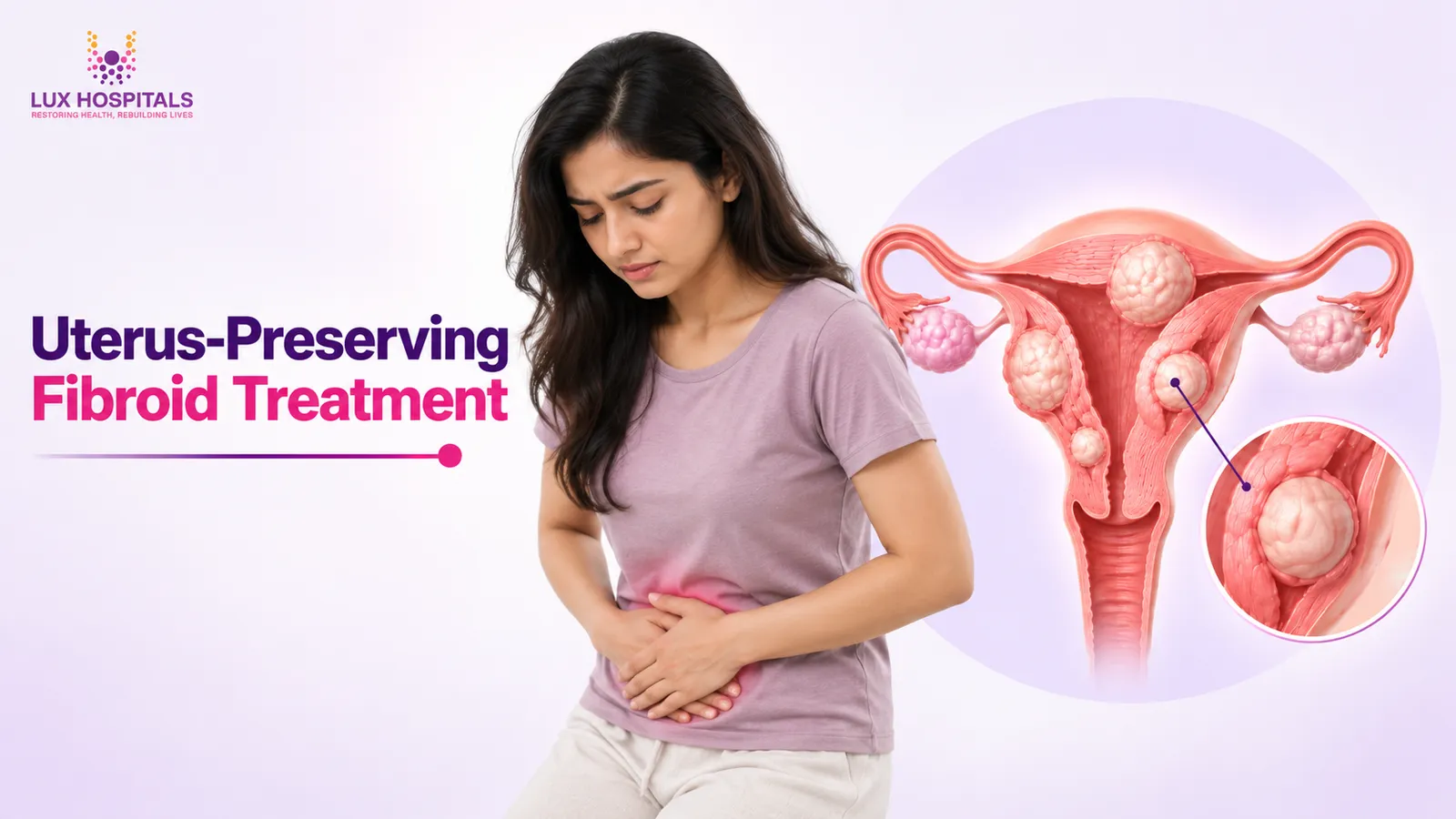
Uterus-preserving fibroid treatment may be considered when a woman wants to manage fibroids while keeping the uterus for future pregnancy. The right option depends on the fibroid’s size, number, location, symptoms, effect on the uterine cavity, age, fertility plans and overall health. Myomectomy is one uterus-preserving option. Fibroid location and whether the uterine cavity is […]
12 October 2026

Heavy periods might influence your energy, work, sleep, emotions, and daily routine. While some women may experience less bleeding after taking medication, symptoms may occasionally persist or recur. Rather than continuing to self-medicate, persistent severe bleeding should be properly evaluated by a gynaecologist. If you are looking for heavy periods treatment in Hyderabad, your next […]
6 October 2026
Send your reports across and a senior surgeon will review them, explain the options and tell you honestly whether surgery is the right call.
Plot No.116, Lumbini Avenue, HITEC CITY, Near IKEA, Hyderabad – 500032