











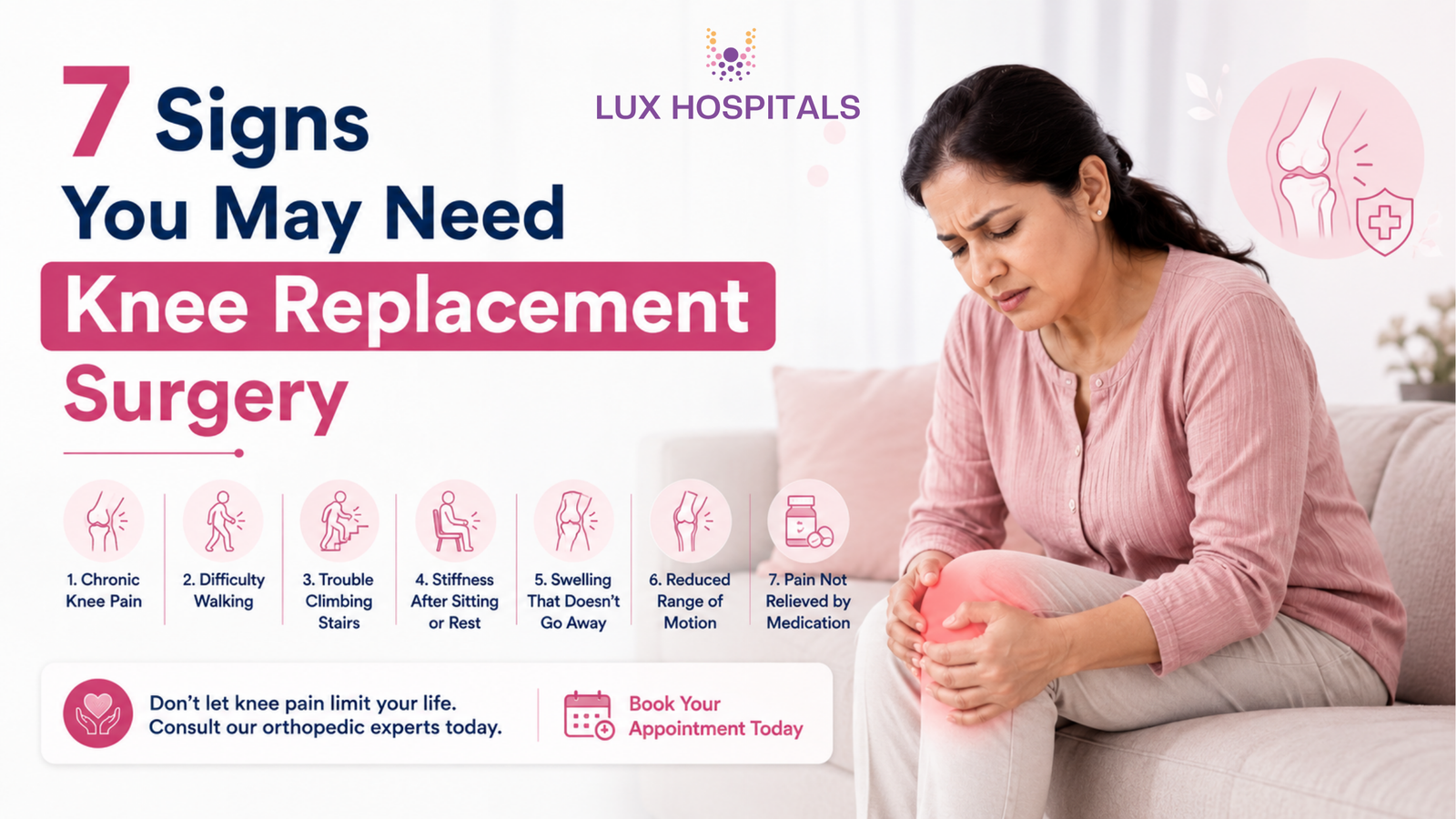
7 Signs You May Need Knee Replacement Surgery
Knee discomfort can affect every part of daily life—from walking and climbing stairs to sleeping comfortably and staying active. Many people ignore early warning signs and continue living with limitations, assuming pain is a normal part of ageing. Persistent knee pain symptoms, however, can point to more than just transient discomfort. Replacement surgery may be a viable option to improve the quality of life and restore mobility when the knee joint sustains significant damage.
Lux Hospitals focuses on helping patients make early diagnoses and treatment decisions that promote long-term joint health.
Understanding When Knee Replacement Becomes Necessary
Knee replacement surgery is generally considered when damage within the joint significantly limits movement and affects daily activities.
Common reasons include:
- Severe joint degeneration
- Long-term arthritis
- Joint stiffness
- Chronic inflammation
- Reduced mobility
Many patients notice progressive knee pain symptoms before surgery becomes necessary.
Symptoms That May Indicate You Need Knee Replacement Surgery
Early detection of knee pain symptoms can assist in making prompt treatment decisions and help prevent joint degeneration from worsening. The following should be evaluated to determine whether more advanced treatment options are required if pain, stiffness, oedema, or reduced movement start to interfere with your everyday activities.
1. Persistent Knee Pain That Does Not Improve
Persistent discomfort that doesn’t resolve with rest, medication, or physical therapy is one of the first symptoms patients experience.
Persistent knee pain symptoms may appear:
- During walking
- During standing
- During exercise
- During daily movement
Pain that remains for months deserves professional evaluation.
Ignoring persistent symptoms can lead to reduced function and worsening joint damage.
2. Difficulty Walking or Climbing Stairs
When everyday movement becomes challenging, it may indicate advanced knee problems.
Patients often report:
- Slower walking
- Fear of stairs
- Reduced endurance
- Needing support while moving
These worsening knee pain symptoms can limit independence.
As joint surfaces deteriorate, movement may become increasingly uncomfortable.
3. Knee Stiffness That Limits Mobility
Stiffness is more than feeling tight after rest.
Signs include:
- Difficulty bending the knee
- Trouble standing after sitting
- Reduced range of motion
- Morning stiffness
Progressive knee pain, combined with stiffness, can reduce quality of life.
Knee replacement may be considered if movement remains severely restricted.
4. Swelling That Frequently Returns
Occasional swelling after activity is common, but repeated swelling should not be ignored.
Patients may notice:
- Warmth around the joint
- Tightness
- Visible enlargement
- Increased discomfort
Recurrent swelling often accompanies chronic knee pain. Persistent inflammation can affect joint function over time.
5. Pain Even During Rest or Sleep
Pain that interrupts sleep may suggest more advanced joint damage.
Patients often describe:
- Night discomfort
- Waking from pain
- Trouble finding comfortable positions
Severe knee pain symptoms at rest may indicate reduced joint cushioning.
This symptom often has a major impact on emotional and physical well-being.
6. Knee Deformity or Visible Joint Changes
Changes in knee appearance may indicate structural damage.
Possible signs:
- Bowing of the legs
- Joint alignment changes
- Uneven walking posture
Visible changes combined with knee pain symptoms require evaluation.
Early diagnosis can improve treatment planning.
7. Daily Activities Become Difficult
One of the strongest signs is the loss of the ability to perform normal tasks.
Examples include:
- Household work
- Standing for long periods
- Shopping
- Recreational activities
When knee pain symptoms interfere with independence, discussing treatment options becomes important. Many patients experience improved function after appropriate treatment planning.
Stop Managing Knee Pain—Start Treating It.
Treatment Options Before Knee Replacement
Not every patient immediately needs surgery.
Knee replacement Treatment may include:
Lifestyle Changes
Weight management and activity adjustments.
Physical Therapy
Exercises that improve strength and mobility.
Medications
Symptom management under supervision.
Joint Injections
Supportive options for selected patients.
If conservative methods no longer reduce knee pain, knee replacement may be considered.
Regain Comfortable Movement and Enjoy Life Again.
Why Patients Choose Lux Hospitals?
Patients often choose Lux Hospitals for clear communication, personalised treatment planning, and long-term support tailored to their individual needs.
Dr Saikishan emphasises:
- Individual evaluation
- Detailed diagnosis
- Patient education
- Recovery-focused care
Understanding knee pain symptoms early can help patients make informed decisions.
Conclusion
Living with ongoing discomfort should not become normal. Persistent knee pain symptoms can affect movement, sleep, confidence, and overall health. Recognising these warning signs early may help patients seek appropriate care before symptoms become severe. With expert evaluation and individualised treatment guidance from Dr saikishan patients can move toward improved mobility and a better quality of life. Recognising the warning signs early gives patients more opportunities to explore treatment options and protect long-term joint function. While many people benefit from non-surgical care, others may achieve better comfort and movement through timely surgical intervention.
Frequently Asked Questions
Persistent discomfort, decreased mobility, oedema, stiffness, and trouble carrying out regular tasks are typical symptoms. A professional examination might be advised if these symptoms persist despite treatment.
Because treatment choices are based on joint condition, movement restrictions, and symptoms, there is no set age. Physicians prioritise quality of life and function over age alone.
Because treatment choices are based on joint condition, movement restrictions, and symptoms, there is no set age. Physicians prioritise quality of life and function over age alone.
Many patients report significant improvements in comfort and mobility after recovery. Results vary depending on individual circumstances, rehabilitation, and overall health.
Yes. Dr Saikishan performs detailed assessments and discusses treatment approaches to determine whether surgery or conservative care is more suitable for each patient.
Dr Saikishan focuses on patient education, individualised planning, and long-term mobility goals to support informed treatment decisions.
Physical therapy, medication, lifestyle modifications, and guided treatment regimens can help in certain instances. Treatment options are often expanded by early diagnosis. While everyone recovers differently, patients usually improve over several weeks and continue their strengthening and mobility exercises.