











Persistent Shoulder Pain? Regain Comfort and Mobility with Shoulder Arthroscopy
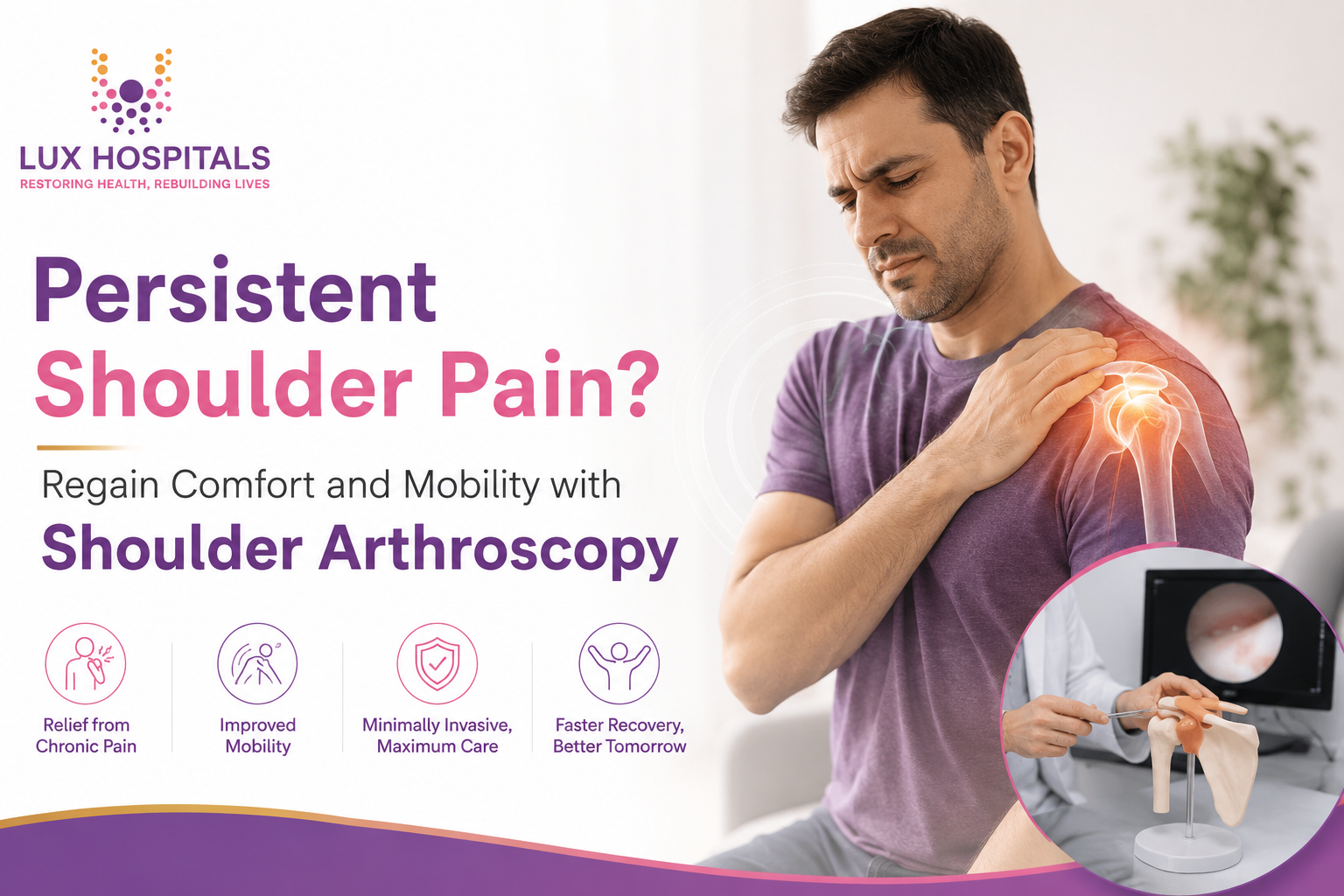
Every part of daily living, including driving, lifting your arm, and getting a good night’s sleep, can be impacted by persistent shoulder pain. Persistent shoulder pain that lasts for weeks or months usually indicates an underlying shoulder problem that needs treatment, while intermittent shoulder pain may resolve with rest. Ignoring chronic shoulder pain can lead to further damage, decreased mobility, weakening of the muscles, and chronic discomfort. Our skilled orthopaedic doctors at Lux Hospitals treat shoulder problems using cutting-edge arthroscopic techniques, helping patients. Early diagnosis and prompt treatment might help you resume your regular activities without needless delays if you have persistent shoulder pain.

What is Persistent Shoulder Pain?
Shoulder pain that persists for a few weeks or more despite rest, medicine, or home remedies is referred to as persistent shoulder pain. It may appear gradually or result from age-related wear and tear, repetitive motion, or an injury.
The shoulder is one of the body’s most flexible joints. Because it allows a wide range of movement, it is also more prone to injuries affecting muscles, tendons, ligaments, cartilage, and bones.
Common causes include:
- Rotator cuff tears
- Shoulder impingement syndrome
- Frozen shoulder
- Labral tears
- Shoulder instability
- Arthritis
- Tendon inflammation
Early medical evaluation helps identify the exact cause of persistent shoulder pain, allowing treatment before permanent damage occurs.
Symptoms That Should Never Be Ignored
Many people continue living with Persistent Shoulder Pain, believing it will improve naturally. However, certain symptoms indicate that professional evaluation is necessary.
Warning Signs
Pain that persists for more than four weeks
* Having trouble raising the arm
* Weakness in the shoulders
* Popping or clicking noises
* Restricted mobility
* Sleep-disturbing ache at night
* Swelling in the shoulder area.
When these symptoms accompany Persistent Shoulder Pain, they may indicate structural damage that requires specialised treatment.
What is Shoulder Arthroscopy?
Shoulder arthroscopy is a minimally invasive surgical procedure used to diagnose and treat various shoulder conditions. Instead of making a large incision, the surgeon inserts a small camera called an arthroscope through tiny cuts around the shoulder.
The arthroscope provides a clear, magnified view of the shoulder joint on a monitor, allowing surgeons to repair damaged tissues with exceptional precision.
Conditions Treated with Shoulder Arthroscopy
- Rotator cuff tears
- Shoulder impingement
- Labral tears
- Recurrent shoulder dislocation
- Shoulder instability
- Inflamed bursae
- Cartilage injuries
- Loose bone fragments
- Frozen shoulder (selected cases)
This advanced procedure effectively treats the root cause of Persistent Shoulder Pain, improving function while minimising surgical trauma.
How Shoulder Arthroscopy Helps Relieve Persistent Shoulder Pain
Instead of just covering up symptoms, shoulder arthroscopy actively treats damaged joint components.
Key Benefits
- Smaller incisions
- Less blood loss
- Reduced postoperative pain
- Faster recovery
- Minimal scarring
- Lower infection risk
- Better visualisation of the joint
- Earlier return to work and sports
- Improved shoulder strength
- Long-term relief from Persistent Shoulder Pain
Shoulder arthroscopy improves normal shoulder mechanics and lessens discomfort by mending torn tendons, eliminating inflammatory tissue, or correcting instability.
Diagnosis Before Shoulder Arthroscopy
Before proposing surgery, orthopaedic physicians at Lux Hospitals conduct a thorough evaluation.
Diagnostic Evaluation Includes
- Detailed medical history
- Physical examination
- Range of motion assessment
- Muscle strength testing
- X-rays
- MRI scan
- Ultrasound (when required)
- CT scan in selected cases
These investigations identify the exact cause of Persistent Shoulder Pain, ensuring every patient receives the most suitable treatment.
Recovery After Shoulder Arthroscopy
The underlying illness being treated will determine how well a patient recovers. Most patients report far less discomfort than with conventional surgery.
Recovery Tips
- Wear the shoulder sling as instructed.
- Attend physiotherapy sessions regularly.
- Perform prescribed rehabilitation exercises.
- Avoid heavy lifting until cleared by your surgeon.
- Maintain follow-up appointments.
- Eat a balanced diet to support healing.
- Take medications exactly as prescribed.
Depending on the type of surgery, most patients gradually restore shoulder movement over a few weeks, but full recovery may take several months.
Can Persistent Shoulder Pain Be Prevented?
Although not every shoulder condition can be avoided, healthy habits help reduce the risk.
Prevention Tips
- Warm up before exercise.
- Strengthen shoulder muscles regularly.
- Maintain proper posture.
- Avoid repetitive overhead strain.
- Lift heavy objects correctly.
Early medical attention keeps minor shoulder issues from developing into surgically necessary chronic persistent shoulder pain.
Why Choose Lux Hospitals for Shoulder Arthroscopy?
At Lux Hospitals, patients benefit from comprehensive orthopaedic care using the latest minimally invasive techniques.
Our Advantages
- Experienced orthopedic surgeons
- Advanced arthroscopic technology
- Accurate diagnosis
- Personalised treatment plans
- Modern operating theatres
- Comprehensive physiotherapy support
- Faster rehabilitation
- Patient-focused care
Whether your shoulder problem results from sports injuries, arthritis, or trauma, Lux Hospitals provides individualised treatment focused on restoring comfort, mobility, and long-term shoulder health.
Conclusion
Persistent Shoulder Pain should never be ignored because it often signals an underlying shoulder problem that requires professional evaluation. Shoulder arthroscopy offers a safe, minimally invasive, and highly effective solution for repairing damaged tissues, restoring movement, and relieving discomfort. If you have been struggling with Persistent Shoulder Pain, trust the experienced orthopaedic specialists at Lux Hospitals for accurate diagnosis, advanced treatment, and compassionate care that helps you return to an active and pain-free life.
Frequently Asked Questions
If your persistent shoulder pain persists for more than a few weeks, gets worse over time, restricts your range of motion, or interferes with your sleep or everyday activities, you should see a doctor. Early diagnosis helps identify the underlying cause, and prompt treatment can prevent irreversible shoulder damage.
Patients do not experience any discomfort during shoulder arthroscopy because the surgery is carried out under anaesthesia. Pain is well controlled with medication and directed rehabilitation, and most patients have less postoperative discomfort than with open surgery.
Depending on the ailment being treated and the degree of mending done, recovery varies. While full recovery with physiotherapy may take several months for good shoulder function, many patients return to light daily activities in a matter of weeks.
Yes. One of the best methods for healing numerous rotator cuff injuries, removing damaged tissue, and regaining shoulder strength is shoulder arthroscopy. It facilitates faster healing and better outcomes by enabling surgeons to perform accurate repairs through tiny incisions.
Particularly when detected early, some cases can be managed with medication, physical therapy, rest, and lifestyle changes. To get long-lasting relief, shoulder arthroscopy may be necessary for significant tendon tears, persistent instability, or advanced joint degeneration.
Lux Hospitals combines highly qualified orthopaedic surgeons, state-of-the-art operating rooms, comprehensive imaging, state-of-the-art arthroscopic instruments, and customised rehabilitation programs. Thanks to our all-encompassing approach, each patient will obtain an accurate diagnosis, effective treatment, and a speedier recovery.
Yes. Lux Hospitals offers structured postoperative rehabilitation, led by experienced physiotherapists who guide patients through personalised exercise programs. Regular follow-up and rehabilitation help restore shoulder strength, flexibility, and long-term function while reducing the risk of recurrence.