











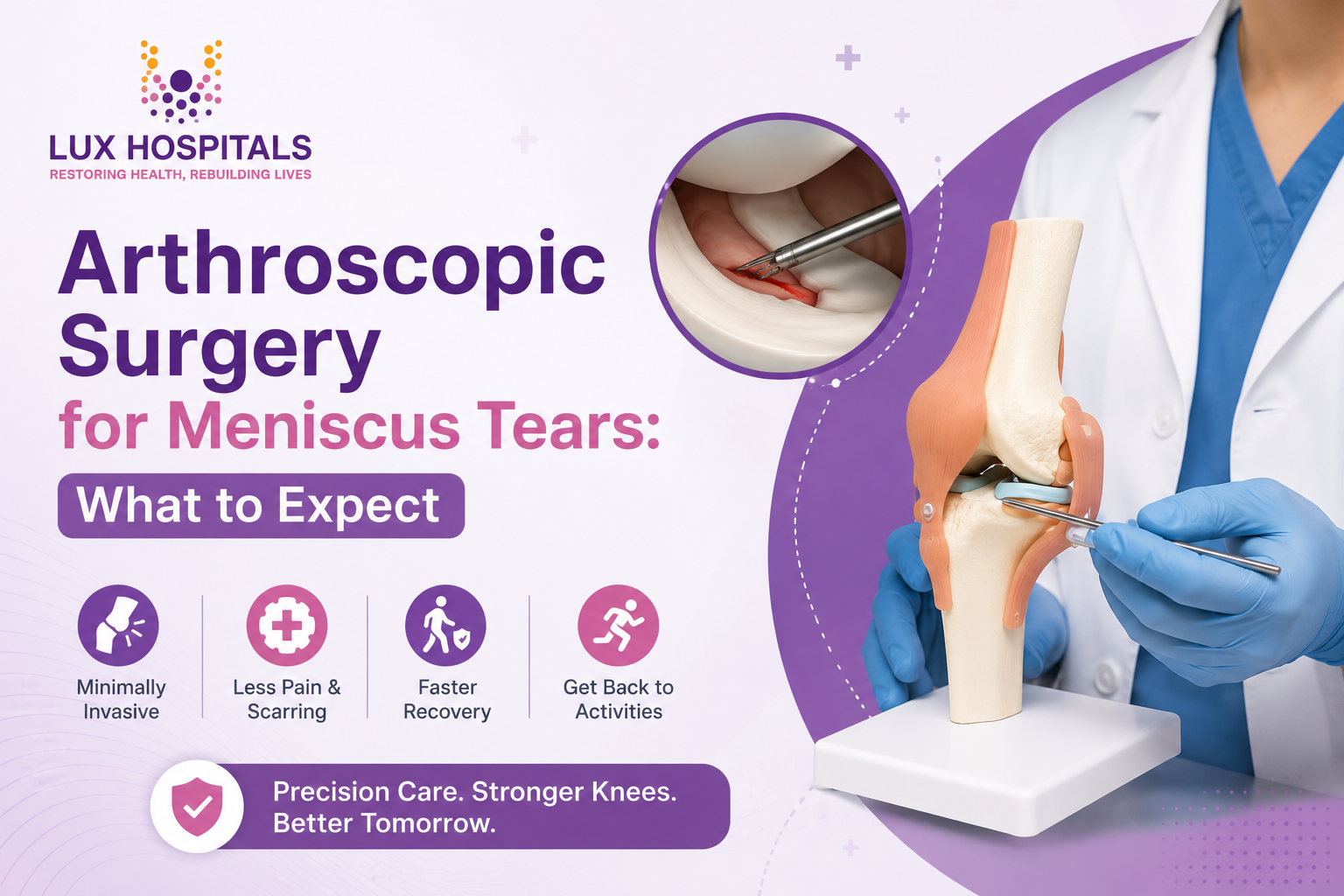
Arthroscopic Surgery for Meniscus Tears: What to Expect
Walking, climbing stairs, and other physical activities may become difficult and uncomfortable due to a meniscus tear. The meniscus helps the knee absorb pressure and retain stability by acting as a cushion between the thigh and shin bones. Pain, oedema, stiffness, and limited movement can result from damage to this cartilage caused by sports injuries, accidents, ageing, or abrupt twisting motions. With fewer incisions, less discomfort, and a quicker recovery than with open surgery, this minimally invasive method helps many patients regain knee function.
At Lux Hospitals, experienced orthopaedic specialists use advanced diagnostic methods and modern surgical techniques to provide personalised treatment plans based on each patient’s knee condition, age, activity level, and overall health.

Understanding Meniscus Tears and Their Symptoms
Inside the knee joint lies a C-shaped cartilage structure called the meniscus. Two menisci in each knee support fluid motion and absorb trauma. A tear may result from:
- Sports-related injuries involving sudden twisting
- Direct impact during accidents or falls
- Repeated stress on the knee joint
- Age-related cartilage weakening
- Degenerative changes in the knee
A damaged meniscus may not always heal naturally because certain areas of the cartilage have limited blood supply. In such situations, Arthroscopic Surgery for Meniscus Tears can help restore movement and reduce ongoing discomfort.
Common Symptoms of a Meniscus Tear
Patients may experience:
- Knee pain during movement
- Swelling around the knee joint
- A clicking or locking sensation
- Difficulty bending or straightening the knee
- Feeling that the knee may give way
- Reduced ability to participate in physical activities
Ignoring these symptoms can sometimes worsen the injury and affect daily mobility.
When is Arthroscopic Surgery Recommended?
Conditions That May Require Surgical Treatment
Not every meniscus tear requires surgery. Doctors usually consider Arthroscopic Surgery for Meniscus Tears when conservative treatments fail or when the injury significantly affects daily life.
Surgery may be recommended for patients with:
Persistent Knee Pain
If knee pain doesn’t go away after rest, medicine, and physical therapy, surgery might help repair damaged cartilage, which can be uncomfortable.
Locked Knee Movement
Normal knee movement may occasionally be impeded by a torn meniscus. Surgeons can effectively diagnose and treat the issue via arthroscopy.
Large or Complex Tears
Certain tear patterns, including bucket-handle tears or unstable cartilage fragments, may require surgical correction.
Active Lifestyle Requirements
Athletes and physically active individuals may choose surgery to restore knee function and safely return to activities.
At Lux Hospitals, orthopaedic specialists carefully evaluate MRI scans, symptoms, and physical examination results before recommending surgery.
How is Arthroscopic Surgery for Meniscus Tears Performed?
Before surgery, a lot of patients have anxiety since they don’t know what to expect. Reducing worries can be achieved by comprehending the procedure.
1. Preparation Before Surgery
Before the procedure, the doctor reviews:
- Medical history
- Imaging reports
- Current medications
- Overall fitness for surgery
Patients receive instructions on fasting, medication adjustments, and preparation for post-surgery care.
2. Small Incisions and Camera Guidance
During Arthroscopic Surgery for Meniscus Tears, the surgeon makes small openings around the knee joint. A thin instrument called an arthroscope, equipped with a camera, is inserted to provide a clear view of the damaged meniscus.
3. Repair or Removal of Damaged Tissue
Depending on the injury, the surgeon may:
- Repair the torn meniscus using specialised stitches.
- Remove only the damaged portion while preserving healthy cartilage.
- Smooth irregular edges to improve knee movement
The goal is always to preserve as much natural meniscus tissue as possible.
4. Completion of Surgery
After completing the procedure, the instruments are removed, and the small incisions are closed. Most patients can return home the same day, depending on their condition.
Benefits of Arthroscopic Surgery for Meniscus Tears
Modern orthopaedic care focuses on procedures that reduce recovery time while achieving effective results. Arthroscopic Surgery for Meniscus Tears offers several advantages compared to traditional surgery.
Smaller Surgical Cuts
Small incisions are made during the treatment, which typically causes less tissue damage and scarring.
Faster Recovery
Under medical supervision, patients can progressively resume their regular activities and often experience faster recovery.
Better Joint Visualisation
The arthroscope allows surgeons to view the inside of the knee clearly and treat the exact problem area.
Reduced Post-Surgery Discomfort
Because the procedure is minimally invasive, many patients experience less pain and swelling after surgery.
Improved Knee Function
Successful treatment can improve stability, flexibility, and overall quality of life.
Take the next step toward pain-free movement and improved knee health.
Recovery After Arthroscopic Surgery for Meniscus Tears
The type of meniscus injury, the surgical method, and each patient’s healing response all affect recovery.
Immediately After Surgery
Patients may experience mild swelling and discomfort, which can usually be managed with prescribed medications and proper care.
Physiotherapy and Rehabilitation
Physical therapy plays an important role in recovery. A rehabilitation program may include:
- Knee strengthening exercises
- Flexibility training
- Balance improvement exercises
- Gradual return to physical activities
Returning to Daily Activities
Depending on whether the meniscus was partially removed or restored, full recovery may take longer. However, many patients gradually return to their regular activities within weeks.
Following the surgeon’s instructions is essential for preventing complications and achieving the best possible outcome.
Risks and Precautions After Surgery
Although Arthroscopic Surgery for Meniscus Tears is considered safe, like any surgical procedure, it may involve certain risks.
Possible complications include:
- Infection
- Temporary swelling
- Blood clots
- Knee stiffness
- Persistent pain
- Limited healing after meniscus repair
Patients can reduce risks by:
- Following rehabilitation guidelines
- Keeping surgical wounds clean
- Avoiding excessive strain during recovery
- Attending follow-up appointments
Why Choose Lux Hospitals for Meniscus Tear Treatment?
Patients at Lux Hospitals receive complete orthopaedic care backed by cutting-edge technology, skilled professionals, and patient – centered treatment philosophies.
The hospital focuses on:
- Accurate diagnosis through advanced imaging
- Personalised treatment planning
- Minimally invasive surgical techniques
- Comprehensive rehabilitation support
- Continuous patient guidance throughout recovery
The orthopaedic team at Lux Hospitals works closely with patients to understand their concerns and provide treatment options designed for long-term knee health.
Conclusion
Although sophisticated treatments can help patients regain knee function, a meniscus tear can considerably impair mobility, comfort, and daily activities. For many individuals with chronic knee issues, arthroscopic surgery for meniscus tears offers a successful, less invasive option.
With expert orthopaedic care, advanced technology, and personalised rehabilitation support, Lux Hospitals helps patients achieve better recovery outcomes and return to an active lifestyle. If knee pain is limiting your movement, consulting an orthopaedic specialist can help you understand the right treatment options for your condition.