








Achalasia Cardia Treatment at Lux Hospitals

Achalasia Cardia Treatment for Safe & Long-Term Swallowing Relief

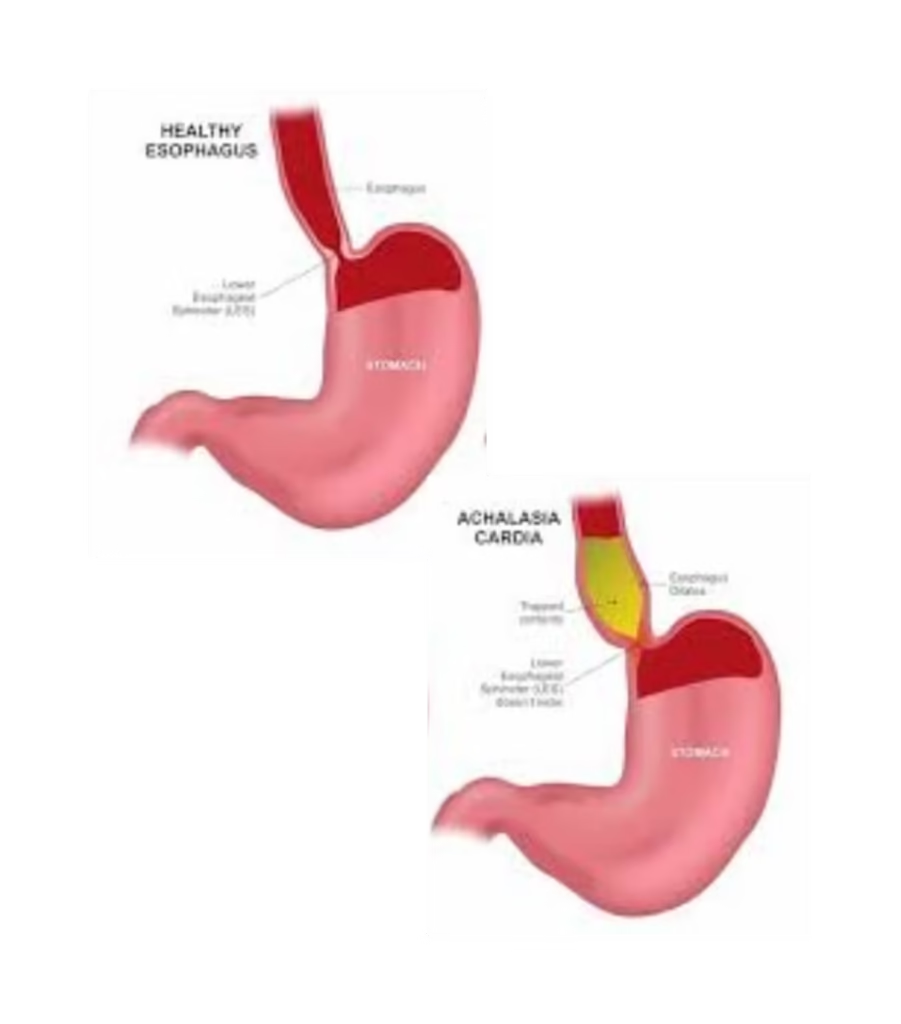
Achalasia cardia is a rare swallowing disorder where the lower esophageal sphincter fails to relax properly, making it difficult for food and liquids to pass into the stomach. Common achalasia cardia symptoms include difficulty swallowing and regurgitation of undigested food. If left untreated, the condition can lead to severe esophageal enlargement, weight loss, and recurrent lung infections. Timely achalasia cardia treatment helps restore normal swallowing and prevents complications. At Lux Hospitals, our experienced specialists provide advanced and personalized achalasia cardia treatment using minimally invasive techniques for safe and effective recovery.

What Is Achalasia Cardia?

Achalasia Cardia is a rare disorder of the esophagus, the tube that carries food from your mouth to your stomach. In this condition, the lower esophageal sphincter (LES) — a muscular ring at the junction of the esophagus and stomach — fails to relax properly. This makes it difficult for food and liquids to pass into the stomach, leading to swallowing difficulties and other digestive issues.

Causes of Achalasia Cardia

The exact achalasia cardia causes are not fully known, but possible reasons include:
  • Degeneration of esophageal nerves
  • Autoimmune response
  • Viral infections
  • Genetic factors (rare cases)

Symptoms of Achalasia Cardia

Common achalasia cardia signs and symptoms include:

  • Difficulty swallowing solids and liquids
  • Chest pain or pressure
  • Regurgitation of undigested food
  • Persistent cough at night
  • Heartburn sensation
  • Unexplained weight loss

Early diagnosis ensures effective achalasia cardia treatment and prevents long-term damage.

Diagnosis of Achalasia Cardia

Accurate diagnosis is essential before starting achalasia cardia treatment.

Physical Examination

Doctor reviews symptoms and swallowing difficulty pattern.

Achalasia Cardia Barium Swallow

An achalasia cardia barium swallow test shows the characteristic “bird-beak” narrowing of the esophagus.

Esophageal Manometry

Confirms diagnosis and identifies achalasia cardia types (Type I, II, III).

Endoscopy

Rules out structural blockages or cancer.
Proper assessment helps determine the most suitable achalasia cardia treatment plan.

Treatment Options for Achalasia Cardia

The goal of achalasia cardia treatment is to relax the lower esophageal sphincter and improve food passage.

Non-Surgical Achalasia Cardia Treatment

  • Muscle-relaxing medications
  • Botox injections
  • Pneumatic balloon dilation

These are suitable for selected patients and form part of conservative achalasia cardia management.

Minimally Invasive Treatment

  • Laparoscopic Heller’s Myotomy
  • POEM (Per Oral Endoscopic Myotomy)

These advanced procedures provide long-lasting achalasia cardia treatment results with shorter hospital stays.

Surgical Treatment

In severe cases, achalasia cardia surgery may be required.

Surgical options:
  • Heller’s Myotomy with fundoplication
  • Advanced laparoscopic techniques

Modern achalasia cardia treatment surgeries are safe and offer excellent success rates.

When Should You See a Doctor?

You should consult a specialist if swallowing difficulties persist for more than a few weeks. Seek immediate medical care if you experience:

  • Severe chest pain
  • Repeated vomiting
  • Significant weight loss
  • Fever with aspiration symptoms

Prompt evaluation allows early planning of achalasia cardia treatment and reduces complications.

Why Choose Lux Hospitals for Achalasia Cardia Treatment?

Lux Hospitals is dedicated to providing the best Achalasia Cardia treatment in Hyderabad. Here’s why patients trust us:

  • Experienced Gastroenterologists: Our team of digestive health specialists has extensive experience in diagnosing and managing achalasia cardia, including complex cases, ensuring expert care for every patient.
  • Advanced Treatment Options: We offer the latest diagnostic tools like esophageal manometry and endoscopy, along with minimally invasive procedures such as POEM, pneumatic dilation, and surgical myotomy for effective symptom relief.
  • Comprehensive Care: From accurate diagnosis to personalized treatment plans and post-procedure follow-up, we provide complete support for a smooth recovery.
  • Patient-Centered Approach: We understand that each patient’s condition is unique, so treatments are customized to meet individual needs and achieve the best outcomes.
  • State-of-the-Art Facility: Lux Hospitals is equipped with modern gastroenterology technology, ensuring precise diagnosis and advanced treatment for achalasia cardia in a safe and comfortable environment

If you are searching for the best doctor for achalasia cardia in Hyderabad, our multidisciplinary team ensures evidence-based care and long-term outcomes.

Recovery & Aftercare

Recovery after achalasia cardia treatment depends on the procedure type.

Recovery Timeline
  • Minimally invasive surgery: 1–2 weeks
  • Balloon dilation: Short recovery period
Post-Treatment Care
  • Follow your doctor’s dietary guidelines to ease swallowing and digestion.
  • Start with soft foods and gradually return to a normal diet.
  • Take prescribed medications on time to prevent complications or reflux.
  • Attend all follow-up appointments to monitor recovery and esophageal function.
  • Practice recommended lifestyle changes, including smaller meals and staying upright after eating.
  • Report any persistent symptoms like chest pain, difficulty swallowing, or regurgitation immediately.

Proper achalasia cardia management ensures sustained symptom relief.

Dr. Tagore Grandhi

Dr. Tagore Grandhi

MBBS, MS, FRCS (UK), DLS (France)

Fellowship in Bariatric Surgery (USA)
Fellowship in Robotic Surgery (Korea)
Senior Consultant – Bariatric & Gastrointestinal Surgery

Experience : 28 years

Testimonials

I was diagnosed with a liver cyst, and Dr. Tagore Mohan Grandhi carefully explained all treatment options. The surgery was smooth, minimally invasive, and recovery was faster than I expected. The entire team was attentive and supportive. Highly recommend for anyone facing complex liver issues.

Vikram

Vikram, Hyderabad

Abdominal tuberculosis had me worried, but Dr. Tagore guided me through the surgical treatment with patience and compassion. The surgery went smoothly, and post-op care was excellent. I felt genuinely cared for throughout the process.

Priya

Priya, Hyderabad

My mother had recurring acid reflux and needed surgical intervention. Dr. Grandhi took the time to explain everything clearly to our family, including post-operative care. The surgery was seamless, and she is now feeling much healthier and comfortable. The staff was always there to support us throughout.

Anita

Anita, Hyderabad

I was treated for colon polyps by Dr. Grandhi. The procedure was minimally invasive, painless, and very well managed. He explained the risks, recovery plan, and preventive steps in detail. The hospital staff was attentive, making the entire experience stress-free.

Suman

Suman, Hyderabad

Latest Health Articles by Lux

Frequently Asked Questions

What are achalasia cardia types?

Achalasia cardia is classified into three types based on esophageal muscle activity. Type I shows minimal muscle movement, Type II involves pressure buildup in the esophagus, and Type III causes abnormal spasms. The type is identified through esophageal manometry and helps determine the right treatment approach.

What is the best treatment for achalasia?

The best treatment for achalasia depends on the type and severity of the condition. Common and effective options include POEM (Peroral Endoscopic Myotomy), Heller myotomy surgery, and pneumatic dilation, all aimed at relaxing the lower esophageal sphincter to improve swallowing. Your doctor will recommend the most suitable option based on individual evaluation.

What causes achalasia?

Achalasia is caused by damage to the nerves of the esophagus, which affects its ability to move food into the stomach. The exact reason is not fully known, but it may be linked to autoimmune reactions or viral infections.

Is achalasia cardia treatment permanent?

Achalasia cardia treatment is not completely permanent because the condition cannot be fully cured. However, procedures like POEM, Heller myotomy, or pneumatic dilation can provide long-term symptom relief and significantly improve swallowing.

How much is achalasia cardia treatment cost in Hyderabad?

At Lux Hospitals, the cost of achalasia cardia treatment depends on the type of procedure and individual patient condition. Our team provides a clear treatment plan and transparent guidance after detailed evaluation to ensure quality care and a smooth experience.

Is achalasia cardia surgery safe?

Yes, achalasia cardia surgery is safe when performed by experienced specialists.At Lux Hospitals, our expert gastroenterology and surgical team uses advanced techniques and strict safety protocols to ensure effective treatment with minimal risks and a smooth recovery for patients.

Who is the best doctor for achalasia cardia in India?

The best doctor for achalasia cardia treatment in India at Lux Hospitals is Dr. Tagore Grandhi, a highly skilled gastroenterologist and surgeon known for his expertise in diagnosing and managing complex esophageal conditions with advanced, patient-focused care.

How can I book an appointment for achalasia cardia treatment at Lux Hospitals, Hyderabad?

You can book an appointment by calling our hospital’s appointment number, sending a WhatsApp message, or by using the online booking form on the Lux Hospitals website.

×

Chat on WhatsApp...

WhatsApp Icon Open In WhatsApp

If it doesn’t open automatically, click here.

Chat ↗