Dr. Samhitha Reddy
Consultant Proctologist & Laparoscopic Surgeon
MBBS, MS, FMAS, FISCP, DMAS
- 8 Yrs
- ASCRS Member
By Dr Harshita Kakarla · MBBS, MS, FMAS 30 June 2026 5 min read Updated 7 August 2026
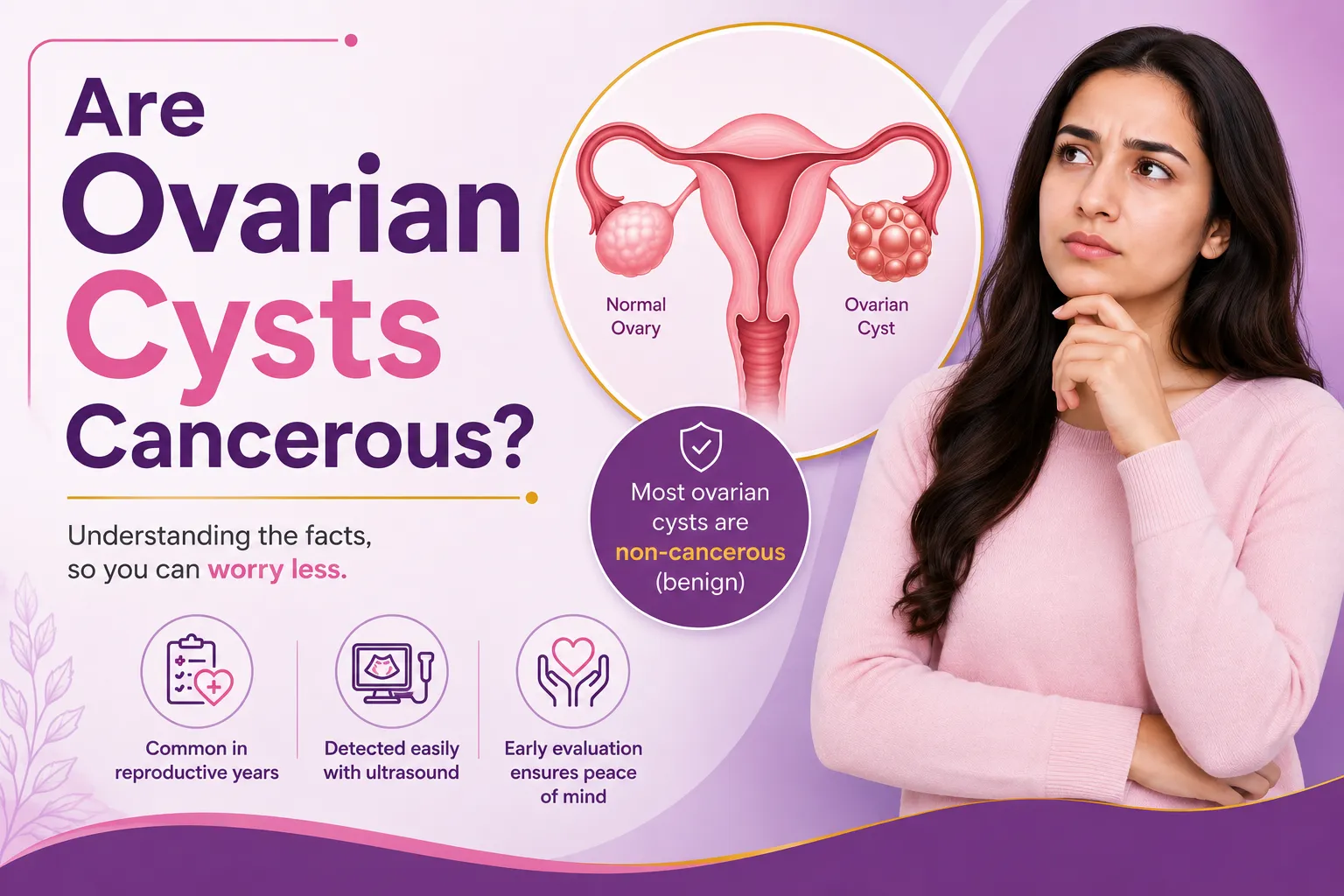
The term “ovarian cyst” causes anxiety in many women, particularly because they frequently link cysts to cancer. Nonetheless, the majority of ovarian cysts are benign and do not develop into malignancy. These fluid-filled sacs develop on or inside the ovaries and are commonly seen in women during their reproductive years. Women can make better healthcare […]
The term “ovarian cyst” causes anxiety in many women, particularly because they frequently link cysts to cancer. Nonetheless, the majority of ovarian cysts are benign and do not develop into malignancy. These fluid-filled sacs develop on or inside the ovaries and are commonly seen in women during their reproductive years. Women can make better healthcare decisions if they are aware of the distinction between a benign cyst and a possibly dangerous development. Protecting reproductive health largely depends on routine assessment, prompt diagnosis, and professional medical advice.
Lux Hospitals’ specialists provide complete gynaecological care, using modern diagnostic techniques to identify the type of cyst, monitor changes, and suggest the best course of action for each woman’s circumstances.
Ovarian Cysts are small sacs filled with fluid or solid material that develop on the ovaries. The ovaries are important reproductive organs that produce eggs and hormones, such as estrogen and progesterone.
Common types of ovarian cysts include:
Although most Ovarian Cysts are benign, doctors evaluate their size, appearance, symptoms, and growth pattern to determine whether further investigation is needed.
One of the most common concerns among women is whether Ovarian Cysts can turn into cancer. The good news is that the majority of ovarian cysts are non-cancerous and do not pose a serious health threat.
However, certain factors may increase concern, including:
At Lux Hospitals, gynaecologists carefully analyse every patient’s symptoms and test results to provide an accurate diagnosis and personalised treatment recommendations.
Many Ovarian Cysts do not cause noticeable symptoms and are often discovered during routine pelvic examinations or imaging tests. When ovarian cysts symptoms occur, they may vary depending on the cyst size and location.
Common symptoms include:
Sudden severe pelvic pain may indicate complications such as cyst rupture or ovarian twisting, which require immediate medical attention.
Doctors diagnose Ovarian Cysts through a combination of medical history, physical examination, and advanced testing.
Ultrasound is one of the most common methods for examining ovarian cysts. It helps doctors understand:
Certain blood tests may help doctors assess the possibility of ovarian cancer, especially when imaging findings require additional evaluation.
In some cases, advanced imaging may provide more detailed information about complex cysts.
Periodic follow-up scans may be sufficient to confirm that small, straightforward cysts are resolving or resolving on their own. Modern diagnostic tools at Lux Hospitals enable medical professionals to diagnose illnesses early and suggest appropriate treatments.
Treatment for Ovarian Cysts depends on several factors, including cyst size, symptoms, age, and risk factors.
For small cysts that seem harmless, doctors may advise caution. Tracking any changes is made easier with routine follow-up consultations.
Hormonal medications may help prevent new functional cysts from developing in some women, although they do not usually shrink existing cysts.
If a cyst is large, painful, growing, or has concerning features, doctors may recommend laparoscopic surgery. This technique uses small incisions and generally allows faster recovery.
Surgery may be necessary to remove the cyst or damaged ovary while maintaining general health in rare situations where the risk of malignancy is higher.
Many women worry that Ovarian Cysts may prevent pregnancy. In most cases, simple ovarian cysts do not affect fertility and disappear naturally. However, certain conditions, such as endometriomas or polycystic ovary-related problems, may influence fertility and require specialised management. Women planning pregnancy should discuss their ovarian health with a gynaecologist. Early evaluation can help identify concerns and create an appropriate treatment plan. At Lux Hospitals, specialists provide fertility-focused care while considering each woman’s reproductive goals.
Women should consult a doctor if they encounter:
Early consultation enables medical professionals to identify issues before they grow more complex. For women who have a history of cysts, hormonal issues, or family risk factors, routine gynaecological examinations are particularly crucial.
At Lux Hospitals, patients receive personalised gynaecological treatment supported by experienced specialists and modern medical technology.
The hospital focuses on:
The team ensures that women clearly understand their condition and feel confident when making healthcare decisions.
Finding an ovarian cyst can feel stressful, but understanding the condition can help women make confident healthcare decisions. Most Ovarian Cysts are harmless and can be managed with proper evaluation and monitoring. Timely consultation, accurate diagnosis, and expert guidance are essential for maintaining ovarian and reproductive health. With advanced facilities and experienced specialists, Lux Hospitals provides comprehensive care to help women receive the right treatment at the right time.
The majority of ovarian cysts, particularly those associated with regular menstrual cycles, are benign and do not develop into malignancy. To identify warning signs, doctors assess the cyst's size and appearance, as well as the patient's risk factors. Frequent monitoring helps detect early, significant changes.
The need for surgery depends on more than just cyst size; it also includes symptoms, growth pattern, and imaging appearance. Large, painful, or complex Ovarian Cysts may require surgical treatment to prevent complications. A gynaecologist will recommend the safest option after a complete evaluation.
Yes, many functioning ovarian cysts go away on their own in a few menstrual cycles if left untreated. To track progress, doctors can advise follow-up scans. When cysts exhibit worrisome characteristics, cause symptoms, or persist, treatment is considered.
Lux Hospitals uses advanced diagnostic methods, including imaging and specialist evaluation, to understand each patient’s condition. The gynaecology team creates personalised treatment plans based on symptoms, cyst characteristics, and health needs. Patients receive complete guidance from diagnosis through recovery.
Lux Hospitals offers skilled gynaecological care, with modern facilities and patient-centred treatment. The facility provides women with precise diagnosis, advanced treatments, and sympathetic medical advice. The objective is to offer long-term support for reproductive health and safe treatment.
An ovarian cyst that remains on repeat scans does not automatically mean that surgery is needed. Many ovarian cysts are benign and may disappear without treatment. Your gynaecologist will consider the cyst’s size, appearance, symptoms, age, menstrual status, and whether it changes over time when deciding whether to monitor or treat. Being told that an […]
14 October 2026
Uterus-preserving fibroid treatment may be considered when a woman wants to manage fibroids while keeping the uterus for future pregnancy. The right option depends on the fibroid’s size, number, location, symptoms, effect on the uterine cavity, age, fertility plans and overall health. Myomectomy is one uterus-preserving option. Fibroid location and whether the uterine cavity is […]
12 October 2026
Heavy periods might influence your energy, work, sleep, emotions, and daily routine. While some women may experience less bleeding after taking medication, symptoms may occasionally persist or recur. Rather than continuing to self-medicate, persistent severe bleeding should be properly evaluated by a gynaecologist. If you are looking for heavy periods treatment in Hyderabad, your next […]
6 October 2026
Send your reports across and a senior surgeon will review them, explain the options and tell you honestly whether surgery is the right call.
Plot No.116, Lumbini Avenue, HITEC CITY, Near IKEA, Hyderabad – 500032