
Dr. Samhitha Reddy
Consultant Proctologist & Laparoscopic Surgeon
MBBS, MS, FMAS, FISCP, DMAS
- 8 Yrs
- ASCRS Member
By Dr. Ashwani Narla · MBBS, MS (Obstetrics & Gynaecology) 24 November 2026 5 min read
Medically reviewed by Dr Ashwani Narla 24 November 2026

Insulin resistance symptoms in women often include stubborn belly fat, constant tiredness, strong sugar cravings, dark skin patches, and irregular periods. These signs appear when the body stops responding well to insulin, causing blood sugar and insulin levels to rise. Many women dismiss them as stress, hormones, or ageing. Left unchecked, insulin resistance can progress to prediabetes and type 2 diabetes. This guide explains the warning signs, why women are uniquely affected, how doctors diagnose the condition, and the treatment options available at Lux Hospitals.
Insulin is a hormone made by the pancreas. It helps move sugar from your blood into your cells for energy.
In insulin resistance, cells in your muscles, fat, and liver respond poorly to insulin. Here is what happens:
Over time, the pancreas may not keep up. Blood sugar then rises into the prediabetes or diabetes range.
Female hormones influence how the body handles sugar. Shifts in these hormones can make insulin resistance more likely at certain life stages.
Women face added risk during:
Notice hormonal changes alongside these signs? Book a consultation at Lux Hospitals today.
High insulin levels encourage the body to store fat, especially around the waist. Many women find this weight hard to lose, even with dieting.
Watch for these signs:
A growing waistline is one of the most common signs of insulin resistance. Expert obesity and weight management support can help break this cycle.
When cells cannot use sugar properly, they are short on energy. This can leave you tired even after a full night's sleep.
You may notice:
Ongoing tiredness has many causes, so it deserves proper evaluation. Our team offers dedicated body pain and fatigue treatment to find the root cause.
Blood sugar swings can trigger strong hunger soon after eating. High insulin may also make the brain crave quick carbohydrates.
Common patterns include:
These cravings are a physical signal, not a lack of willpower. Recognising them early helps you take action sooner.
Your skin can reveal hidden metabolic problems. Velvety, darkened patches, called acanthosis nigricans, are closely linked to high insulin levels.
Look for changes in these areas:
These skin changes are visible clues worth showing a doctor. They often improve when insulin levels are controlled.
Spotted dark skin patches? Get your blood sugar checked at Lux Hospitals.
High insulin can push the ovaries to make more male hormones (androgens). This is a key reason insulin resistance and PCOS so often occur together.
Symptoms may include:
If these sound familiar, explore our care for polycystic ovary syndrome or broader menstrual disorders treatment.
Some women are more likely to develop insulin resistance. Common risk factors include family history of diabetes, inactivity, excess weight, and a past gestational diabetes diagnosis.
If ignored, it may lead to:
Many of these are part of metabolic syndrome. Early action can lower your long-term risk.
No single test confirms insulin resistance. Doctors combine your symptoms, medical history, and blood results to build a clear picture.
Common tests include:
Regular preventive health checkups can catch rising blood sugar long before diabetes develops.
Schedule a metabolic health screening at Lux Hospitals this week.
The good news is that insulin resistance often improves with the right plan. Treatment is tailored to your symptoms, test results, and goals.
Your care plan may include:
Women with rising sugar levels can also benefit from our structured diabetes management programme.
Insulin resistance affects many body systems. At Lux Hospitals, specialists work together to treat the whole picture, not just one symptom.
Patients choose us for:
We aim to help every woman feel heard, understood, and supported long term.
Take charge of your metabolic health—book an appointment at Lux Hospitals today.
Insulin resistance symptoms in women are easy to overlook because they develop slowly and mimic everyday stress or hormonal shifts. Belly fat, fatigue, sugar cravings, dark skin patches, and irregular periods are all signals worth taking seriously. Catching them early can prevent prediabetes, type 2 diabetes, heart disease, and other complications.
The encouraging news is that insulin resistance is often reversible with healthy eating, regular activity, weight management, and medical guidance where needed. If you recognise several of these signs, do not wait for them to worsen. Speak with a specialist, get the right tests, and start a personalised plan. The team at Lux Hospitals is ready to help you protect your long-term health.
Early signs often include weight gain around the belly, tiredness after meals, strong sugar cravings, and darkened skin on the neck or armpits. Irregular periods and acne may also appear, especially in women with PCOS.
In many women, yes. Healthy eating, regular exercise, modest weight loss, good sleep, and stress control can significantly improve insulin sensitivity. Some women may also need medication prescribed by a doctor after proper evaluation.
No. Insulin resistance is an earlier stage where the body struggles to use insulin. Blood sugar may still be normal. Without treatment, it can progress to prediabetes and eventually type 2 diabetes.
Many women with PCOS have insulin resistance. High insulin levels can increase male hormone production by the ovaries, worsening irregular periods, acne, excess hair, and fertility problems. Treating insulin resistance often improves PCOS symptoms.
Doctors commonly order fasting blood sugar, HbA1c, an oral glucose tolerance test, fasting insulin, and a lipid profile. Results are interpreted alongside your symptoms, weight, waist size, and family history.
See a doctor if you notice several symptoms together, such as belly weight gain, fatigue, dark skin patches, or irregular periods. A family history of diabetes or past gestational diabetes is another reason to get tested.

PCOS and insulin resistance often occur together because high insulin levels push the ovaries to make more androgens, which disrupts ovulation and worsens PCOS symptoms. Insulin resistance affects many women with polycystic ovary syndrome, including some who are at a healthy weight. This two-way link helps explain why PCOS can raise the risk of type 2 diabetes, weight gain, and heart problems. In this guide, we explain how the connection works, which warning signs to watch for, and how doctors test for it. You will also learn practical lifestyle steps and the treatment options available at Lux Hospitals.
18 November 2026

An ovarian cyst that remains on repeat scans does not automatically mean that surgery is needed. Many ovarian cysts are benign and may disappear without treatment. Your gynaecologist will consider the cyst’s size, appearance, symptoms, age, menstrual status, and whether it changes over time when deciding whether to monitor or treat.
14 October 2026
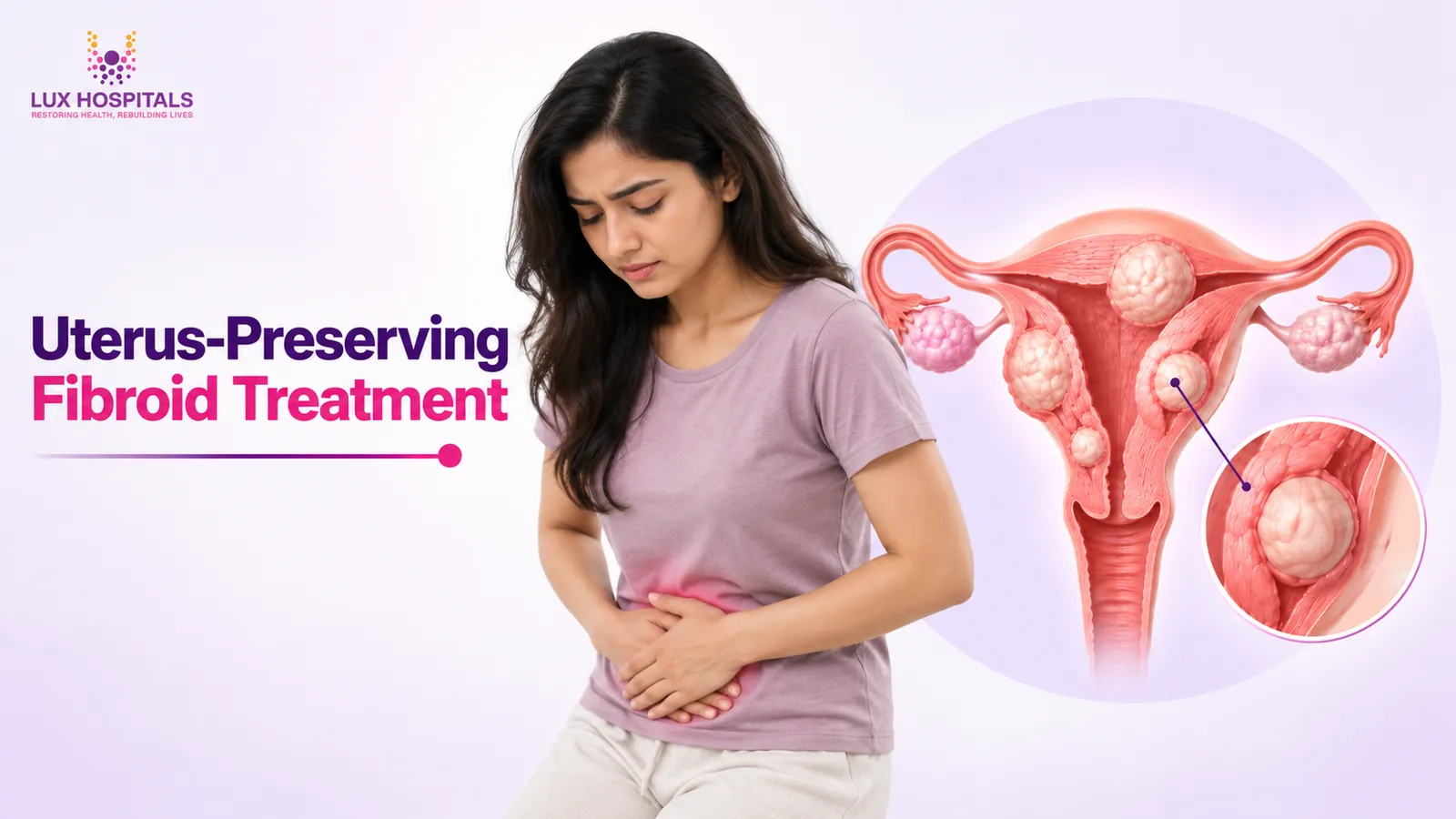
Uterus-preserving fibroid treatment may be considered when a woman wants to manage fibroids while keeping the uterus for future pregnancy. The right option depends on the fibroid’s size, number, location, symptoms, effect on the uterine cavity, age, fertility plans and overall health. Myomectomy is one uterus-preserving option.
12 October 2026
Send your reports across and a senior surgeon will review them, explain the options and tell you honestly whether surgery is the right call.
Plot No.116, Lumbini Avenue, HITEC CITY, Near IKEA, Hyderabad – 500032