Dr. Samhitha Reddy
Consultant Proctologist & Laparoscopic Surgeon
MBBS, MS, FMAS, FISCP, DMAS
- 8 Yrs
- ASCRS Member
By Dr. M. Ram Prabhu · MBBS, MS, MCH (Plastic Surgery) 4 September 2025 3 min read Updated 8 December 2025
Breast augmentation after pregnancy is a popular option among women seeking to restore their pre-pregnancy breast appearance. Pregnancy and breastfeeding can cause changes like sagging, deflation, and asymmetry in the breasts. This comprehensive guide explains everything you need to know about breast augmentation after pregnancy, including procedure options, recovery, risks, and long-term care.
Many women experience the following breast changes post-pregnancy:
Breast augmentation after pregnancy can help restore:
Physicians advise waiting six months or more after quitting. Breastfeeding before considering surgery. This allows:
Pro tip: Avoid surgery while breastfeeding or during significant weight fluctuations.
Implants are a core part of breast augmentation after pregnancy, with two main types:
Key decisions include:
After pregnancy, implants alone may not address sagging. Many women choose a breast lift (mastopexy) with breast augmentation after pregnancy for better results.
Benefits of combining both:
To ensure the best outcome from breast augmentation after pregnancy, follow these steps:
Recovery after breast augmentation after pregnancy varies by individual but typically follows this timeline:
Tips for smooth recovery:
Like any surgery, breast augmentation after pregnancy involves some risks:
Minimize risks by:
Results from breast augmentation after pregnancy are long-lasting but not permanent. Here’s what you should know:
Tips for maintaining results:
Beyond physical transformation, breast augmentation after pregnancy often improves:
It’s a personal decision, but for many moms, it’s a positive step toward reclaiming control over their appearance.
Breast augmentation after pregnancy offers women a chance to regain confidence and restore their pre-baby figure. The procedure can produce stunning, natural results with careful planning, the right surgeon, and realistic expectations. Whether you’re addressing volume loss, sagging, or asymmetry, breast augmentation after pregnancy can help you feel more confident and comfortable in your body again.
It's best to wait at least 6 months after breastfeeding to allow the breasts to stabilize. Hormones and glandular tissue need time to return to normal. This ensures better implant sizing and results.
Yes, following breast augmentation, the majority of women are still able to nurse. after pregnancy. The risk is lower when implants are placed under the muscle and ducts remain untouched. However, success depends on your natural milk-producing ability, too.
If you have sagging or stretched skin after pregnancy, you may need a breast lift in addition to your breast augmentation. Implants restore volume, but a lift corrects drooping. Combining both offers a more youthful, lifted contour.
Silicone implants are usually preferred for breast augmentation after pregnancy due to their natural texture. However, saline implants are also viable and slightly more adjustable. Your surgeon will assist you in making a decision based on your goals and body type.
Recovery can be more demanding if you have young children at home. Arrange for help during the initial weeks. Avoid lifting, bending, or engaging in vigorous activity during healing from breast augmentation after pregnancy.
Yes, breast augmentation after pregnancy can result in very natural-looking breasts, especially with modern implant options and expert techniques. Selecting the appropriate implant size and location is essential for natural results. You can rely on a talented surgeon to attain proportion and balance.
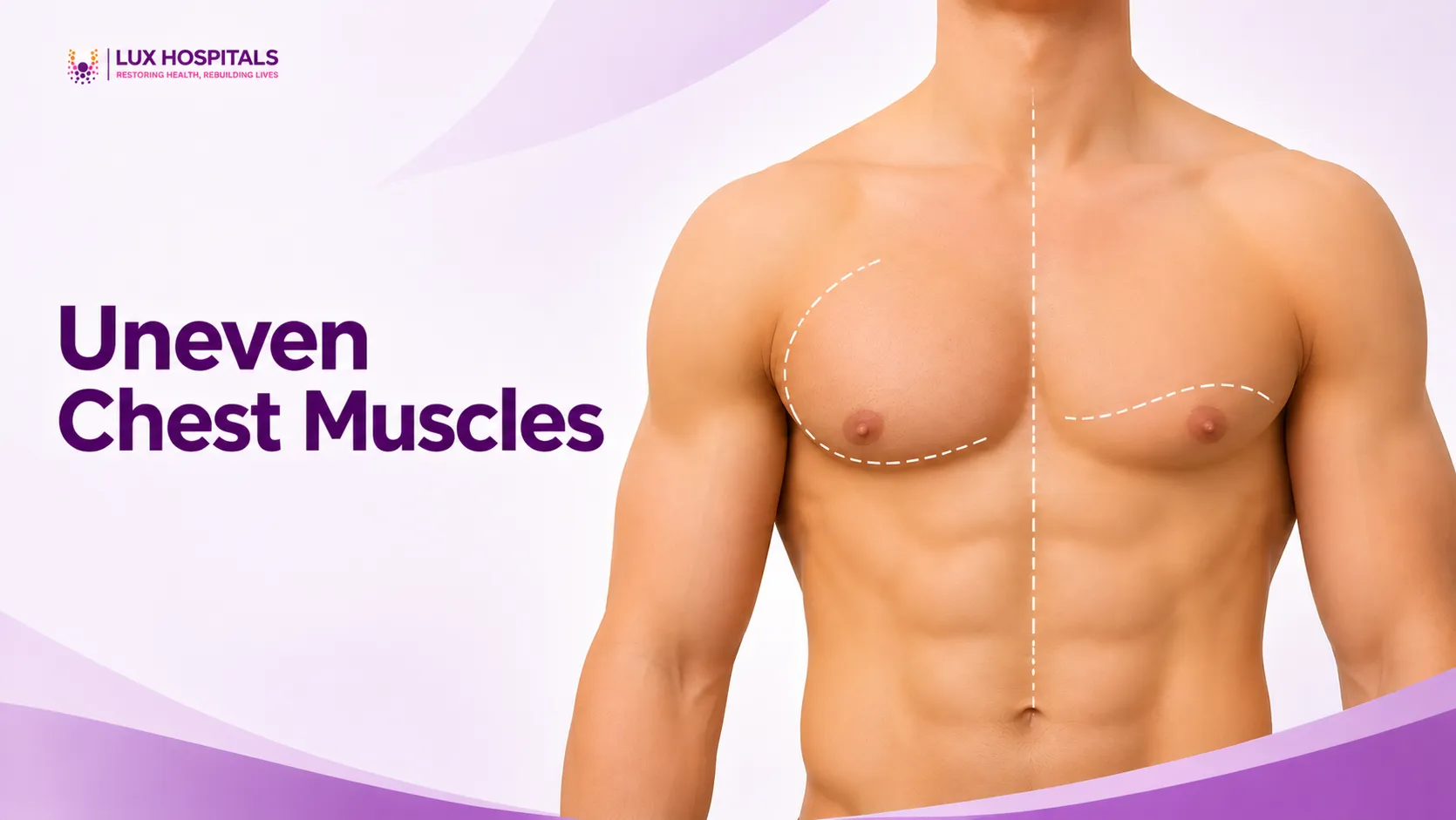
Noticing uneven chest muscles can be concerning, especially when one side appears larger, flatter or more developed than the other. Mild differences between the two sides are common. However, a noticeable change may relate to muscle imbalance, posture, a previous injury, chest wall structure, or changes in breast tissue.
6 November 2026
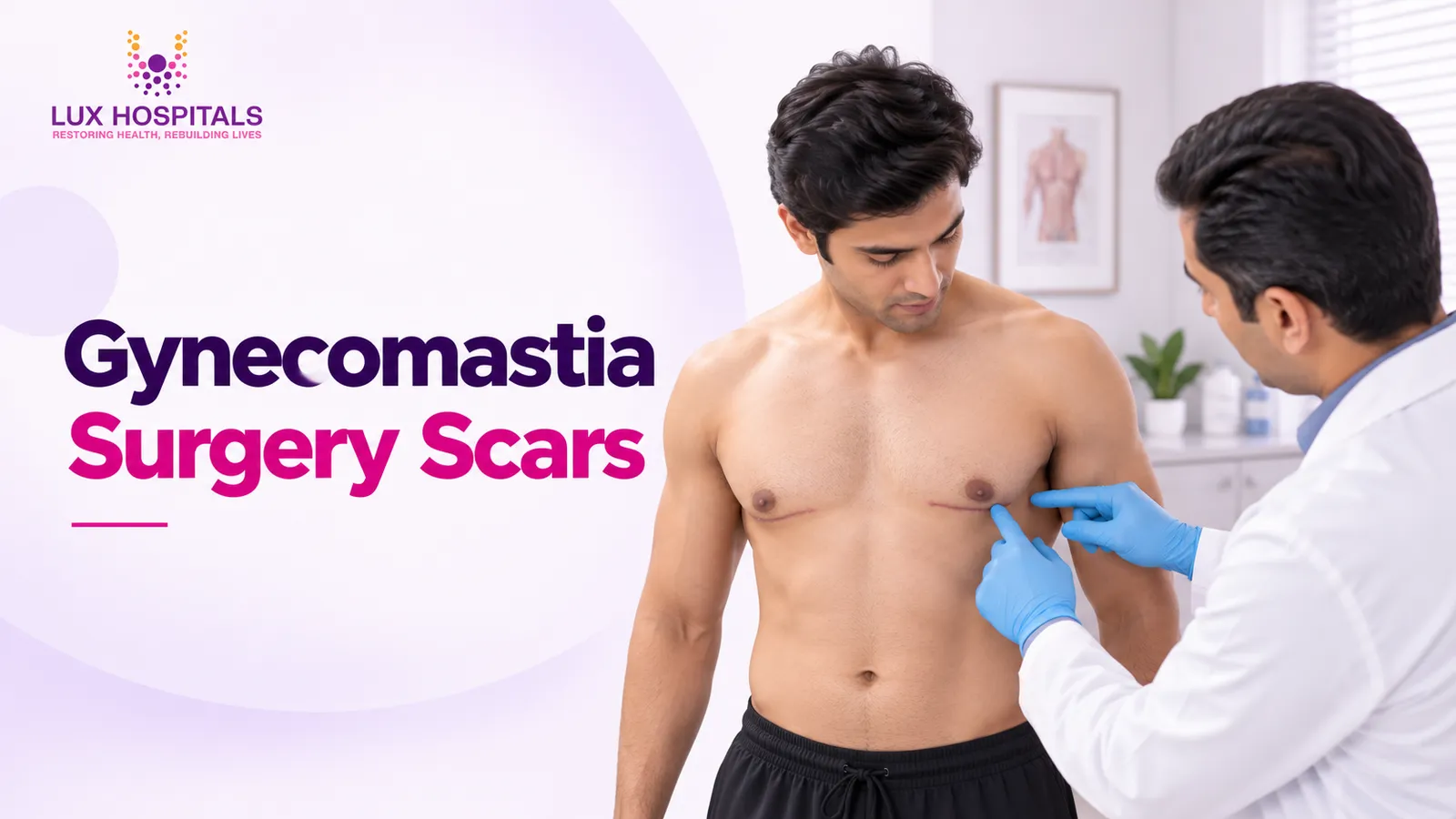
Gynecomastia surgery requires an incision, so some scarring is expected. The scar’s size and location depend on how much tissue is removed and whether excess skin also needs treatment. Scars usually fade over time, but they don’t disappear completely. If you are thinking about gynecomastia surgery, you may already have questions about the result.
14 October 2026
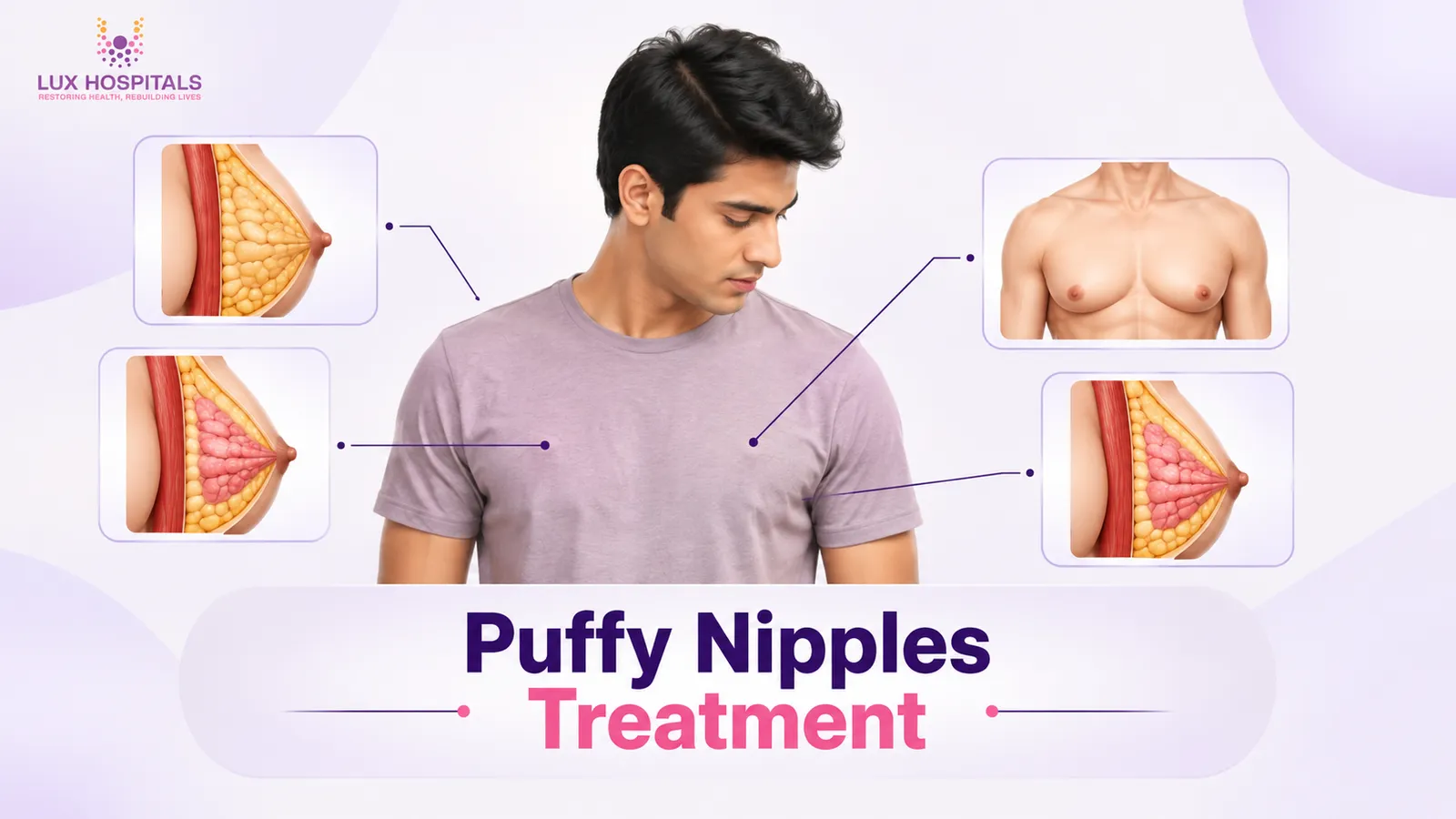
Puffy nipples treatment starts with finding out why the nipple area looks enlarged or projects through clothing. During an assessment, a plastic surgeon examines the chest, nipple-areola area, and surrounding tissue checks for gynecomastia or excess fat; assesses chest asymmetry; and may recommend blood tests or imaging when clinically indicated.
11 October 2026
Send your reports across and a senior surgeon will review them, explain the options and tell you honestly whether surgery is the right call.
Plot No.116, Lumbini Avenue, HITEC CITY, Near IKEA, Hyderabad – 500032