











How Breast Augmentation Surgery Is Performed: A Complete Patient Guide
One of the most common cosmetic operations in the world is breast augmentation surgery. Women choose this procedure to improve symmetry, increase breast size, and replace volume lost after pregnancy or weight reduction. If you are considering Breast Augmentation Surgery, being aware of how the process operates might boost your confidence. and prepared. In this comprehensive guide, we explain every step of Breast Augmentation Surgery, from consultation to recovery.
What is Breast Augmentation Surgery?
Breast Augmentation Surgery is a cosmetic procedure that increases breast size and improves shape using implants or fat transfer. Surgeons place implants either under the chest muscle or behind the breast tissue to create a fuller and more balanced appearance.
Patients choose Breast Augmentation Surgery for several reasons:
- To increase a naturally small breast size
- To restore volume after pregnancy or weight loss
- To correct asymmetry
- To improve overall body proportions
- To enhance self-confidence
The goal of Breast Augmentation Surgery is not just size enhancement but achieving natural, proportionate, and long-lasting results.
Personalised Consultation and Planning
Every successful Breast Augmentation Surgery begins with a detailed consultation. During this stage, the surgeon:
- Evaluates your breast anatomy
- Discusses your aesthetic goals
- Reviews medical history
- Explains implant options
- Uses measurements and imaging for planning
You and your surgeon decide the implant size, shape, and placement technique. Open communication ensures realistic expectations and safe results.
Choosing the Right Implants
The success of breast augmentation surgery is significantly influenced by the type of implant used. The two most popular kinds of implants are:
1. Silicone Implants
These implants feel soft and natural since they are filled with silicone gel. Because of their lifelike texture, they are frequently utilised in breast augmentation surgery.
2. Saline Implants
Filled with sterile saltwater, these implants allow size adjustment during surgery and require smaller incisions.
Your surgeon may also discuss round vs. anatomical (teardrop) shapes, surface texture, and implant profile. Choosing the right implant ensures a balanced and attractive result.
Anaesthesia and Preparation
Breast Augmentation Surgery is usually performed under general anaesthesia. This keeps you comfortable and pain-free during the procedure.
Before surgery:
- The surgical area is cleaned and marked.
- Monitoring devices are attached.
- The anaesthesia team ensures safety.
This preparation phase ensures a smooth and controlled surgical experience.
Incision Techniques
The surgeon makes a small incision to place the implant. The most common incision options include:
- Inframammary (under the breast fold)
- Periareolar (around the nipple)
- Transaxillary (in the armpit)
Each incision type has advantages. The inframammary incision is commonly preferred in Breast Augmentation Surgery because it allows better precision and minimal visible scarring
Implant Placement
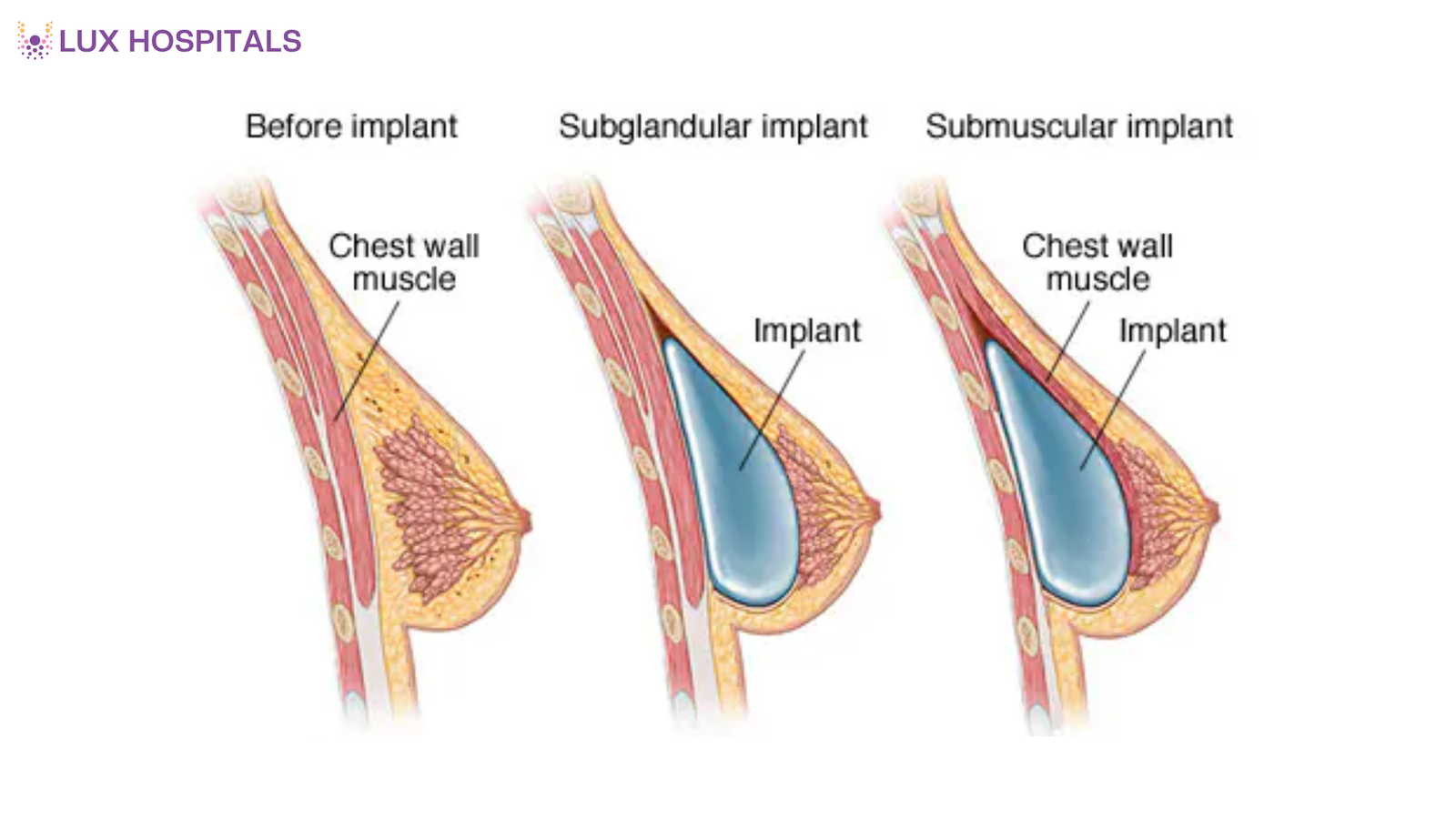
The surgeon makes a pocket for the implant after making the incision. Placement of the implant is possible:
Subglandular: Behind the tissue of the breasts
Submuscular: The muscle beneath the chest
Submuscular implantation frequently minimises noticeable rippling and produces a more natural contour. To ensure symmetry and a natural shape, the surgeon carefully positions the implant. After placement, the incision is closed using sutures, surgical tape, or skin adhesive.
Recovery After Breast Augmentation Surgery
Recovery from Breast Augmentation Surgery typically takes a few weeks. Most patients return home the same day.
Immediate Recovery
- Mild swelling and soreness
- Compression garments to support healing
- Prescription medications for pain management
First Few Weeks
- Avoid heavy lifting
- Limit upper body movement.
- Attend follow-up appointments
Full results become visible after swelling subsides, usually within 6–8 weeks. Breast Augmentation Surgery results can last many years with proper care.
Risks and Safety Considerations
Like any surgical procedure, Breast Augmentation Surgery carries some risks, including:
- Infection
- Implant rupture
- Capsular contracture
- Temporary changes in nipple sensation
Choosing a qualified, experienced surgeon significantly reduces the risk of complications. Always follow post-operative instructions carefully to ensure safe healing.
Benefits of Breast Augmentation Surgery
Breast Augmentation Surgery offers both physical and emotional benefits:
- Enhanced breast volume
- Improved body proportions
- Better clothing fit
- Restored post-pregnancy appearance
- Increased self-confidence
Many patients report improved self-image and satisfaction after Breast Augmentation Surgery
Why Choosing the Right Hospital Matters
Choosing a reputable medical facility guarantees accuracy, safety, and individualised treatment. A skilled surgical team adheres to strict sterilisation guidelines and employs sophisticated techniques to achieve predictable, lifelike results. Your safety, comfort, and self-assurance should always come first.
Conclusion
Breast Augmentation Surgery is a transformative procedure that enhances both appearance and self-esteem. At Lux Hospital, patients receive personalised treatment plans, advanced surgical care, and compassionate support throughout their journey, and the hospital focuses on patient comfort, safety standards, and natural-looking outcomes. When performed by skilled professionals at Lux Hospital, Breast Augmentation Surgery can deliver beautiful, balanced, and confidence-boosting results tailored to your body and goals. Take the first step toward a more confident you by scheduling a consultation today.
Frequently Asked Questions
Breast Augmentation Surgery usually takes 1 to 2 hours, depending on the implant type and the surgical technique used by the surgeon. The duration also depends on whether the implant is placed under the muscle or behind the breast tissue.
Patients experience mild to moderate discomfort after Breast Augmentation Surgery, especially in the first few days. Surgeons prescribe pain medication to effectively control soreness and reduce inflammation.
Breast implants used in Breast Augmentation Surgery are long-lasting but may not be lifetime devices. On average, implants can last 10 to 20 years without complications. Regular follow-ups help monitor implant condition and detect any issues early.
Many women can successfully breastfeed after Breast Augmentation Surgery without difficulty. Breastfeeding ability depends on the incision type and implant placement technique.
You will notice an immediate improvement in volume after Breast Augmentation Surgery, once swelling begins to settle. However, final results typically appear within six to eight weeks after full healing.