
Dr. Samhitha Reddy
Consultant Proctologist & Laparoscopic Surgeon
MBBS, MS, FMAS, FISCP, DMAS
- 8 Yrs
- ASCRS Member
By Dr Sai kishan Sirasala · MBBS, MS. Orthopedics, FIJR, FIASM ( UK ) 24 November 2026 6 min read
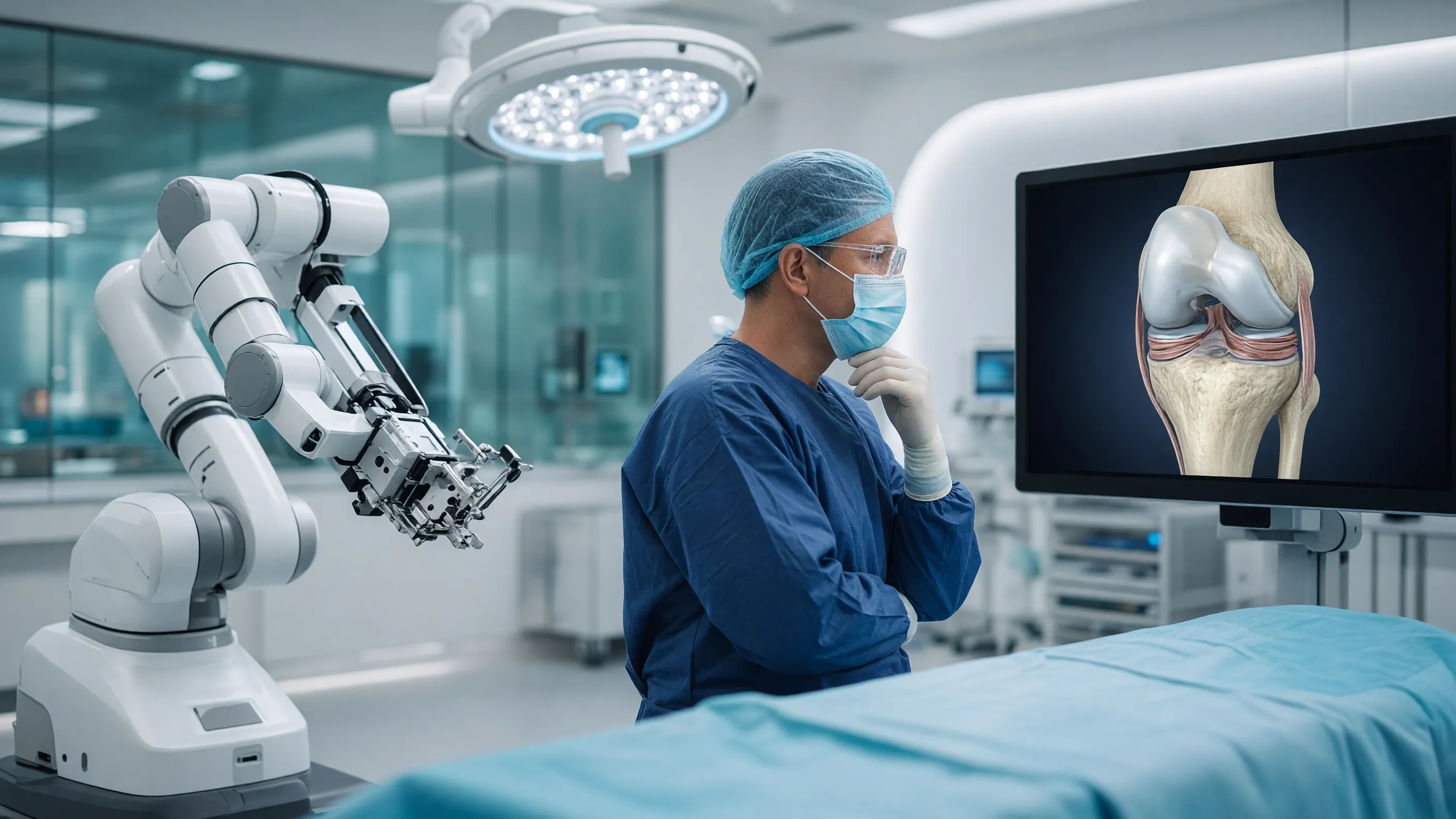
Robotic knee replacement is usually best for adults with moderate-to-severe knee arthritis whose pain and stiffness continue despite medicines, physiotherapy, or injections. Ideal candidates are healthy enough for surgery, committed to rehabilitation, and want precise, personalised implant placement. This guide explains what robotic-arm assisted knee surgery involves and the signs that you may qualify. It also covers who may not be suitable, how age, weight, and overall health affect eligibility, and how surgeons evaluate candidacy. Finally, you will learn what recovery looks like and how Lux Hospitals supports patients at every step of the journey.
Robotic knee replacement is a type of knee replacement surgery in which the surgeon uses a robotic-arm system to guide bone cuts and implant placement. The surgeon stays in full control throughout the operation.
The technology helps with:
The robot does not operate on its own. It is a precision tool that supports the surgeon's skill and judgement.
Before surgery, imaging of your knee is used to build a personalised surgical plan. During the operation, the system maps your joint and helps the surgeon follow that plan.
The typical steps include:
Many patients begin walking with support soon after surgery. The exact timing depends on your health and your surgeon's advice.
The ideal robotic knee replacement candidate has significant joint damage that limits daily life. Simpler treatments have usually been tried first without lasting relief.
You may be a candidate if you have:
If several of these sound familiar, a specialist assessment is a sensible next step. You can also read about common knee pain symptoms before your visit.
Don't live with daily knee pain—consult the joint specialists at Lux Hospitals today.
Robotic assistance is used for the same conditions as conventional knee replacement. It may be especially helpful when precise alignment matters.
Common conditions include:
Your surgeon will confirm the diagnosis with an examination and imaging. Only then will a specific knee osteoarthritis treatment or procedure be recommended.
Robotic surgery is not right for everyone. Some health issues raise surgical risk or suggest another treatment may work better.
Extra caution may be needed with:
Many of these issues can be managed before surgery. Some non-arthritic problems, such as meniscus tears, may be better treated with knee arthroscopy instead.
There is no strict age limit for robotic knee replacement. Surgeons focus more on your symptoms, joint damage, and fitness for surgery.
Key eligibility factors include:
Improving weight, blood sugar, and fitness before surgery can lower risks. It may also support a smoother knee replacement recovery.
Book a candidacy assessment with the orthopaedic team at Lux Hospitals.
Robotic systems can assist with both partial and total knee replacement. The right choice depends on how much of the joint is damaged.
Here is a simple comparison:
Our guide on partial vs total knee replacement explains each option in more detail. Your surgeon will advise which suits your knee.
Robotic-arm assisted knee surgery aims to improve accuracy and personalisation. Like any surgery, it also has limits patients should understand.
Potential benefits and limitations include:
Long-term outcomes are still being studied. Our article on robotic vs traditional knee replacement compares both approaches clearly.
Get expert advice on robotic knee surgery benefits at Lux Hospitals.
Deciding on surgery is a shared process between you and your surgeon. A thorough evaluation matches the procedure to your needs and goals.
Your assessment may include:
It also helps to review knee replacement surgery cost estimates early. This lets you plan finances and insurance ahead of time.
Recovery after robotic knee replacement still depends on steady, guided rehabilitation. Your effort after surgery matters as much as the operation itself.
Recovery usually involves:
Timelines vary from person to person. Your care team will set milestones based on your progress.
At Lux Hospitals, orthopaedic specialists assess each patient carefully before recommending robotic surgery. The focus is on the right treatment, not simply the newest one.
Patients benefit from:
Discover more about robotic surgeries at Lux Hospitals. Precision technology combined with experienced care supports confident decisions.
Schedule your robotic knee replacement consultation at Lux Hospitals today.
Robotic knee replacement can be an excellent option for adults with advanced knee arthritis who have not found lasting relief from conservative care. The right candidate is generally healthy enough for surgery, has clear imaging evidence of joint damage, and is ready to commit to rehabilitation. Age alone rarely rules anyone out, but weight, blood sugar, heart health, and infection risk all matter.
No article can decide candidacy for you. A detailed evaluation by an experienced orthopaedic surgeon is the only way to know whether robotic, conventional, partial, or total replacement suits your knee. If knee pain is limiting your life, speak with the specialists at Lux Hospitals to explore your options safely.
Ideal candidates usually have moderate-to-severe knee arthritis, ongoing pain and stiffness despite medicines or physiotherapy, and imaging showing joint damage. They should be fit enough for surgery and willing to follow a structured rehabilitation programme afterwards.
There is no fixed age limit. Surgeons consider overall health, activity level, bone quality, and the severity of joint damage. Both younger active patients and older adults may qualify after a careful medical evaluation by an orthopaedic specialist.
Many overweight patients can have robotic knee surgery. However, a high BMI may increase risks such as infection or wound problems. Your surgeon may recommend weight management before surgery to improve safety and support a better recovery.
Robotic assistance can improve the precision of bone cuts and implant alignment. Traditional surgery also gives good results in skilled hands. Long-term differences are still being studied, so your surgeon will recommend the approach that best suits your knee.
Many patients walk with support soon after surgery and resume light daily activities within several weeks. Full recovery often takes a few months. Timelines vary with age, health, and how consistently you follow physiotherapy and your surgeon's advice.
Yes, people with diabetes can often have robotic knee replacement if their blood sugar is well controlled. Poorly controlled diabetes raises infection and healing risks, so your doctors may optimise sugar levels before scheduling surgery.
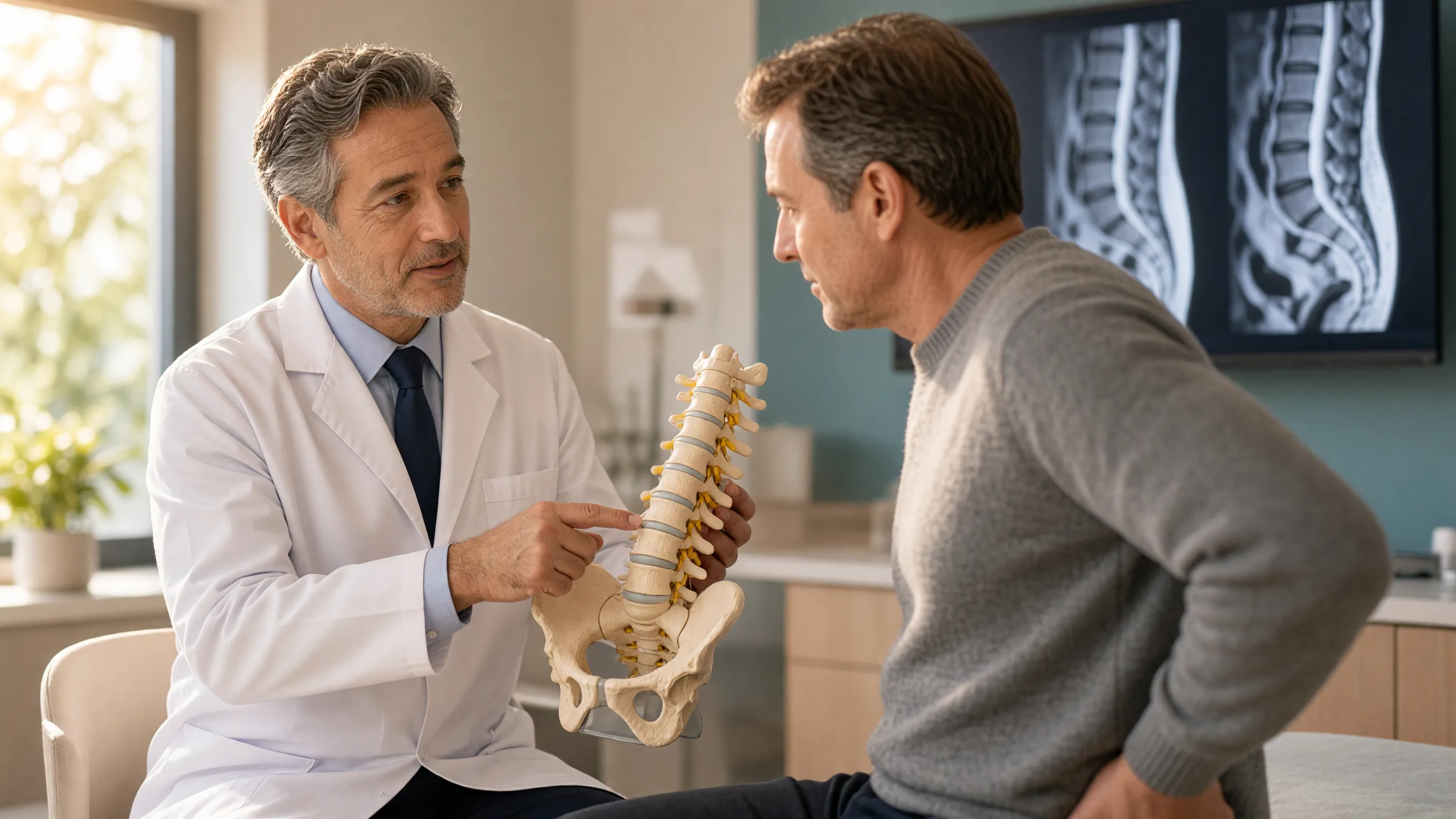
Most people with sciatica do not need spine surgery and improve with conservative sciatica treatment such as activity changes, medicines, and physiotherapy. Surgery is usually considered only when pain persists despite good care, nerve weakness worsens, or emergency signs like bladder or bowel changes appear. In this guide, you will learn what sciatica is and what causes it. We explain non-surgical options, the clear signs that point toward an operation, and how specialists diagnose the problem. You will also find surgical options, recovery tips, and how Lux Hospitals can help.
20 November 2026

Cervical myelopathy symptoms usually begin subtly, with clumsy or numb hands, trouble with fine tasks like buttoning a shirt, and new unsteadiness while walking. These signs appear when the spinal cord in the neck is squeezed, most often by age-related wear and tear. Because the condition can slowly worsen, spotting it early really matters. In this guide, you will learn what cervical myelopathy is, its early and advanced warning signs, and the common causes and risk factors. We also explain how doctors diagnose it, which treatments are available, and when you should see a spine specialist.
16 November 2026

Dr Sai Kishan Sirasala is a Consultant Orthopaedic Surgeon at Lux Hospitals, Hyderabad. His clinical interests include joint replacement, arthroscopy, sports-related injuries and musculoskeletal conditions. He holds an MS in Orthopaedics and fellowships in arthroscopy, sports medicine, and joint replacement surgery. Lux Hospitals lists his experience as 8 years.
9 November 2026
Send your reports across and a senior surgeon will review them, explain the options and tell you honestly whether surgery is the right call.
Plot No.116, Lumbini Avenue, HITEC CITY, Near IKEA, Hyderabad – 500032