











Best Treatment for Bladder Prolapse: Modern Medical Approaches
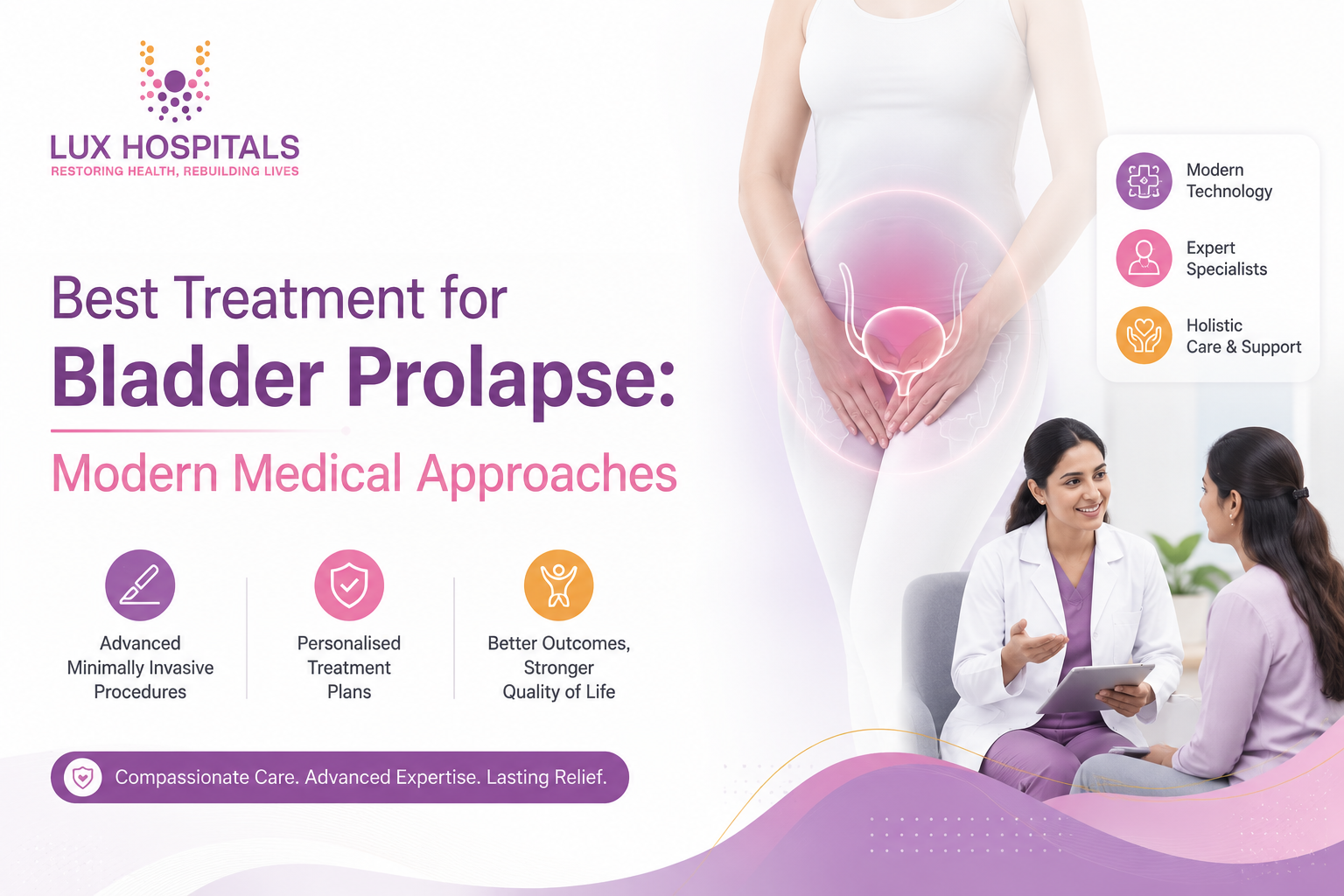
A frequent pelvic floor ailment that many women have, particularly after childbirth, menopause, or ageing, is bladder prolapse. It happens when the bladder protrudes into the vagina due to a weakening of the muscles and tissues supporting it. Due to embarrassment or ignorance, many women are reluctant to seek therapy. To treat bladder prolapse and restore normal bladder function, contemporary medicine offers several efficient, minimally invasive treatments. Experienced pelvic floor specialists and urologists at Lux Hospitals offer individualised treatment programs that restore patients’ comfort and self-assurance.

What is Bladder Prolapse?
Bladder Prolapse, also known as cystocele or anterior vaginal prolapse, occurs when the supportive tissues between the bladder and vaginal wall become weak or stretched. As a result, the bladder slips downward into the vagina.
The severity of Bladder Prolapse varies from mild to severe. While some women experience only minor discomfort, others may have significant urinary and pelvic symptoms that require medical treatment.
Common Types of Bladder Prolapse
- Grade 1 – Mild descent
- Grade 2 – Moderate prolapse reaching the vaginal opening
- Grade 3 – Severe prolapse protruding outside the vagina
- Grade 4 – Complete prolapse with major bladder displacement
Early diagnosis helps prevent complications and improves treatment outcomes.
What Causes Bladder Prolapse?
Several factors weaken the pelvic floor muscles, increasing the risk of Bladder Prolapse.
Pregnancy and Childbirth
Pelvic support tissues are stretched and weakened by repeated vaginal births.
Menopause
Lower estrogen levels reduce tissue strength, increasing the risk of Bladder Prolapse.
Aging
Natural muscle weakening occurs with age.
Chronic Pressure on the Pelvic Floor
This may result from:
- Chronic constipation
- Persistent coughing
- Obesity
- Heavy lifting
- Previous pelvic surgery
Women with multiple risk factors are more likely to develop Bladder Prolapse over time.
Symptoms of Bladder Prolapse
Symptoms depend on the severity of the condition. Mild cases may cause little discomfort, while advanced Bladder Prolapse can interfere with everyday life.
Common Symptoms Include
- Feeling of heaviness in the pelvis
- Vaginal bulge or pressure
- Frequent urination
- Difficulty emptying the bladder
- Urinary leakage
- Recurrent urinary tract infections
- Pain during intercourse
- Lower back discomfort
If these symptoms continue or worsen, medical evaluation is essential.
How is Bladder Prolapse Diagnosed?
Accurate diagnosis helps determine the most suitable treatment for Bladder Prolapse.
Medical History
The doctor discusses symptoms, childbirth history, surgeries, and lifestyle factors.
Physical Examination
A pelvic examination helps determine the extent of prolapse.
Additional Diagnostic Tests
Depending on the condition, your doctor may recommend:
- Urine examination
- Ultrasound scan
- Urodynamic testing
- Cystoscopy
- MRI in complex cases
At Lux Hospitals, advanced diagnostic facilities ensure accurate evaluation and personalised treatment planning.
Best Modern Treatments for Bladder Prolapse
The ideal treatment depends on the severity of Bladder Prolapse, age, lifestyle, and future pregnancy plans.
Lifestyle Changes
Mild Bladder Prolapse may improve with simple lifestyle modifications.
These include:
- Weight management
- Avoiding heavy lifting
- Treating constipation
- Managing chronic cough
- Eating a fibre-rich diet
These measures reduce pelvic pressure and slow disease progression.
Pelvic Floor Exercises (Kegel Exercises)
Kegel exercises strengthen pelvic muscles and improve bladder support.
Benefits include:
- Better bladder control
- Reduced urinary leakage
- Improved pelvic muscle strength
- Prevention of worsening prolapse
A pelvic floor physiotherapist can guide patients to the best results.
Vaginal Pessary
A pessary is a soft silicone device placed inside the vagina to support the bladder.
It is recommended for:
- Mild to moderate Bladder Prolapse
- Women avoiding surgery
- Elderly patients
- Women awaiting surgery
Regular follow-up ensures proper fitting and hygiene.
Medications
While medications can’t treat bladder prolapse, they can help control its symptoms.
Doctors may prescribe:
- Vaginal estrogen therapy after menopause
- Medication for urinary urgency
- Antibiotics for recurrent infections
Treatment is individualised based on symptoms.
Minimally Invasive Surgery
Surgery offers long-term improvement when conservative treatment is ineffective.
These days, surgical options include:
Anterior Vaginal Repair
The weakened vaginal wall is repaired to restore bladder support.
Laparoscopic Pelvic Floor Repair
Pain, blood loss, and recovery time are all decreased with small incisions.
Robotic-Assisted Surgery
Offers enhanced precision with faster healing.
Sacrocolpopexy
A durable procedure for severe or recurrent Bladder Prolapse.
Modern surgical techniques at Lux Hospitals focus on preserving normal anatomy while minimising complications.
Recovery After Bladder Prolapse Treatment
Recovery depends on the treatment performed.
Patients are usually advised to:
- Avoid lifting heavy weights.
- Prevent constipation
- Drink adequate water
- Continue pelvic floor exercises.
- Attend regular follow-up visits.
- Follow postoperative instructions carefully.
Most patients return to routine activities within a few weeks after minimally invasive surgery.
Can Bladder Prolapse Be Prevented?
Although not every case of Bladder Prolapse is preventable, healthy habits reduce the risk.
Prevention Tips
- Perform pelvic floor exercises regularly.
- Maintain a healthy body weight.
- Treat chronic constipation
- Avoid smoking
- Manage chronic cough
- Avoid excessive heavy lifting.
- Stay physically active
Preventive care plays a major role in maintaining pelvic health.
Why Choose Lux Hospitals for Bladder Prolapse Treatment?
Choosing the right hospital ensures safe treatment and excellent long-term outcomes.
At Lux Hospitals, patients benefit from:
- Experienced urologists
- Advanced diagnostic technology
- Minimally invasive surgical expertise
- Tailored treatment regimens
- All-inclusive health services for women
- Caring, patient-centred treatment
- Quicker recovery procedures
- Full post-treatment assistance
- Every patient with bladder prolapse has their comfort, self-esteem, and quality of life restored by our interdisciplinary team.
Conclusion
Early medical attention can improve everyday comfort and prevent consequences from bladder prolapse, which is a treatable condition. Timely treatment is crucial whether you require sophisticated minimally invasive surgery, pelvic floor therapy, pessary management, or lifestyle coaching. Our experts at Lux Hospitals offer thorough evaluations and cutting-edge treatment options tailored to your needs, enabling you to resume a healthy, active life confidently.
Frequently Asked Questions
Your age, symptoms, general health, and the severity of your bladder prolapse all influence the best course of action. While moderate to severe cases may need minimally invasive surgery, mild cases frequently resolve with pelvic floor exercises or a pessary.
Pelvic floor strengthening exercises, lifestyle changes, weight control, and pessary support can all be used to treat mild bladder prolapse. Surgery is typically necessary for severe prolapse to reduce ongoing discomfort and restore bladder support. Early medical consultation increases therapy efficacy.
Yes, modern Bladder Prolapse surgery is considered safe when performed by experienced specialists using advanced minimally invasive techniques. Most patients experience less pain, shorter hospital stays, faster recovery, and excellent long-term outcomes. Your surgeon will explain the risks and benefits of treatment before the procedure.
Lux Hospitals offers each patient a thorough evaluation, cutting-edge imaging, minimally invasive surgery procedures, and customised treatment regimens. Using evidence-based medical care, our skilled professionals prioritise patient safety, quicker recovery, and long-term symptom management.
Yes, Lux Hospitals offers a range of non-surgical treatment options, including hormonal therapy when necessary, pelvic floor rehabilitation, pessary fitting, and lifestyle counselling. After thoroughly evaluating each patient's condition, our doctors provide the most efficient, individualised course of treatment.