Dr. Samhitha Reddy
Consultant Proctologist & Laparoscopic Surgeon
MBBS, MS, FMAS, FISCP, DMAS
- 8 Yrs
- ASCRS Member
By Dr. Priyank Ashokkumar Salecha · MBBS, MS, MCH, DNB 28 May 2025 6 min read Updated 21 August 2026
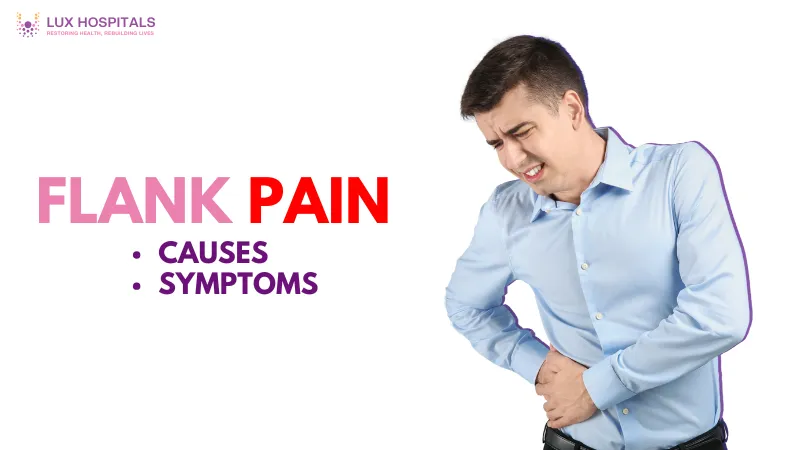
It starts with a twinge. Maybe a dull ache after a long day or a sudden, sharp stab takes your breath away. Whatever the sensation, flank pain the discomfort felt on either side of your body between the lower ribs and hips is something you shouldn’t ignore. It can be as harmless as a strained […]
It starts with a twinge. Maybe a dull ache after a long day or a sudden, sharp stab takes your breath away. Whatever the sensation, flank pain the discomfort felt on either side of your body between the lower ribs and hips is something you shouldn’t ignore. It can be as harmless as a strained muscle or as serious as a kidney infection.
In this guide, we’ll walk you through the flank pain causes, common flank pain symptoms, and when you should consider seeing a doctor. Whether you’re dealing with left, right, or flank pain on both sides, this blog is your go-to resource.
Pain on one’s side is referred to as flank pain, often between the ribs and the hip. This area houses vital organs like the kidneys and is closely related to structures in the back, digestive system, and reproductive system.
The pain may be subtle or intense, continuous or sporadic, and may radiate to the abdomen or lower back. While flank pain on one side is more common, experiencing flank pain on both sides can point to more systemic or bilateral issues.
Understanding how flank pain symptoms present can help identify what’s causing the discomfort. Common symptoms include:
If your pain is persistent, severe, or associated with any of the above symptoms, you should seek medical evaluation immediately.
Several conditions can cause flank pain, ranging from mild to life-threatening. Here are some of the most common culprits:
The kidneys are one of the most frequent sources of flank pain, particularly if you’re experiencing right flank pain or left flank pain.
If you’ve recently lifted something heavy or twisted your body awkwardly, your flank pain could be muscular in origin.
Though UTIS typically cause pelvic discomfort, a severe or untreated infection can ascend to the kidneys and lead to left flank pain, right flank pain, or flank pain on both sides.
Your digestive system can also be a hidden source of flank pain.
For women, gynecological conditions can sometimes mimic or contribute to flank pain:
Men may also experience referred flank pain from testicular conditions, like torsion or infection.
Before the rash appears, shingles can cause a burning or tingling sensation in one flank. This pain is usually one-sided and very intense.
While some causes of flank pain are benign and resolve on their own, others require urgent medical attention. Here’s when you should be concerned:
Could indicate kidney stones or a ruptured ovarian cyst.
May point to a kidney infection or systemic infection.
Never normal. It could signal kidney stones, infections, or, in rare cases, tumours.
Chronic or worsening pain should always be evaluated to rule out more serious conditions.
Simultaneous pain on both flanks may be a sign of a systemic condition, such as polycystic kidney disease or dehydration affecting both kidneys.
When you visit a healthcare provider with flank pain, here’s what they might do:
For insurance and documentation, flank pain ICD 10 codes, such as R10.9 (Unspecified abdominal pain) or more specific ones, are used for diagnosis and billing purposes.
Treatment depends entirely on the underlying cause:
Always follow your doctor’s advice and avoid self-diagnosing or self-medicating, especially with something as variable as flank pain.
While you can’t prevent every type of flank pain, some lifestyle changes can reduce your risk:
Your body uses flanking as a warning sign when anything is wrong. Paying attention is always crucial, whether you have a minor muscle pain or a more complicated problem with your kidneys or reproductive organs. If you are aware of the symptoms and possible causes of flank pain, you can make better decisions about when to seek assistance.
While many causes are minor, others can be dangerous if left untreated. If you’re experiencing persistent left flank pain, right flank pain, or flank pain on both sides, don’t wait. Contact a healthcare provider for timely evaluation and treatment.
Flank pain can feel like a dull ache, sharp stabbing, or cramping sensation on one or both sides of your lower back, just below the ribs. It may be constant or come and go, and sometimes, it radiates to the abdomen or groin.
Not all the time. A simple muscular strain can induce flank discomfort, but it can also indicate more serious conditions including kidney infections, kidney stones, or even problems with the reproductive organs. See a doctor immediately if the pain is severe, ongoing, or accompanied by fever, nausea, or blood in the urine.
Usually, kidney-related conditions such kidney stones or kidney infections are the primary cause of flank pain. Urinary tract infections and muscle strains are also frequent causes.
To prevent flank pain, use over-the-counter pain medications, rest, and drink plenty of water. If the pain is severe, persistent, or has fever or urinary symptoms, consult a doctor for proper diagnosis and treatment.
Flank pain may last a few hours to several days, depending on the cause. Muscle strains usually improve in a few days, while kidney infections or stones may take longer and need medical treatment. If the pain persists, consult a doctor.
Yes. Flank pain on both sides may occur due to conditions like bilateral kidney infections, dehydration, or polycystic kidney disease. If you’re feeling pain on both flanks, especially with urinary symptoms, consult a doctor promptly.
Yes, strain in the muscles brought on by stress might result in minor flank pain. However, it’s crucial to rule out medical explanations first if the pain is severe or persistent.
You should worry about left flank pain if it’s severe, doesn’t improve in a few days, or is associated with fever, vomiting, or painful urination. It could be due to kidney, gastrointestinal, or gynecological conditions.
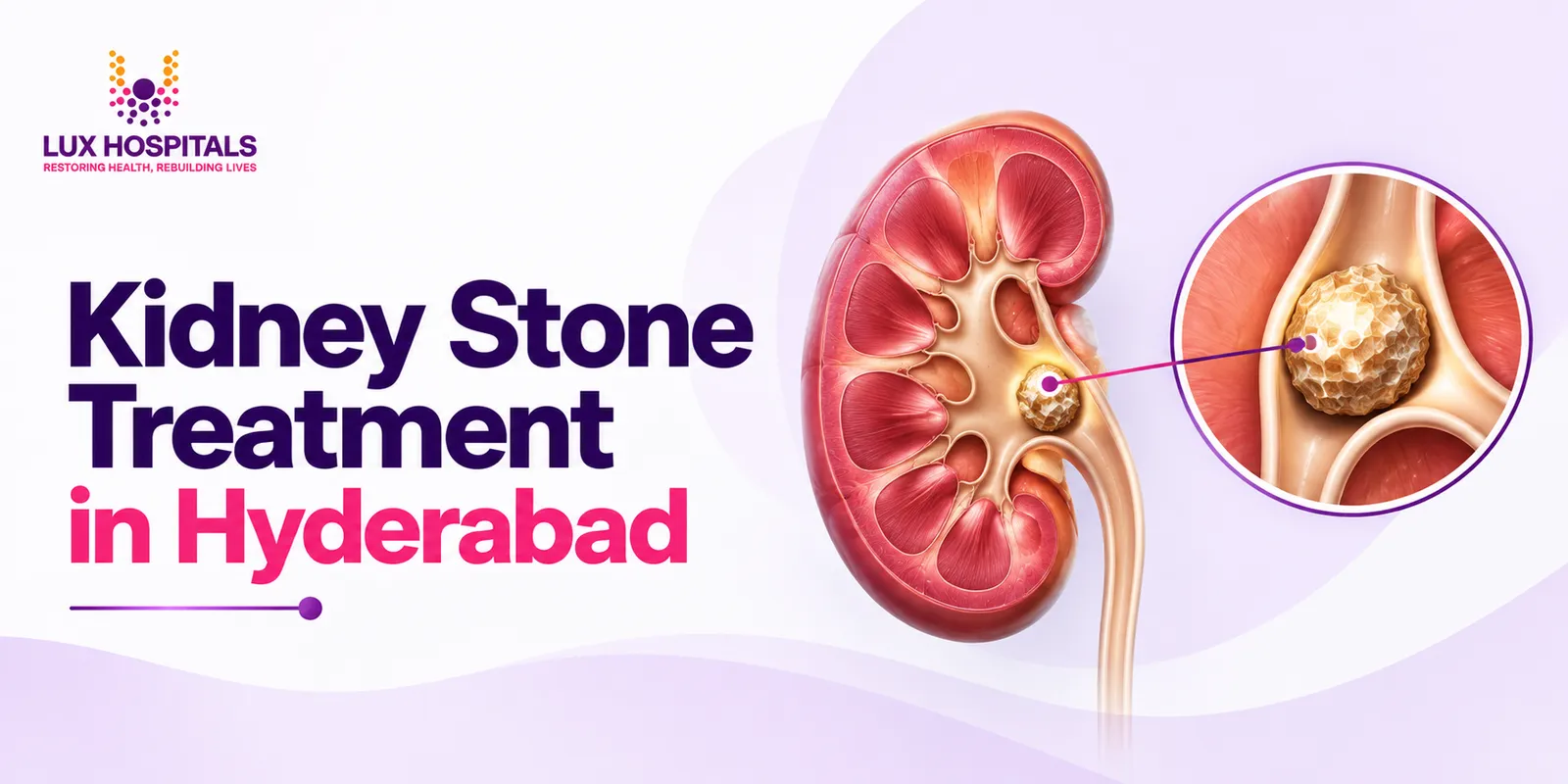
A kidney stone that remains visible on repeat scans can leave you wondering what to do next. Should you wait, change medicines, or consider a procedure? The answer depends on the stone’s size, location, symptoms, blockage, kidney function, and whether it is growing or moving. Don’t choose kidney stone treatment in Hyderabad based on the […]
8 October 2026

Kidney stones can cause sudden, intense pain, difficulty passing urine, nausea and blood in the urine. If a stone doesn’t pass naturally or causes obstruction, infection, or ongoing symptoms, you may need treatment. But with several options available, many patients ask: What is the Best treatment for kidney stones? The answer depends on several factors, […]
17 September 2026

Kidney stones can cause sudden pain, nausea, blood in the urine, and difficulty passing urine. When a stone is too large to pass naturally or causes repeated symptoms, your urologist may recommend a procedure to remove it. Two commonly used options are RIRS and PCNL. But how do you know which treatment is right for […]
2 September 2026
Send your reports across and a senior surgeon will review them, explain the options and tell you honestly whether surgery is the right call.
Plot No.116, Lumbini Avenue, HITEC CITY, Near IKEA, Hyderabad – 500032