Dr. Samhitha Reddy
Consultant Proctologist & Laparoscopic Surgeon
MBBS, MS, FMAS, FISCP, DMAS
- 8 Yrs
- ASCRS Member
By Dr. Priyank Ashokkumar Salecha · MBBS, MS, MCH, DNB 29 December 2025 4 min read Updated 8 January 2026

End-stage renal failure and chronic kidney disease (CKD)remain major global health challenges. The need for effective Renal Failure Treatment has never been more critical as the prevalence of diabetes and hypertension rises worldwide. Fortunately, the field of nephrology is witnessing dynamic advances, from advanced medications to regenerative medicine and AI-driven diagnostics, transforming how […]
End-stage renal failure and chronic kidney disease (CKD)remain major global health challenges. The need for effective Renal Failure Treatment has never been more critical as the prevalence of diabetes and hypertension rises worldwide. Fortunately, the field of nephrology is witnessing dynamic advances, from advanced medications to regenerative medicine and AI-driven diagnostics, transforming how we approach kidney care. In this comprehensive blog, we break down the latest advances in Renal Failure Treatment, offering detailed insights that are both evidence-based and accessible.
A breakthrough in Renal Failure Treatment is the FDA approval of GLP-1 receptor agonists like semaglutide (Ozempic). Initially used for diabetes, these medications have shown significant benefits in slowing CKD progression and lowering the chance of cardiovascular problems and renal failure. This marks a paradigm shift in combining metabolic and renal treatment approaches.
Atrasentan (Vanrafia) has gained FDA approval for reducing proteinuria, a major risk factor in kidney disease progression. By targeting pathways that contribute to kidney damage, this new class expands options in Renal Failure Treatment beyond traditional drugs.
Medications like daprodustat are an innovative oral Renal Failure Treatment designed to address anemia in CKD patients. By stabilizing hypoxia-inducible factors, these drugs improve hemoglobin production and potentially reduce the need for injectable erythropoiesis-stimulating agents.
Technological advances such as AI-enabled dialysis systems (e.g., Renalyx RxT 21) are revolutionizing Renal Failure Treatment. These machines offer real-time remote monitoring and connectivity, improving treatment precision and accessibility, especially in underserved regions.
Innovations like low-flow and personalized dialysis strategies are tailored to reduce cardiovascular stress and improve tolerance. Such approaches are particularly beneficial for elderly or medically complex patients undergoing Renal Failure Treatment.
The goal of regenerative therapy in Renal Failure Treatment is to repair damaged kidney tissue, potentially reducing or delaying the need for dialysis and transplantation. Studies on mesenchymal stem cells (MSCs) have shown promising results in animal models for improving kidney function and promoting tissue repair. While still largely in experimental stages, stem cell research is one of the most fascinating areas of research in renal failure treatment.
Artificial intelligence (AI) is becoming increasingly important in modern Renal Failure Treatment. AI tools can:
These advancements allow clinicians to intervene earlier and tailor treatments to individual patient needs.
Emerging biomarkers like NGAL (neutrophil gelatinase-associated lipocalin), KIM-1 (kidney injury molecule-1), and cystatin C can detect kidney damage earlier than traditional tests. Earlier detection enables timely Renal Failure Treatment, slower disease progression, and better outcomes overall.
In addition to medical and technological advances, supportive therapy plays a key role in Renal Failure Treatment. For instance:
These supportive measures are essential complements to formal Renal Failure Treatment regimens.
Recent breakthroughs include successful transplantations of genetically modified pig kidneys into humans. While still experimental, this approach has the potential to alleviate organ shortages and significantly transform the landscape of Renal Failure Treatment.
Research into wearable or implantable artificial kidneys continues, with the vision of providing continuous renal replacement therapy outside traditional clinical settings. If successful, these devices could eventually redefine Renal Failure Treatment by mimicking the kidney’s natural function.
The field of Renal Failure Treatment is rapidly evolving. From breakthrough medications and smarter dialysis systems to regenerative therapy and AI-enhanced care, the prospects for patients with kidney disease are brighter than ever. At a time when kidney disease rates are rising, staying informed about the latest advances in Renal Failure Treatment is vital. While hospitals around the world, including specialized centers such as those at Lux Hospital, integrate advanced practices, patient education, and proactive care, they remain the foundation of optimal Renal Failure Treatment.
The latest Renal Failure Treatment options include GLP-1 receptor agonists like semaglutide, endothelin receptor antagonists such as atrasentan, AI-driven dialysis machines, regenerative stem cell therapies, and advanced biomarkers for early disease detection. New approaches, such as xenotransplantation, also show promise.
While complete reversal is rare, early intervention with advanced Renal Failure Treatment (including medications, lifestyle changes, and emerging regenerative therapies) can significantly slow progression and improve quality of life.
The future of dialysis in Renal Failure Treatment includes more personalized and gentle techniques, smart AI-driven machines, wearable devices, and possibly hybrid solutions that improve patient comfort and outcomes.
Chronic renal failure cannot be fully cured, but early and advanced Renal Failure Treatment can slow progression and improve quality of life.
AI enhances Renal Failure Treatment through predictive analytics, personalized treatment planning, early detection of complications, and better management of dialysis regimens, leading to improved patient outcomes.
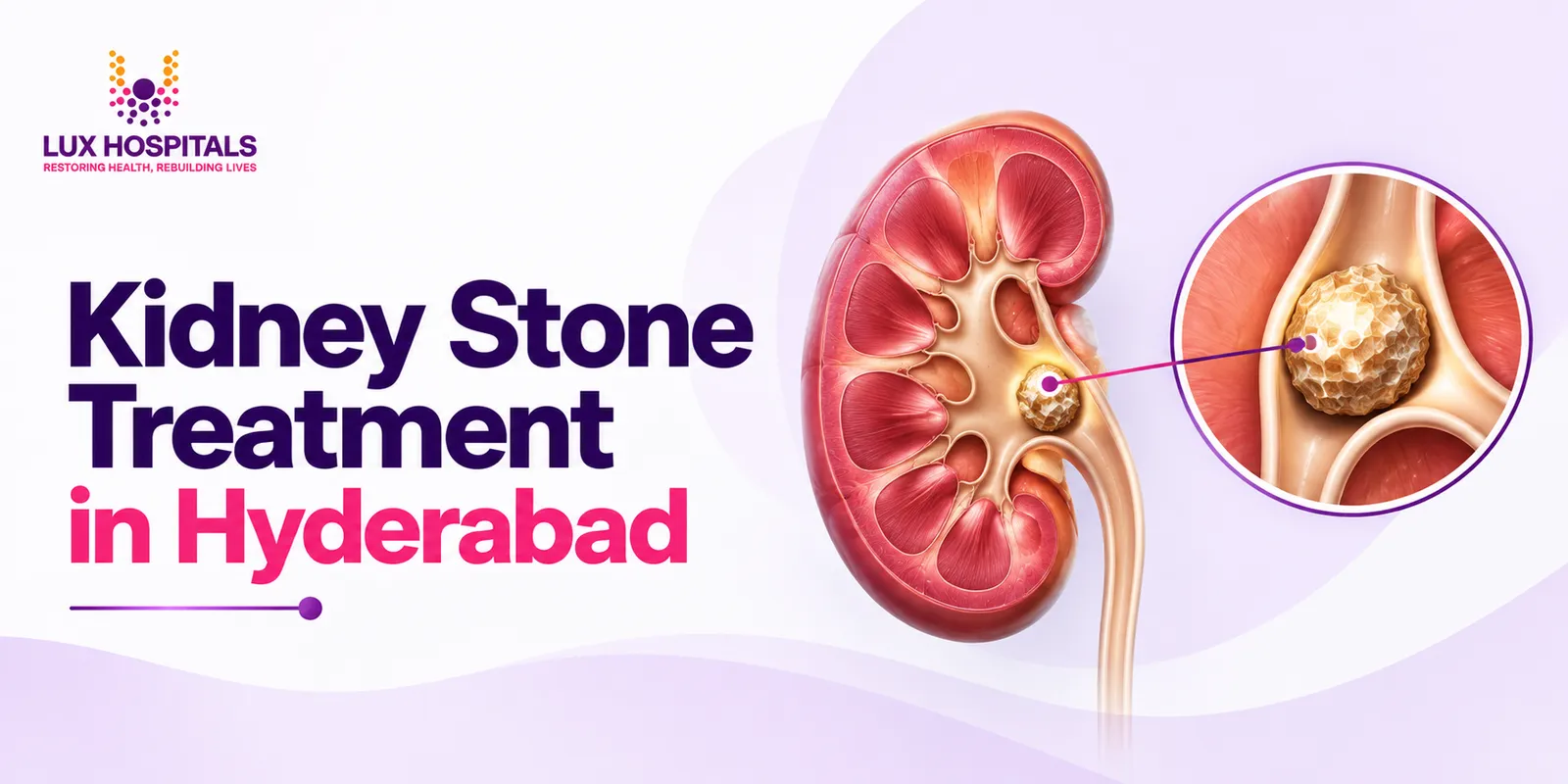
A kidney stone that remains visible on repeat scans can leave you wondering what to do next. Should you wait, change medicines, or consider a procedure? The answer depends on the stone’s size, location, symptoms, blockage, kidney function, and whether it is growing or moving. Don’t choose kidney stone treatment in Hyderabad based on the […]
8 October 2026

Kidney stones can cause sudden, intense pain, difficulty passing urine, nausea and blood in the urine. If a stone doesn’t pass naturally or causes obstruction, infection, or ongoing symptoms, you may need treatment. But with several options available, many patients ask: What is the Best treatment for kidney stones? The answer depends on several factors, […]
17 September 2026

Kidney stones can cause sudden pain, nausea, blood in the urine, and difficulty passing urine. When a stone is too large to pass naturally or causes repeated symptoms, your urologist may recommend a procedure to remove it. Two commonly used options are RIRS and PCNL. But how do you know which treatment is right for […]
2 September 2026
Send your reports across and a senior surgeon will review them, explain the options and tell you honestly whether surgery is the right call.
Plot No.116, Lumbini Avenue, HITEC CITY, Near IKEA, Hyderabad – 500032