Dr. Samhitha Reddy
Consultant Proctologist & Laparoscopic Surgeon
MBBS, MS, FMAS, FISCP, DMAS
- 8 Yrs
- ASCRS Member
By Dr Samhitha Reddy · MBBS, MS, FISCP, FMAS, DMAS 21 August 2024 4 min read Updated 24 September 2025
Anal fistulas can be a challenging and uncomfortable condition, significantly affecting your daily life. Understanding anal fistula treatment options is crucial for finding relief and regaining your comfort. This comprehensive guide looks at effective treatment strategies, including lifestyle adjustments, medical therapies, and advanced surgical options to help you manage and overcome this condition. What is […]
Anal fistulas can be a challenging and uncomfortable condition, significantly affecting your daily life. Understanding anal fistula treatment options is crucial for finding relief and regaining your comfort. This comprehensive guide looks at effective treatment strategies, including lifestyle adjustments, medical therapies, and advanced surgical options to help you manage and overcome this condition.
An anal fistula is an abnormal passageway that develops between the anal canal and the skin surrounding the anus. It usually results from an infection in the anal glands that creates an abscess, which then drains through a fistula. This condition can lead to persistent discomfort, discharge, and irritation, and often requires intervention for proper management.
Before exploring anal fistula treatment, it’s essential to identify the symptoms associated with this condition:
If you experience any of these symptoms, seeking medical advice is crucial for an accurate diagnosis and effective treatment.
Following anal fistula treatment, proper aftercare is crucial for successful recovery:
Living with an anal fistula can be emotionally challenging. It’s important to seek support if needed. Consider talking to a mental health professional or joining a support group to help manage the psychological aspects of dealing with this condition.
Anal fistula treatment encompasses a range of strategies, from non-surgical methods and medical treatments to advanced surgical options. By understanding these approaches and working closely with your healthcare provider, you can develop an effective treatment plan tailored to your specific needs. Whether through lifestyle modifications, medications, or surgery, the goal is to alleviate symptoms, promote healing, and enhance your quality of life.
If your symptoms are severe or don’t improve, don’t wait: schedule an appointment at Lux Hospital for expert care and treatment. We focus on your comfort and well-being first.
Symptoms include persistent discharge, pain during bowel movements, swelling, redness, itching, and sometimes fever.
Diagnosis typically involves a physical examination, imaging tests (like MRI or ultrasound), and sometimes anoscopy or colonoscopy.
Simple anal fistulas may improve with antibiotics, sitz baths, and dietary changes, but most require surgical intervention for complete healing.
Non-surgical methods include antibiotics, antiseptic care, sitz baths, dietary adjustments, and pain management.
Surgical options include fistulotomy, seton placement, flap surgery, LIFT procedure, fistula plugs, and in rare cases, colostomy.
Recovery depends on the procedure; most patients recover within a few weeks with proper wound care and follow-up.
If a piles lump comes out with every bowel movement, it may indicate prolapsing haemorrhoids. The right prolapsed piles treatment depends on the severity of the prolapse, bleeding, pain, bowel habits and whether the lump goes back on its own. A specialist examination can help identify the right treatment. Noticing a lump coming out during […]
14 October 2026
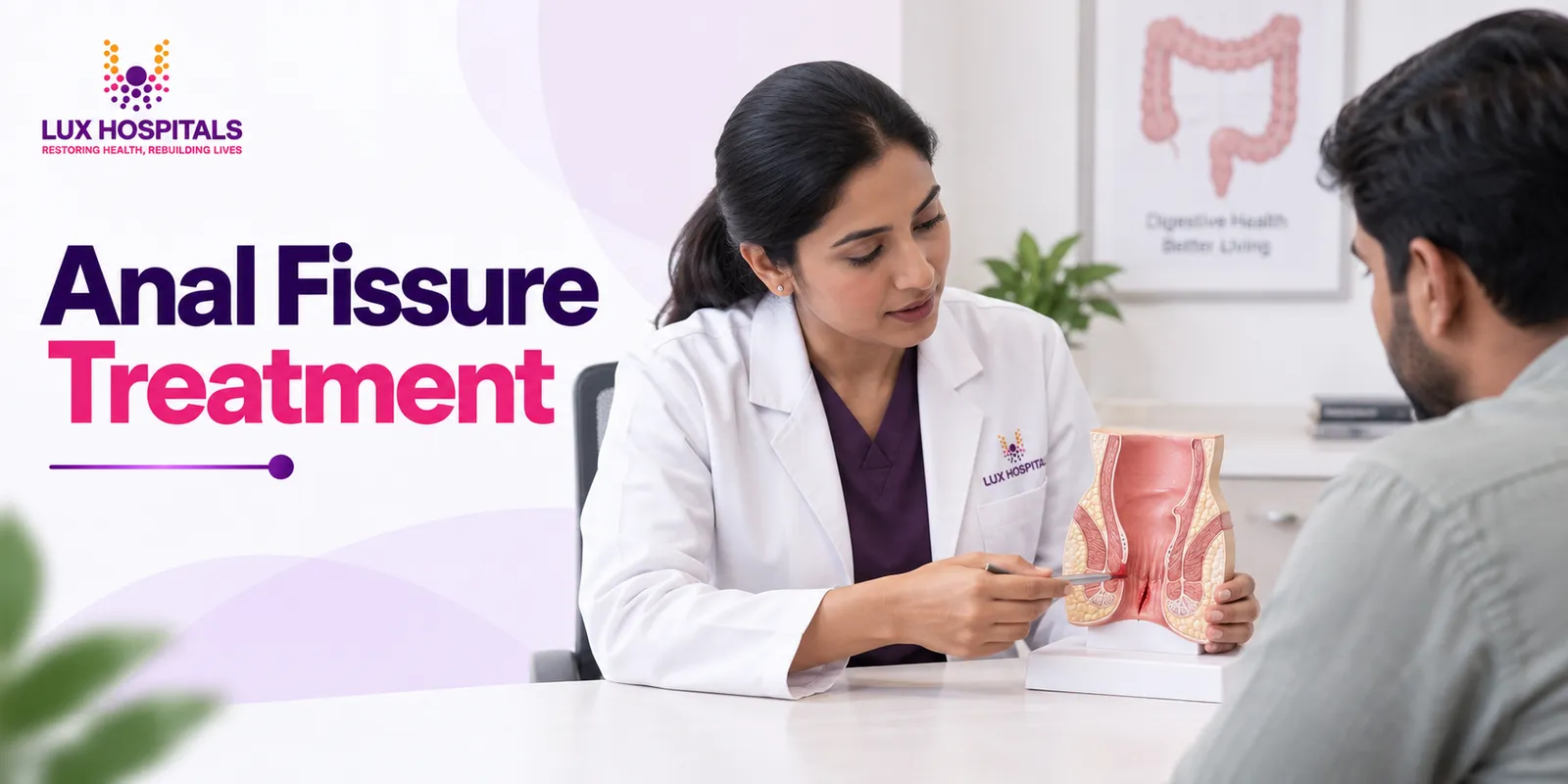
Anal fissure treatment should be discussed with a doctor when pain continues despite prescribed ointment, especially if pain lasts after bowel movements, bleeding keeps returning, or symptoms interfere with daily life. Persistent symptoms may mean the fissure has not healed, is recurring, or needs a different treatment approach.Pain after passing stool is a common reason […]
8 October 2026
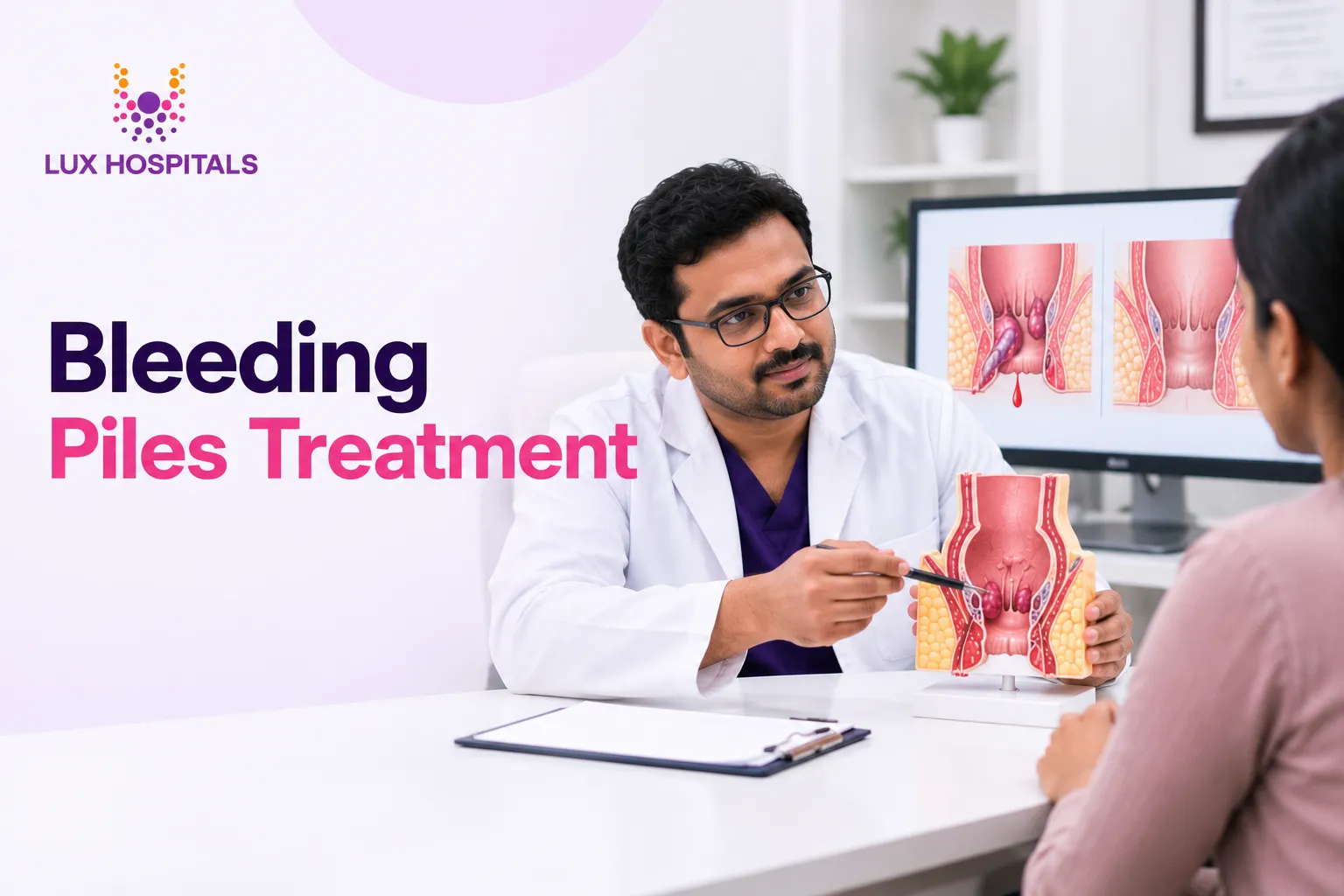
Bleeding during bowel movements is one of the common symptoms of piles, but when it keeps returning despite medicines, it should not simply be ignored. Temporary relief from creams, tablets, or other medicines does not always address the reason behind recurrent bleeding. The severity and type of haemorrhoids, bowel habits, constipation, straining, and other possible […]
4 October 2026
Send your reports across and a senior surgeon will review them, explain the options and tell you honestly whether surgery is the right call.
Plot No.116, Lumbini Avenue, HITEC CITY, Near IKEA, Hyderabad – 500032