












Laser Piles Surgery vs Traditional Surgery: Which Treatment Is Right for You?
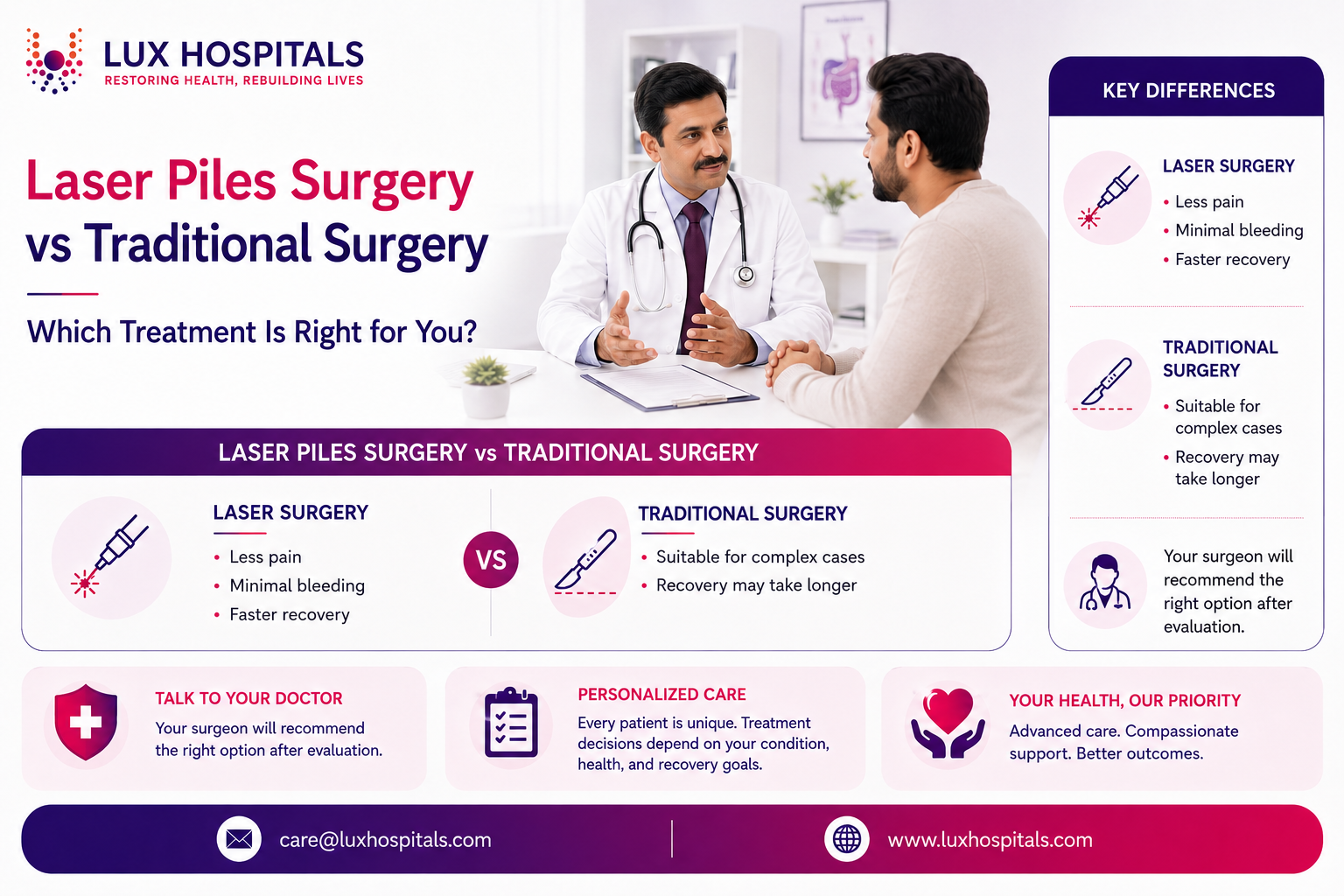
Piles, also called haemorrhoids, can cause bleeding, pain, itching, swelling, and difficulty during bowel movements. While many patients improve with lifestyle changes, medicines, or non-surgical procedures, some need advanced treatment. This is where Laser Piles Surgery vs Traditional Surgery becomes an important question for patients who want lasting relief. At Lux Hospitals, patients can receive a proper evaluation to determine which treatment approach best suits their condition. Traditional excisional hemorrhoidectomy, however, remains an important and effective treatment, especially for selected patients with significant external or combined grade III–IV haemorrhoids.
Understanding Piles Before Choosing Surgery
Piles are swollen blood vessels around the lower rectum or anus. Prolonged sitting, obesity, pregnancy, constipation, straining during bowel movements, and frequent heavy lifting can all raise the risk. Symptoms can range from minor itching to bleeding and prolapse.
Common Symptoms of Piles
You may notice:
- Bright red blood during or after bowel movements
- Pain or discomfort around the anal area
- Itching and irritation
- A lump or swelling near the anus
- Mucus discharge
- A feeling that bowel movements are incomplete
- Prolapsed tissue coming outside the anus
Not every case of bleeding is caused by piles. A medical examination helps identify the real cause and choose the safest treatment.

Laser Piles Surgery vs Traditional Surgery: What Is the Main Difference?
The biggest difference between Laser Piles Surgery and Traditional Surgery is the treatment technique.
What Is Laser Piles Surgery?
Laser treatment for piles, often called laser hemorrhoidoplasty, uses laser energy to shrink and treat haemorrhoidal tissue. The goal is to reduce the blood supply and help the affected tissue shrink while causing less damage to surrounding tissue. Research contrasting laser hemorrhoidoplasty with traditional hemorrhoidectomy has shown that certain patients experience less early postoperative pain, less blood loss, less bleeding after surgery, and an earlier return to normal activities. However, the severity of the patient’s illness and the surgeon’s evaluation still determine the best course of action.
What Is Traditional Piles Surgery?
Traditional surgery usually refers to excisional hemorrhoidectomy. During this procedure, the surgeon removes the problematic haemorrhoidal tissue. It is an established surgical treatment and can be particularly useful for selected patients with large external piles or combined internal and external haemorrhoids. The recovery may involve more postoperative discomfort, but excisional surgery remains highly effective and is strongly recommended in appropriate grade III–IV or external/combined disease situations.
1. Laser Piles Surgery vs Traditional Surgery: Pain After the Procedure
Pain is one of the biggest concerns for patients considering piles treatment. In Laser Piles Surgery vs Traditional Surgery, laser hemorrhoidoplasty has shown lower early postoperative pain in several systematic reviews and meta-analyses. Laser treatment can reduce tissue trauma because it does not involve the same degree of tissue excision as a conventional hemorrhoidectomy. This may make the early recovery period more comfortable for suitable patients. Traditional hemorrhoidectomy can cause moderate to significant postoperative pain, particularly during early bowel movements. Pain management, warm sitz baths, medicines, hydration, fibre intake, and constipation prevention play an important role in recovery.
2. Laser Piles Surgery vs Traditional Surgery: Recovery Time
Recovery is another important factor in Laser Piles Surgery vs Traditional Surgery. Patients undergoing laser hemorrhoidoplasty may return to daily activities earlier in appropriately selected cases. Research has found that laser treatment can lead to a faster return to work or normal activities than conventional surgery. This can help working individuals who want to reduce downtime after treatment. After a conventional hemorrhoidectomy, the recovery period is usually longer. Recuperation usually takes two to four weeks, but returning to physically demanding activities may take longer, according to the Cleveland Clinic. Recovery depends on the extent of the surgery, pain, healing, and individual health.
3. Laser Piles Surgery vs Traditional Surgery: Bleeding and Surgical Trauma
When patients compare Laser Piles Surgery vs Traditional Surgery, they often ask which procedure causes less bleeding. Compared with standard hemorrhoidectomy, laser hemorrhoidoplasty may reduce postoperative bleeding and operative blood loss in the populations studied, according to recent research. A 2024 meta-analysis of 17 trials reported positive short-term outcomes for laser hemorrhoidoplasty, including decreased operative blood loss and postoperative haemorrhage. However, this does not mean laser treatment is automatically the best choice for every patient. Large, external, mixed, or advanced piles may require a different approach.
5. Laser Piles Surgery vs Traditional Surgery: Which One Is Right for You?
The answer to Laser Piles Surgery vs Traditional Surgery depends on your individual diagnosis. Don’t choose a procedure based only on advertisements, price, or promises of a quick recovery.
Your doctor may consider:
- Grade and severity of the piles
- Internal, external, or combined haemorrhoids
- Presence of prolapse
- Severity of bleeding or pain
- Previous treatment history
- Other health conditions
- Expected recovery requirements
- Suitability for anaesthesia and surgery
Excisional haemorrhoidectomy is typically offered to selected patients with external haemorrhoids or symptomatic combined grade III–IV disease, according to current clinical guidance.
4. Laser Piles Surgery vs Traditional Surgery: Effectiveness and Recurrence
A common question about Laser Piles Surgery vs Traditional Surgery is whether one gives more permanent results. Although symptomatic piles can be successfully treated with either treatment, outcomes may differ depending on the type and severity of the condition. Conventional excisional hemorrhoidectomy, which removes hemorrhoidal tissue, has long been regarded as a very successful treatment with a low recurrence rate, especially for very advanced cases. Laser hemorrhoidoplasty can provide good symptom control with better short-term comfort in selected patients, although long-term recurrence data and outcomes can vary between studies. The most important point is that the “best” procedure is not the same for everyone.
5. Laser Piles Surgery vs Traditional Surgery: Which One Is Right for You?
The answer to Laser Piles Surgery vs Traditional Surgery depends on your individual diagnosis. Don’t choose a procedure based only on advertisements, price, or promises of a quick recovery.
Your doctor may consider:
- Grade and severity of the piles
- Internal, external, or combined haemorrhoids
- Presence of prolapse
- Severity of bleeding or pain
- Previous treatment history
- Other health conditions
- Expected recovery requirements
- Suitability for anaesthesia and surgery
Excisional haemorrhoidectomy is typically offered to selected patients with external haemorrhoids or symptomatic combined grade III–IV disease, according to current clinical guidance.
Why Choose Lux Hospitals for Piles Treatment?
At Lux Hospitals, the treatment process begins with understanding your symptoms and assessing your condition’s severity. A proper consultation can help determine whether lifestyle management, medication, a non-surgical procedure, laser treatment, or conventional surgery is appropriate.
Patients should discuss:
Personalised Treatment Planning
Your treatment should match your diagnosis rather than follow a one-treatment-for-all approach. A proper assessment can help the doctor recommend the most suitable procedure.
Focus on Safe Recovery
Aftercare is important following any piles procedure. Patients may need guidance on pain control, wound care, hydration, fibre intake, bowel habits, and preventing constipation.
Expert Surgical Decision-Making
Choose between Laser Piles Surgery and traditional surgery after discussing the expected benefits, limitations, risks, and recovery needs of each option.
Conclusion
The decision between Laser Piles Surgery vs Traditional Surgery should always be based on your condition and a surgeon’s recommendation. Reduced bleeding, less early postoperative pain, and a quicker return to normal activities are possible outcomes of laser hemorrhoidoplasty for suitable patients. However, traditional excisional hemorrhoidectomy remains an important and effective treatment option for some severe, external, or mixed haemorrhoids. Don’t put off a professional evaluation if piles symptoms are negatively affecting your daily life and comfort. For a thorough evaluation and to discuss the best course of action for your condition, symptoms, and recovery needs, visit Lux Hospitals.
Frequently Asked Questions
Laser Piles Surgery vs traditional surgery can't be decided with one answer for every patient because the right procedure depends on the grade, size, location, and type of haemorrhoids. Laser treatment may offer less early pain and faster recovery for suitable cases, while traditional excisional surgery remains highly effective for selected external, combined, and advanced piles. A surgeon should examine you before recommending the most appropriate treatment.
In certain patients, studies and meta-analyses have shown that laser hemorrhoidoplasty reduces early postoperative pain when compared to traditional hemorrhoidectomy. Pain, however, varies from person to person and depends on the treatment, the severity of the illness, personal healing, and bowel habits after surgery. What degree of agony and recuperation to anticipate in your particular situation can be explained by your physician.
Recovery from a conventional hemorrhoidectomy typically takes two to four weeks, but it may occasionally take longer because of demanding jobs or strenuous hobbies. Pain, wound healing, constipation, and other issues can affect recovery, so follow your doctor's aftercare advice. By taking medicine, eating fibre, drinking plenty of water, and avoiding straining, you can promote a quicker recovery.
Lux Hospitals can evaluate your symptoms and help determine the appropriate treatment pathway based on a clinical assessment of your condition. During your consultation, you can discuss Laser Piles Surgery vs Traditional Surgery, expected recovery, possible benefits, and potential risks with the treating specialist. The final treatment recommendation should always be personalised to your diagnosis and medical needs.
You can make an appointment with Lux Hospitals for a thorough medical evaluation if you experience bleeding, soreness, itching, swelling, or a mass close to the anus. In addition to discussing relevant treatment options, such as conservative, minimally invasive, laser, or surgical techniques when clinically appropriate, the specialist can determine whether your symptoms are caused by piles or another condition.