
Dr. Samhitha Reddy
Consultant Proctologist & Laparoscopic Surgeon
MBBS, MS, FMAS, FISCP, DMAS
- 8 Yrs
- ASCRS Member
By Dr Samhitha Reddy · MBBS, MS, FISCP, FMAS, DMAS 28 May 2025 4 min read Updated 21 August 2026
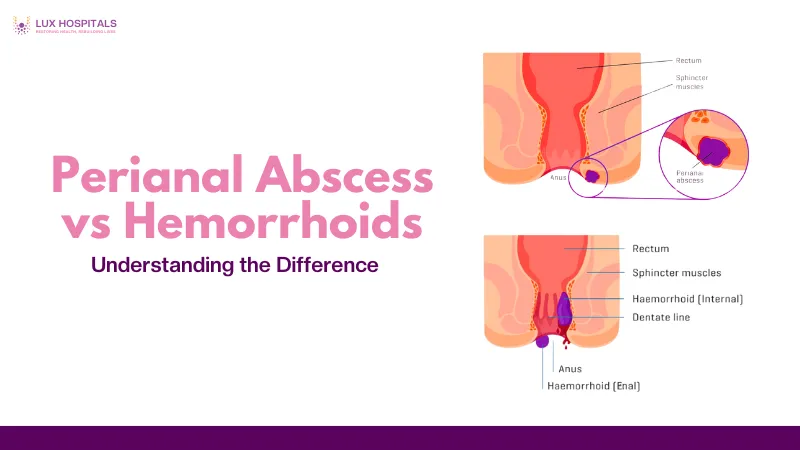
It might be perplexing and concerning to have pain or discomfort in the anal region. This area is frequently affected by two conditions: hemorrhoids and perianal abscess. Despite their initial similarities, their causes, symptoms, and treatments are very different. Comprehending these distinctions is crucial for accurate diagnosis, and these differences are essential for proper diagnosis and prompt relief.
A perianal abscess is a painful collection of pus caused by a bacterial infection in the tissue around the anus or rectum. This condition develops rapidly and often requires urgent medical attention. Common symptoms include constant pain, swelling, redness, warmth, and sometimes fever. If left untreated, it can result in an anal fistula, a more dangerous condition.
Treatment typically involves incision, drainage, antibiotics, and proper wound care.
Similar to varicose veins, hemorrhoids are enlarged veins in the lower rectum or anus. They can appear outwardly (under the skin surrounding the anus) or internally (within the rectum). They may exist internally, that is, within the rectum. (inside the rectum) or external (under the skin around the anus) Symptoms include itching, rectal bleeding, and pain during bowel movements. Hemorrhoids are not caused by infection and rarely lead to serious complications.
Hemorrhoids are not infectious and can often be managed with lifestyle changes and over-the-counter treatments.
| Feature | Perianal Abscess | Hemorrhoids |
| Cause | Bacterial infection | Venous swelling |
| Pain | Severe and constant | Mild to moderate, episodic |
| Swelling | Red, tender lump | Soft, bluish lump |
| Discharge | May release pus | Rarely any discharge |
| Systemic Symptoms | Fever, chills | None |
Recognizing the different symptoms is crucial for determining whether the issue is a perianal abscess vs hemorrhoid.
A physical examination usually diagnoses both conditions, but some tests may help confirm the diagnosis.
Early diagnosis is vital in choosing the proper treatment for perianal abscess vs hemorrhoid and avoiding complications.
Understanding these options helps patients manage their condition, whether perianal abscess vs hemorrhoid.
Each condition has unique risks that can escalate without proper care.
Prevention plays a key role in reducing the occurrence of perianal abscesses vs. hemorrhoids.
Effective management of anal pain requires an understanding of the distinction between hemorrhoids vs perianal abscesses. Both may result in pain and edema, but they have different causes, dangers, and therapies. Seek medical advice immediately if you notice unusual symptoms, especially fever, discharge, or worsening pain. With proper care and prevention, both conditions are treatable. A perianal abscess is a painful, pus-filled infection, often requiring drainage and possibly antibiotics, while hemorrhoids are swollen veins that may cause itching, bleeding, and discomfort, typically managed with lifestyle changes and topical treatments. It’s crucial to differentiate between the two, as perianal abscesses may require more urgent medical attention.
A perianal abscess usually presents as a swollen, red, and painful lump with fever or chills. Hemorrhoids, in contrast, tend to cause itching, discomfort, and sometimes bleeding without systemic symptoms. If the area feels hot to the touch and the pain is deep or throbbing, it’s likely an abscess
Yes, hemorrhoids are far more common and affect a larger portion of the population. Lifestyle factors generally cause them and can often be managed without medical intervention. Perianal abscesses are less common and usually indicate infection, requiring surgical attention.
While rare, a thrombosed or irritated hemorrhoid may become secondarily infected, leading to abscess formation. More often, perianal abscesses develop independently from anal glands. Poor hygiene, scratching, or hemorrhoidal tissue trauma could introduce infection
A perianal abscess is typically more painful, with sharp or throbbing sensations, and often accompanied by fever. Hemorrhoids can be very uncomfortable but usually cause mild to moderate pain, especially during bowel movements. Systemic symptoms are often indicative of an abscess. The degree and intensity of pain can be used to distinguish between hemorrhoids and perianal abscesses.
Yes, a perianal abscess can be mistaken for hemorrhoids because both conditions may cause anal pain and swelling. However, abscesses tend to cause more severe pain, fever, and a feeling of fullness or pressure. Prompt diagnosis by a healthcare provider is important to avoid complications.
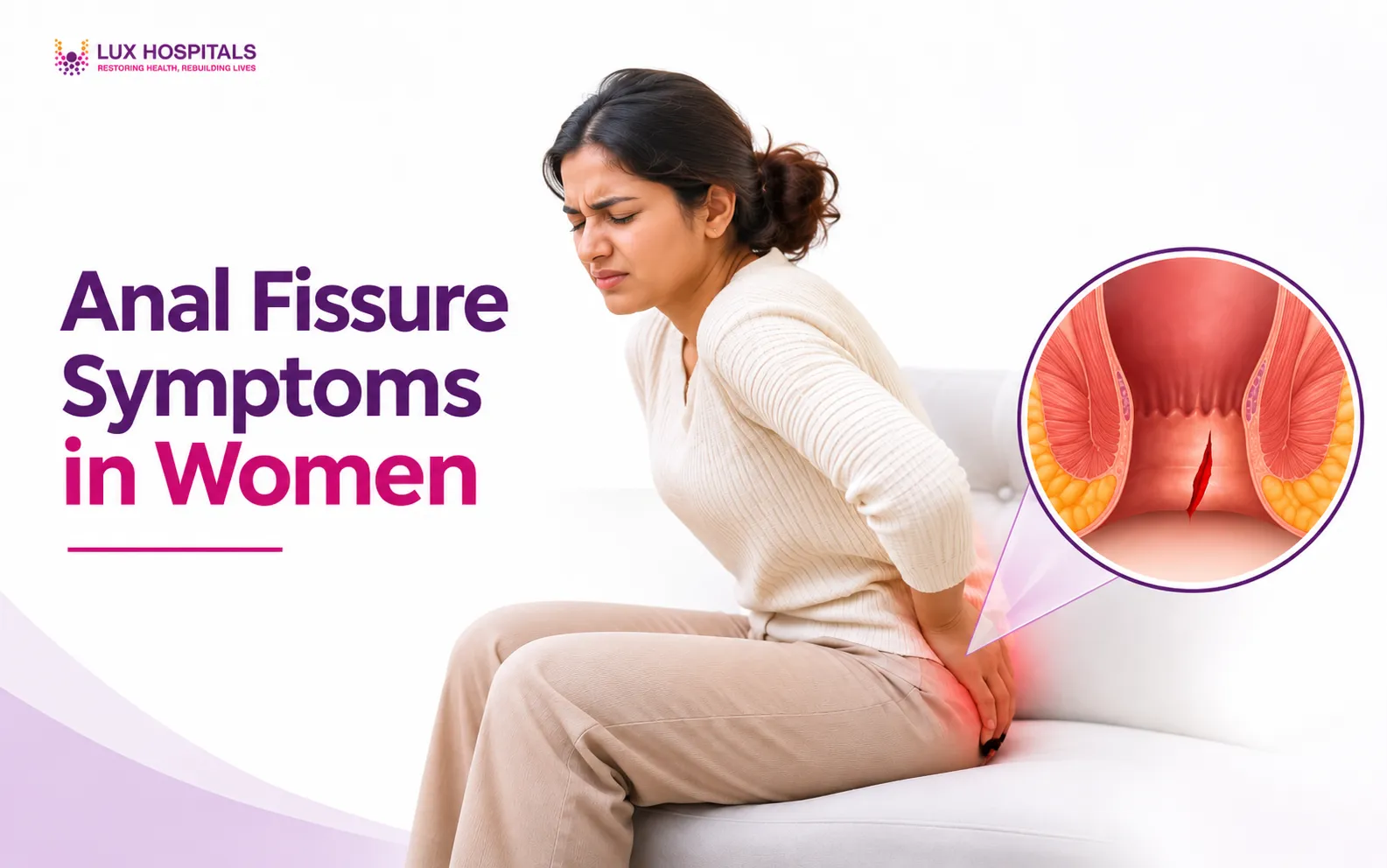
What Is an Anal Fissure? An anal fissure is a small tear in the lining of the anal canal. It can cause sharp or burning pain during bowel movements and may produce a small amount of bright-red bleeding. The existing Lux article highlights constipation, childbirth and changes in bowel habits as factors that may contribute to anal fissures in women. Although anal fissures can occur in anyone, women may experience additional considerations related to pregnancy, childbirth and changes in bowel habits.
11 November 2026

After fistula surgery, your body needs nutrients to support wound healing. At the same time, avoiding constipation and excessive straining can help make bowel movements more comfortable. A suitable fistula surgery diet should provide fibre, fluids, protein, and other nutrients, adjusted according to your doctor's instructions.
9 November 2026
If a piles lump comes out with every bowel movement, it may indicate prolapsing haemorrhoids. The right prolapsed piles treatment depends on the severity of the prolapse, bleeding, pain, bowel habits and whether the lump goes back on its own. A specialist examination can help identify the right treatment.
14 October 2026
Send your reports across and a senior surgeon will review them, explain the options and tell you honestly whether surgery is the right call.
Plot No.116, Lumbini Avenue, HITEC CITY, Near IKEA, Hyderabad – 500032