











5 Warning Signs of Anal Fistula That Require Medical Attention
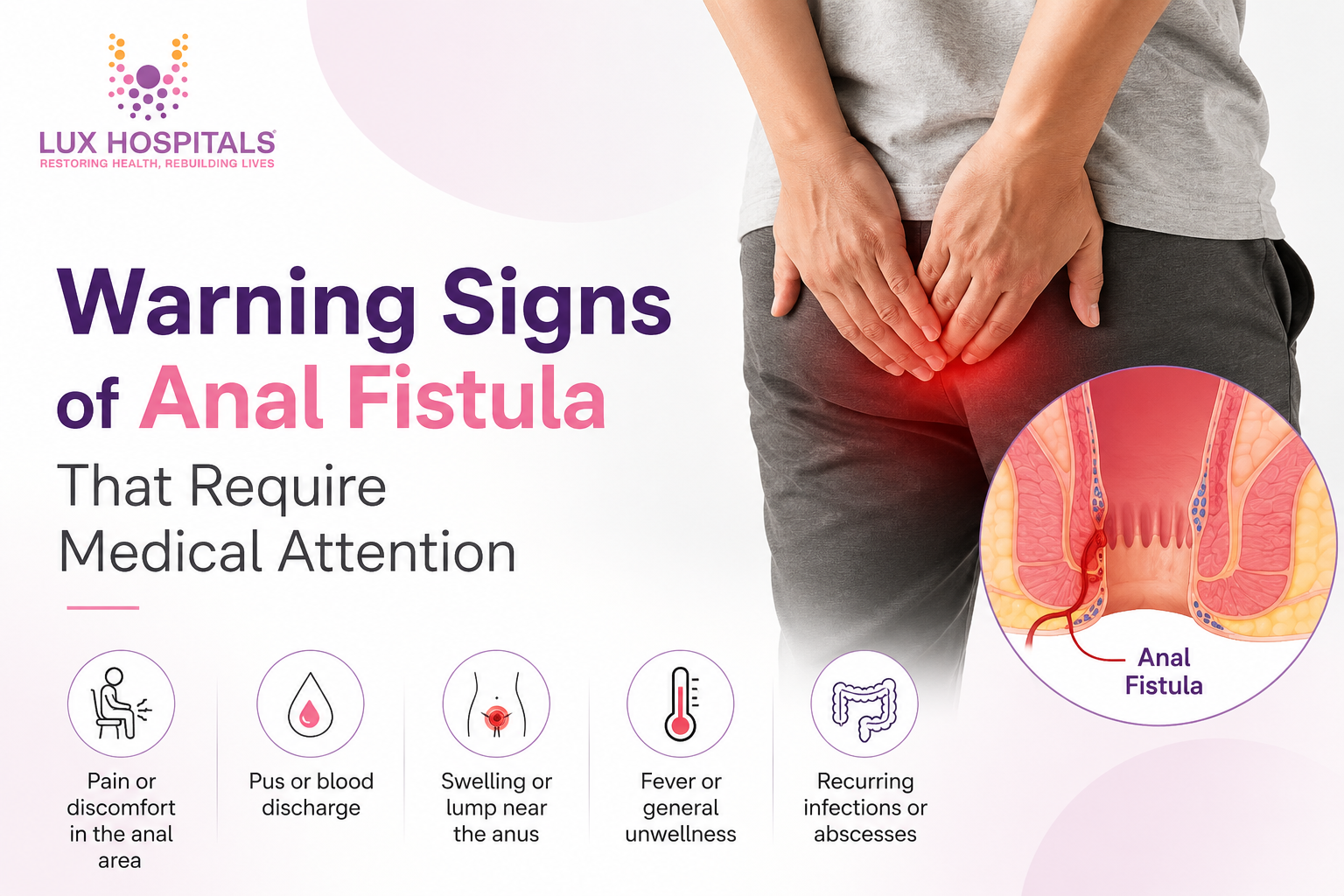
Ignoring the Warning Signs of Anal Fistula can lead to severe pain, recurring infections, and complications that affect your daily life. It usually forms after an untreated anal abscess and rarely heals on its own. Our skilled colorectal doctors at Lux Hospitals offer minimally invasive treatment choices and modern diagnoses to help patients heal more quickly and with less discomfort. This guide explains the Warning Signs of Anal Fistula, their causes, complications, and the importance of seeking medical care without delay.

What is an Anal Fistula?
A tiny channel that forms between an infected gland in the anus and the surrounding skin is called an anal fistula. The majority of anal fistulas form following the rupture or inadequate drainage of an anal abscess. Bacteria continue to move through the tunnel once it forms, causing discomfort and repeated infections. Seldom does the illness go away on its own without therapy. Early detection of the warning signs of an anal fistula can help avoid long-term consequences, including persistent infection, multiple fistula tracts, and injury to surrounding muscles.
Common causes include:
- Previous anal abscess
- Crohn’s disease
- Tuberculosis
- Radiation therapy
- Trauma around the anal region
- Previous anorectal surgery
- Chronic infections
Why You Should Never Ignore the Warning Signs of an Anal Fistula
Anal fistula warning signs may seem minor at first, but if treatment is delayed, the infection may worsen. Treatment may become more difficult and recovery time may increase as the fistula tract becomes more complicated.
Seeking expert evaluation at Lux Hospitals ensures accurate diagnosis using advanced imaging and personalised treatment plans that reduce recurrence and improve healing.
Recognising the 5 Warning Signs of an Anal Fistula
If treatment is not received, the symptoms of an anal fistula might worsen and become more painful. Early detection of these warning indicators enables prompt treatment and avoids problems such as recurrent infections and abscesses.
1. Persistent Pain Around the Anus
Persistent pain around the anus is one of the first warning signs of an anal fistula. When sitting, walking, passing stools, or coughing, the pain often worsens. Patients frequently describe the pain as throbbing or deep inside the anal area. Pain that continues for several days should never be ignored because it often indicates an underlying infection that requires medical treatment.
When to See a Doctor
- Pain lasting more than two days
- Pain associated with swelling
- Pain interferes with daily activities.
- Pain that returns repeatedly
2. Continuous Pus or Blood Discharge
One of the most prevalent warning signs of an anal fistula is persistent discharge. Many patients see fluid flowing from a tiny opening close to the anus that is yellow, white, or stained with blood. Undergarments are frequently stained by the discharge, which can also smell bad.
Although temporary drainage may reduce pain, it does not mean the fistula has healed. Instead, it usually indicates that the infection continues beneath the skin.
Watch for:
- Yellow or green pus
- Blood-stained discharge
- Bad-smelling drainage
- Continuous leakage despite cleaning
Ignoring these Warning Signs of Anal Fistula can lead to recurring infections and larger fistula tracts.
3. Swelling and Redness Around the Anal Area
Another crucial warning sign of an anal fistula is swelling. Inflammation may cause the surrounding skin to turn red, hot, sensitive, and painful.
Some patients notice a lump that becomes larger over time. In many cases, this swelling represents another abscess forming because bacteria continue to collect inside the fistula tract.
Signs include:
- Painful lump
- Warm skin
- Increasing redness
- Difficulty sitting comfortably
- Tenderness on touching
Prompt medical evaluation helps prevent the abscess from enlarging and spreading.
4. Recurrent Anal Abscess
One of the most potent warning signs of an anal fistula is recurrent abscesses. Recurrent swelling often indicates a fistula tunnel even after an abscess has been drained.
Each recurrence worsens tissue damage and complicates treatment. Patients should never assume that repeated abscesses are normal.
If you experience:
- Frequent painful boils
- Recurrent swelling
- Fever after drainage
- Repeated infections
Seek immediate medical attention.
Specialists at Lux Hospitals use advanced diagnostic techniques to identify hidden fistula tracts and provide definitive treatment.
5. Fever and General Illness
Among the serious Warning Signs of Anal Fistula, fever should never be ignored. Fever usually indicates that the infection is spreading beyond the local area.
Patients may experience:
- Fever
- Chills
- Fatigue
- Weakness
- Loss of appetite
These symptoms require urgent medical attention, as an untreated infection can spread to surrounding tissues and worsen.
Early diagnosis at Lux Hospitals helps prevent complications and promotes quicker recovery.
Who is More Likely to Develop an Anal Fistula?
Certain individuals have a higher risk of developing this condition.
High-risk groups include:
- People with previous anal abscesses
- Patients with Crohn’s disease
- Individuals with diabetes
- People with weakened immunity
- Patients with inflammatory bowel disease
- Individuals with repeated anorectal infections
Knowing these risk factors helps people recognise the Warning Signs of Anal Fistula sooner.
How is an Anal Fistula Diagnosed?
At Lux Hospitals, diagnosis begins with a thorough medical history and physical examination.
Additional investigations may include:
- Clinical examination
- Digital rectal examination
- MRI Fistulogram
- Endoanal Ultrasound
- CT Scan (selected cases)
- Blood investigations
Advanced imaging accurately identifies the fistula pathway and guides effective treatment planning.
Treatment Options at Lux Hospitals
Anal fistula Treatment depends on the location and complexity of the fistula.
Common treatment options include:
Surgical Treatment
- Fistulotomy
- Fistulectomy
- Seton Placement
- Advancement Flap Procedure
- LIFT Procedure
- Laser Treatment (selected patients)
Supportive Care
- Pain relief medication
- Antibiotics when indicated
- Sitz baths
- High-fiber diet
- Adequate hydration
The colorectal experts at Lux Hospitals recommend the safest treatment based on each patient’s condition.
Can Anal Fistula Heal Without Surgery?
Most anal fistulas do not heal on their own because the tube beneath the skin is still open. Although it cannot fully block the tract, medication may temporarily reduce the infection. Ignoring the warning signs of an anal fistula might result in more complicated surgery down the road, persistent pain, and recurrent abscesses. At Lux Hospitals, early consultation increases the likelihood of a successful course of therapy with few problems.
How to Reduce the Risk of Anal Fistula
Although not every fistula can be prevented, healthy habits reduce the chances of infection.
Follow these tips:
- Maintain good anal hygiene.
- Eat a high-fibre diet.
- Drink plenty of water.
- Avoid constipation
- Treat anal abscesses promptly.
- Manage Crohn’s disease effectively.
- Attend follow-up appointments
Why Choose Lux Hospitals?
Choosing the right hospital improves treatment outcomes and patient comfort.
At Lux Hospitals, patients receive:
- Experienced colorectal surgeons
- Advanced diagnostic facilities
- Minimally invasive procedures
- Personalised treatment plans
- Faster recovery protocols
- Compassionate patient care
- Comprehensive follow-up support
When you notice the Warning Signs of Anal Fistula, timely treatment at Lux Hospitals can prevent complications and help you return to normal life sooner.
Conclusion
Recognising the Warning Signs of Anal Fistula early is key to preventing chronic pain, recurrent infections, and complex surgeries. Persistent pain, discharge, swelling, recurring abscesses, and fever should never be ignored. If you experience any of these symptoms, consult the colorectal specialists at Lux Hospitals for an accurate diagnosis and advanced treatment. Early medical care offers the best chance for complete healing and a healthier future.
FAQ
1. What are the first warning signs of an anal fistula?
Persistent pain at the anus, swelling, redness, and pus or blood draining from a tiny orifice surrounding the anal area are typically the first warning signs of an anal fistula. Since early diagnosis helps avoid recurring infections and more complicated treatment, these symptoms, which frequently follow an anal abscess, should never be disregarded.
2. Can an anal fistula heal without surgery?
Because the infected tunnel remains beneath the skin even when drainage temporarily stops, most anal fistulas do not resolve on their own. Medication may temporarily minimise infection, but to completely heal the fistula and stop recurrence, surgery or minimally invasive therapy is typically needed.
3. Is an anal fistula dangerous if left untreated?
Yes, untreated anal fistulas can result in recurrent abscesses, ongoing discharge, chronic infection, and the formation of additional fistula tracts. Delaying treatment in difficult situations can complicate surgery and prolong recovery, underscoring the importance of seeking medical care as soon as possible.
4. Why should I choose Lux Hospitals for anal fistula treatment?
Lux Hospitals offers minimally invasive treatment options, skilled colorectal surgeons, cutting-edge diagnostic technologies, and individualised care regimens that emphasise faster recovery with less discomfort. To reduce the risk of recurrence, the knowledgeable staff ensures precise diagnosis, thorough treatment, and ongoing monitoring.
5. Does Lux Hospitals provide advanced treatment for complex anal fistulas?
Yes, Lux Hospitals specialises in treating both basic and difficult anal fistulas with cutting-edge surgical methods that are customised for each patient’s condition, such as laser treatments, fistulotomy, and LIFT.
Title: 5 Warning Signs of Anal Fistula That Require Medical Attention | Lux Hospitals
Description: Learn the top Warning Signs of Anal Fistula, causes, symptoms, treatment, and when to seek expert care at Lux Hospitals for faster recovery.
Focus Keyword: Warning Signs of Anal Fistula
Slug: warning-signs-of-anal-fistula
Canonical: warning-signs-of-anal-fistula
Frequently Asked Questions
Persistent pain at the anus, swelling, redness, and pus or blood draining from a tiny orifice surrounding the anal area are typically the first warning signs of an anal fistula. Since early diagnosis helps avoid recurring infections and more complicated treatment, these symptoms, which frequently follow an anal abscess, should never be disregarded.
Because the infected tunnel remains beneath the skin even when drainage temporarily stops, most anal fistulas do not resolve on their own. Medication may temporarily minimise infection, but to completely heal the fistula and stop recurrence, surgery or minimally invasive therapy is typically needed.
Yes, untreated anal fistulas can result in recurrent abscesses, ongoing discharge, chronic infection, and the formation of additional fistula tracts. Delaying treatment in difficult situations can complicate surgery and prolong recovery, underscoring the importance of seeking medical care as soon as possible.
Lux Hospitals offers minimally invasive treatment options, skilled colorectal surgeons, cutting-edge diagnostic technologies, and individualised care regimens that emphasise faster recovery with less discomfort. To reduce the risk of recurrence, the knowledgeable staff ensures precise diagnosis, thorough treatment, and ongoing monitoring.
Yes, Lux Hospitals specialises in treating both basic and difficult anal fistulas with cutting-edge surgical methods that are customised for each patient's condition, such as laser treatments, fistulotomy, and LIFT.